
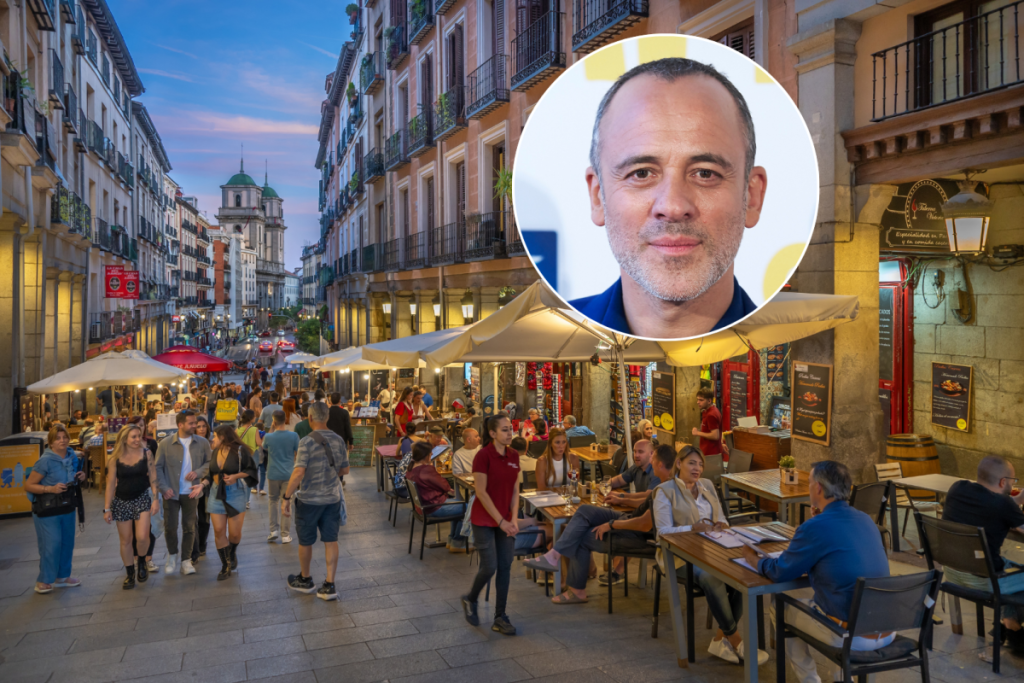

The housing situation in Madrid is so complicated that even actors with long and distinguished careers, such as Javier Gutiérrez, are feeling the consequences. The Asturian actor has spoken out about a transformation that concerns him as a resident of the capital: the replacement of primary residences with tourist accommodations. “I live in a building with 90 residents, and more than half of the units are now vacation rentals,” the actor said in an interview with Esquire. His criticism isn’t limited to housing prices; he also points to the disappearance of the everyday relationships that sustain a community—and the data backs him up, because according to the National Institute of Statistics, nearly one in every 17 homes in central Madrid is used for tourism.
In his conversation with Esquire, the actor extends his reflection to other cities: “In cities like Málaga, Valencia, or Bilbao, gentrification continues to grow, but the situation in Madrid is already unsustainable.” And he insists: “In five years, there may only be four or five homeowners left.”
A Critique of the Urban Model
The actor’s words link the proliferation of vacation rentals to a broader question: for whom is urban life organized? In his account, the concern extends beyond the influx of tourists to the difficulty of maintaining a residential community in an environment he perceives as increasingly unlivable. In the interview, he also describes Madrid as a “hostile” city—an expression that sums up his unease with this trend.
The power of his words lies precisely in his personal experience, despite his privileged position. Gutiérrez describes how he perceives the transformation of his surroundings and what he fears losing as a result. In the face of a debate that often revolves around visitor numbers, occupancy rates, or profitability, his perspective introduces another measure: how many residents remain, and what happens to community life when they leave.