
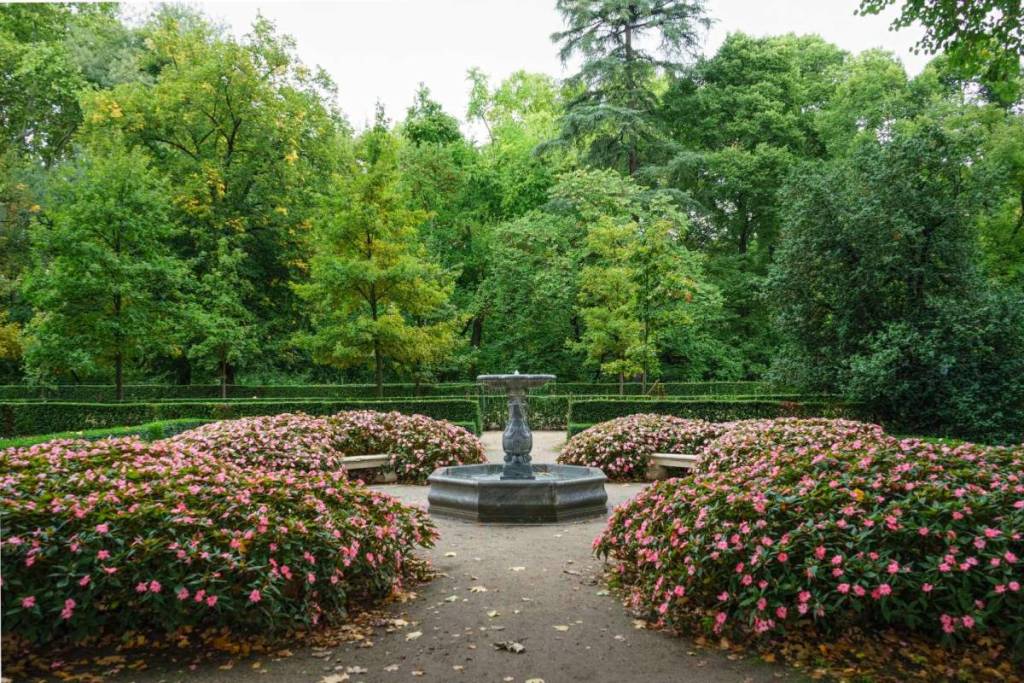

Madrid has large parks that appear in every guidebook, from El Retiro to the Casa de Campo, but it also boasts lesser-visited gardens that seem to resist the city’s fast pace. One of them is El Capricho on the Alameda de Osuna, a historic site where visitors can stroll among groves of trees, sculptures, ponds, and romantically inspired nooks. Across from the Palacio de El Capricho, the French Parterre becomes one of the park’s most striking features during the peak blooming months: hundreds of tiny flowers in various colors form a living tapestry that can be admired through the fall thanks to the impatiens (Impatiens walleriana).
Admission is free, though there’s one condition to keep in mind before leaving home: the park is only open on Saturdays, Sundays, and holidays. From April 1 through September 30, the park is open from 9:00 a.m. to 9:00 p.m. From October 1 through March 31, the hours are 9:00 a.m. to 6:30 p.m. The park is closed on December 25 and January 1.
A historic garden with seasonal flowers
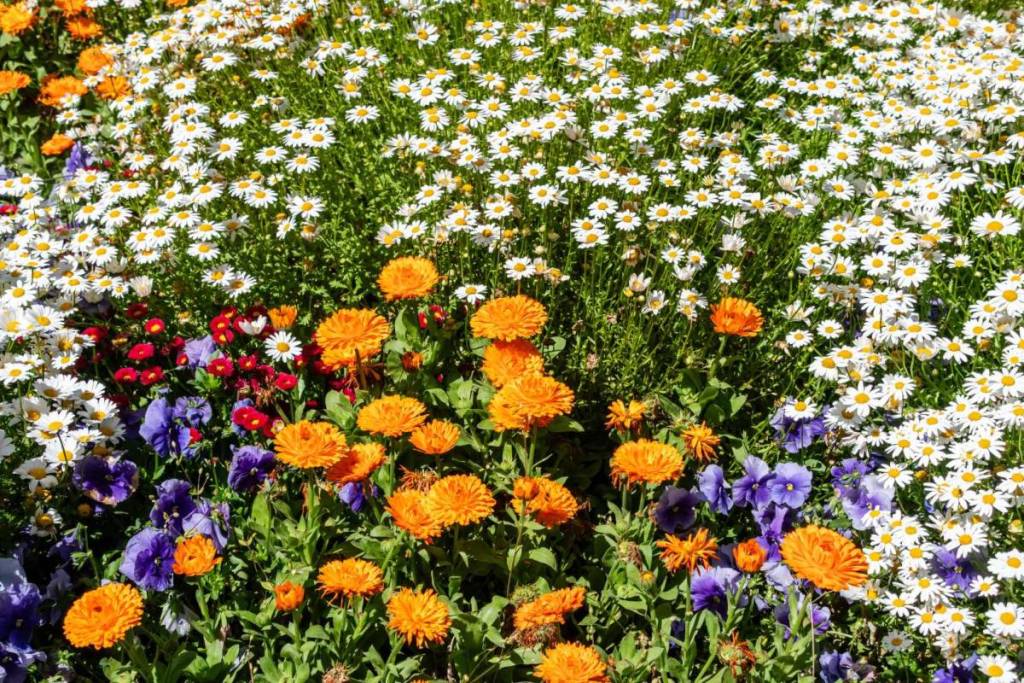
The orderly, geometric layout of the parterre contrasts with other, more natural and scenic areas of the park. Here, seasonal plantings bring color to the paths and architectural features of the garden, with small flowers creating ever-changing compositions depending on the time of year.
The hues range from yellow, pink, white, purple, orange, and red, creating a floral mosaic that serves as an antechamber to the palace. The effect is especially beautiful first thing in the morning, when the garden still retains a quiet atmosphere, or in the late afternoon, when the softest light accentuates the colors of the flowers and the shadows of the trees.
El Capricho: Much More Than Just a Park
El Capricho is not a conventional urban park. It is one of Madrid’s best-preserved historic gardens, created in the late 18th century at the initiative of María Josefa Pimentel, Duchess of Osuna. Over time, the grounds incorporated different styles of landscaping—French, English, and Italian—which explains the variety of atmospheres encountered during a stroll.
The French Parterre represents the most formal and scenic part of this blend. But you need only walk a few minutes to find very different spaces: paths through the trees, a lake, small decorative structures, bridges, sculptures, and nooks designed to surprise visitors. One of the best-known sites is the bunker at Posición Jaca, built during the Civil War; visits require advance reservations through municipal programs.