
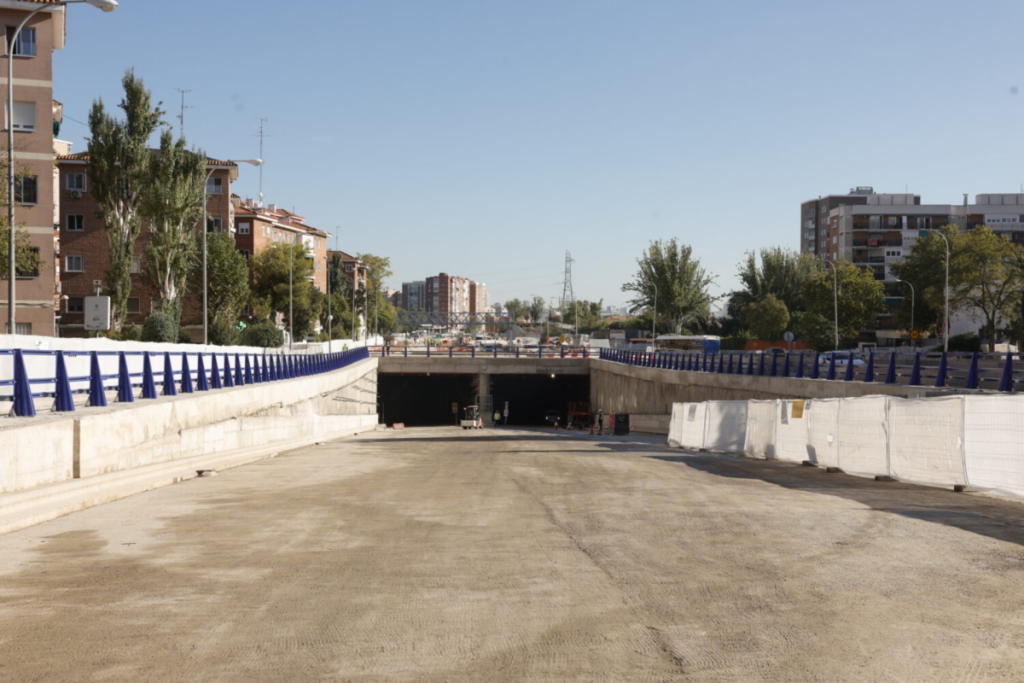

Although the A-5 undergrounding project is nearing completion, work continues, and—as has been the case in the area since construction began—traffic disruptions persist. The city council has announced that there will be new changes to the surface route of the A-5 in anticipation of upcoming progress on the undergrounding work and the third phase of the Paseo Verde del Suroeste project.
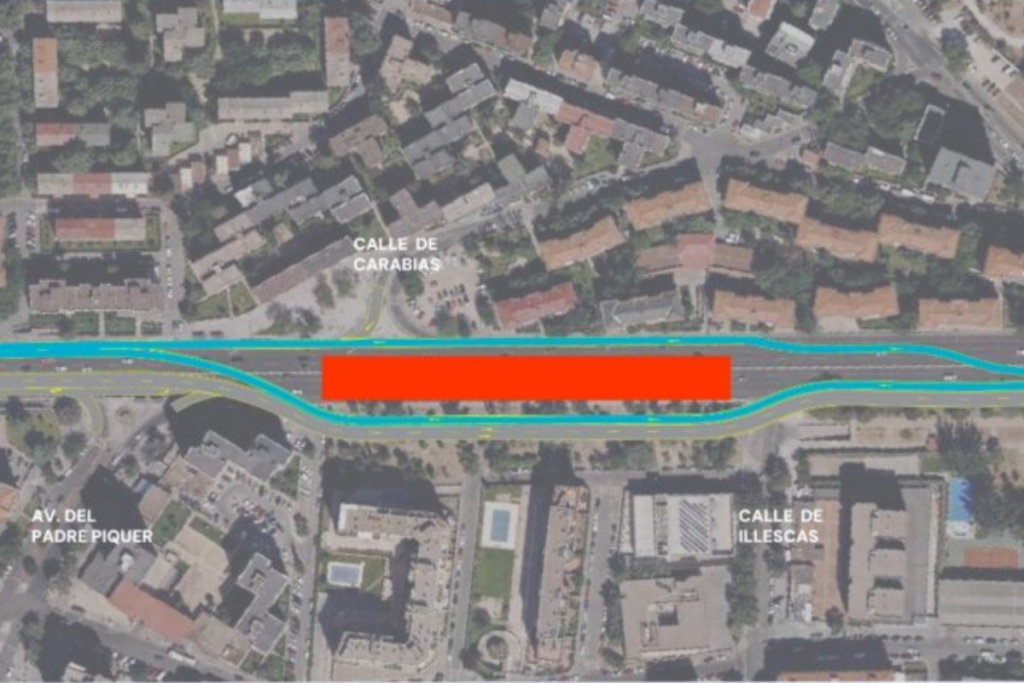
This Friday, October 23, the configuration of the existing exit lanes on the main section of the highway near Illescas Street will be temporarily modified. The lanes will be rerouted to run on both sides of the future tunnel entrance. The purpose of this reorganization is to make room for work to replace the drinking water pipeline affected by the construction and to build the surface road, among other things.
Recommended Articles
 A show featuring 500 drones will light up the sky over downtown Madrid: the Christmas lights ceremony kicks off this weekend
 How to Travel from Madrid to Andalusia While High-Speed Service Is Suspended: All Available Options
Borja Carabante, the councilor for Urban Planning, Environment, and Mobility, has also warned residents that they will see more work taking place at street level. These efforts will be aimed at creating the future naturalized corridor that will connect to Madrid Río, the Casa de Campo, and the Cuña Verde de Latina.
The new A-5 tunnel will open to traffic by the end of the year
Excavation of the entire A-5 underground tunnel was completed in May, while civil engineering work on the tunnel was finished in August. Currently, work on the tunnel—which consists of three lanes in each direction across two spans—is focused on installing utilities and finishing touches. It is expected to connect to the M-30 in November, opening to traffic before the end of the year.
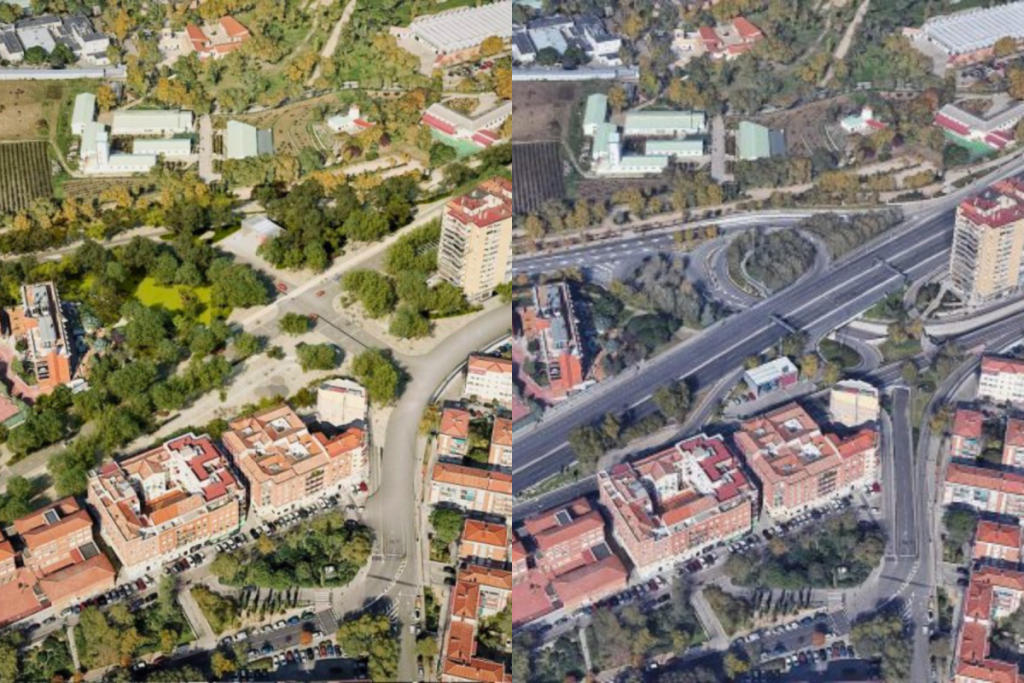
The underground tunnel construction is being coordinated with urban development work along the 3.2-kilometer stretch of the future Paseo Verde del Suroeste. The city council’s goal is for this work—which has already begun on various sections of the route—to eliminate the barrier between Campamento and Casa de Campo and the neighborhoods of Lucero, Aluche, and Las Águilas.
Since 1968, both areas have been separated by a road crossed daily by 80,000 vehicles, which will be covered by the underground tunnel once it opens.