
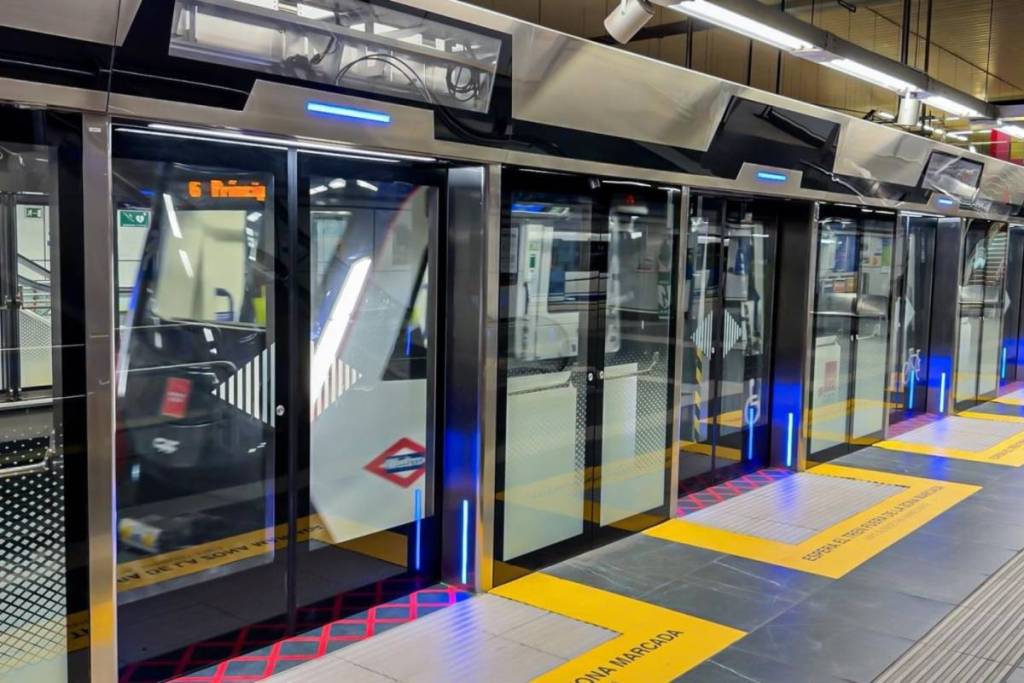

Madrid Metro Line 6, the Circular, takes another step toward automated operation. The Community of Madrid has completed the first phase of nighttime testing between Cuatro Caminos and Lucero, where technicians have verified that the trains, platform doors, and signaling system operate in a coordinated manner.
The second phase is already underway between Arganzuela-Planetario and Ciudad Universitaria and will later be extended to the rest of the line.
How the tests are conducted
The runs begin at low speed. Once the initial checks are validated, technicians gradually increase the speed to evaluate the trains’ performance. During the tests, they verify that traffic rules are followed and that the trains stop precisely at each station.
The tests are conducted both empty and with a load. To simulate an occupancy of four passengers per square meter, two cars carry a ballast of several metric tons of concrete.
Metro is using five of the 48 trains purchased to automate the line. One train from the CAF facility in Corella and three others currently at the Beasain factory will be added. The rest will arrive gradually through the end of the first quarter of 2027.
24-hour service on weekends starting in April
Automatic operation is scheduled to begin in March. Starting in April, the Circular will operate 24 hours a day on weekends. The system will stop each train at the designated point so that the train doors and platform doors open simultaneously.
This change has also been used to make the train cars more accessible. The installation of barriers on the line’s 70 platforms will be completed by the end of the year. With the final configuration, the floor of the cars will be practically at the same height as the platform, and the horizontal gap will be less than 30 millimeters. On curved sections, a gap filler will maintain that distance, allowing people in wheelchairs to board the train directly, without ramps.
Meanwhile, Metro is adapting the Laguna depot to accommodate the new fleet. It has modernized several track components and is refurbishing the facilities and equipment for the maintenance of the automated trains.
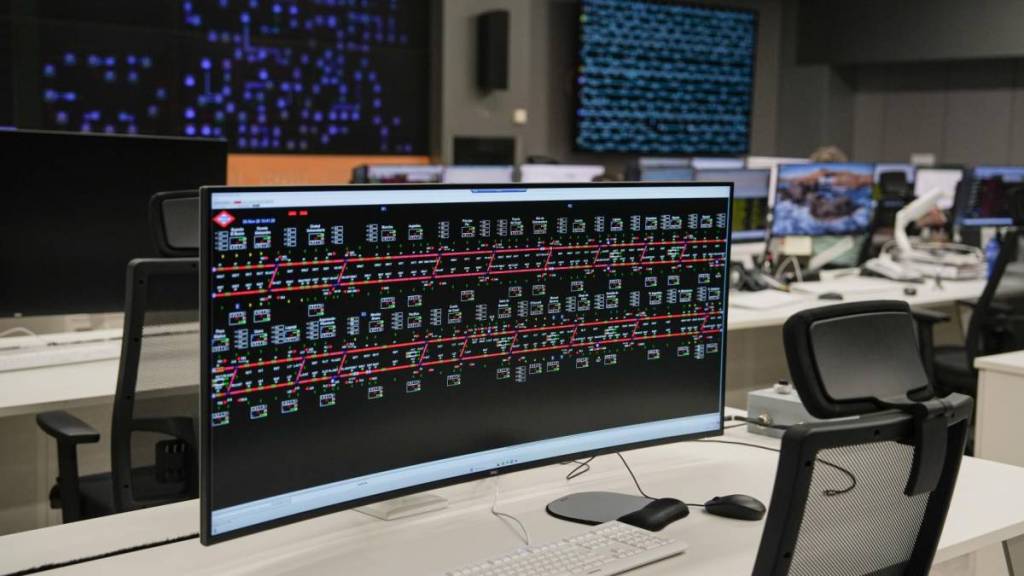
On the line itself, the construction work has included track renewal, upgrades to the power supply, and a signaling system for automated operation. The Central Control Center will have a dedicated area for managing train traffic, staffed by seven personnel: one supervisor, three controllers, one rolling stock technician, and two on-call professionals.