


For a decade, the Teatro Alfil box office not only sold tickets but also used its small booth as a privileged vantage point for observing Madrid’s cultural scene. From inside her booth, Ajo, a renowned micro-poet and local counterculture activist, set out to capture images of theatergoers, passersby, friends, and artists who approached the window.
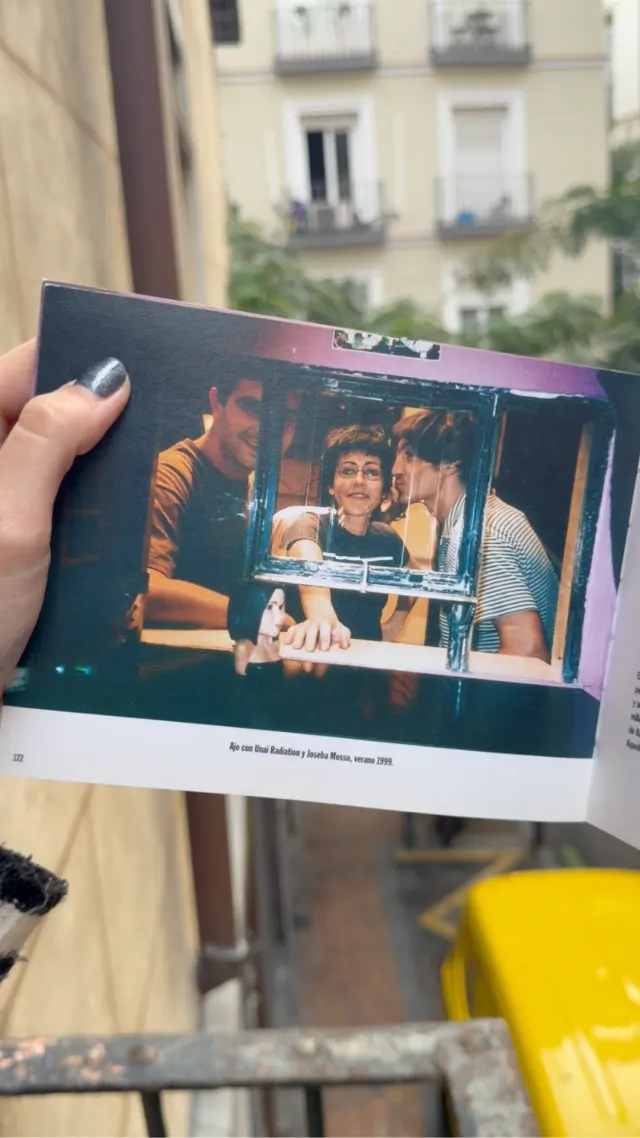
Her adventure began in 1998, after receiving a camera as a gift. Since the box office was where she spent most of her time, and given the constant and diverse flow of people passing through Calle Pez, she began snapping photos on a regular basis. At that time, the theater represented a unique space—an environment where, as he recalls, “the present stood still and lasted longer than usual.” Every routine interaction thus became an opportunity to capture what he describes as an “overdose of the present.”
An archive of the turn of the century
None of those who stopped by to buy a ticket—or simply to have a good conversation—imagined they would end up becoming part of an extensive documentary archive. With her camera, Ajo subverted the usual roles of the theater and turned the audience into the true protagonists, placing them on their own stage framed by the glass. Among the numerous photographs taken during those years of transition into the new millennium, one can identify figures such as Loles León, Alberto San Juan, Arturo Valls, Javier Cámara, Fele Martínez, and Antonio Escohotado, in addition to countless anonymous spectators.
What began as a spontaneous way to document performance nights evolved into a methodical collection that was eventually published. Ajo compiled this visual chronicle into the photobook *Bello Público*, leaving a tangible record of a vibrant era in the Malasaña neighborhood.
Although it’s possible that today many of those photographed barely remember the exact moment the flash went off from the darkness of the ticket booth, the images endure as a testament. This photographic body of work solidifies the artist’s career beyond the stage, cementing her status as an indispensable figure in the city’s visual and cultural memory.