


The Community of Madrid has approved a reform of the regulation governing the Plan Vive that, on paper, “relaxes” financial requirements and speeds up the allocation process, but at the same time clearly tightens the residency requirement: to be among the first in line for these affordable rental units, three years of residency in the municipality will no longer suffice; instead, five years will be required, along with other key changes in how the apartments are allocated.
Until now, anyone wishing to apply for a Plan Vive apartment had to prove at least three years of residency or employment in the municipality where the development was being built, or five years in any locality within the Community, to move up the waiting list. With the decree approved this week, the regional government is raising the stakes:
- Applicants who have been registered in the municipality for at least five years or who have been working there for that same period will have absolute priority.
- Second in line will be those who can prove ten years of residence anywhere in the Community of Madrid (previously five).
- The rest of the registered residents will only be eligible if the housing units are not filled by the two previous groups.
The regional government defends the change as a “strengthening of local ties, ” arguing that subsidized housing should first benefit those who have been connected to the municipality or region the longest.
More public land and active waiting lists
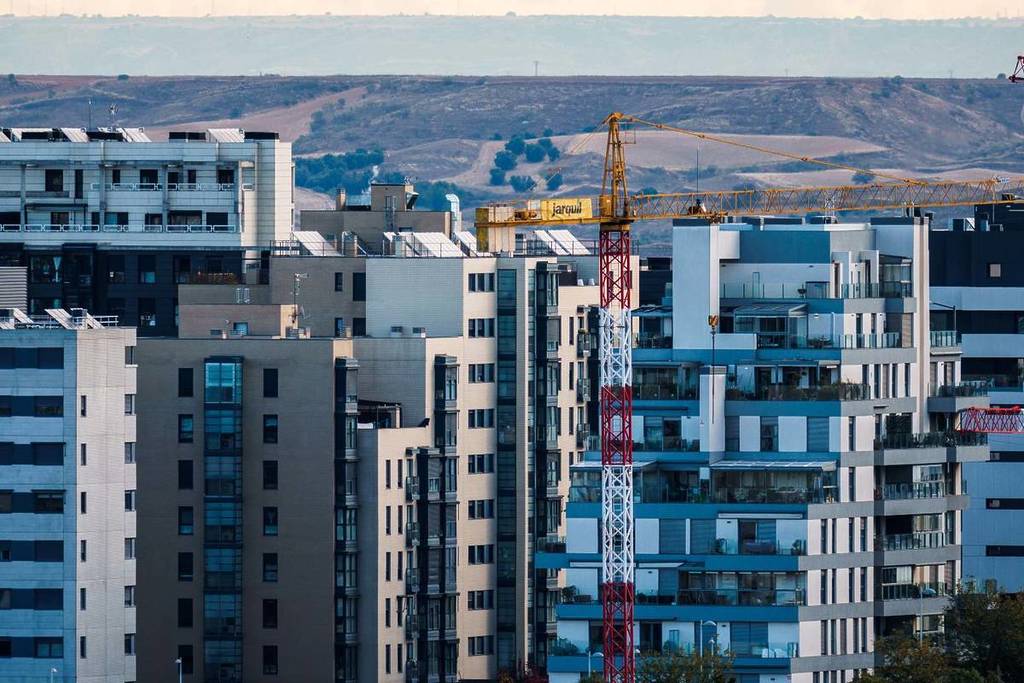
It’s not all restrictions. The same reform of Decree 84/2020 expands the scope of the Plan Vive so that the Community can build housing on land owned by other affiliated administrations, such as city councils, and not just on regional plots. The idea is to have more land available for development and increase the total supply of affordable rentals, one of the weak points highlighted by analysts and housing groups.
Changes are also being announced regarding the management and transparency of the allocation process. Now, lists of interested parties must be permanently published on the concessionaire’s website, with a link from the institutional homepage, so that applicants can update their information and check their status. Allocation deadlines are also being shortened, and it is now permitted to reassign housing units from specific quotas (such as for victims of gender-based violence or asylum seekers) to the general quota if they become vacant, with the aim of preventing units from remaining unoccupied for months.
Broader income thresholds (but with fine print)
Another change the government is promoting as a relaxation of rules is the expansion of income thresholds for certain household types. Specifically, for two-person households, there are now two different income brackets:
- For basic-price housing: between 1.5 and 5.5 times the IPREM.
- For price-capped housing: between 1.5 and 7.5 times the IPREM.
Until now, the same income coefficient applied as for single-person households, which excluded couples with slightly higher combined incomes despite not being high-income earners. With this adjustment, the Community maintains that more citizens will be able to meet the requirements and qualify for the Plan Vive program.
In addition, the door is opened to using more recent tax data and accepting sworn statements when the financial situation has changed significantly since the last tax return filed (for example, recent job loss), which in theory should prevent injustices in borderline cases.
At the same time, the new social housing regulations currently being processed establish, as a general rule for Madrid’s public housing, a minimum of five years of residency for rental and ten for purchase, and it is sufficient for just one member of the household to meet this requirement. In other words, the tightening of residency requirements is not an exception to the Plan Vive, but part of a broader shift in regional housing policy.