
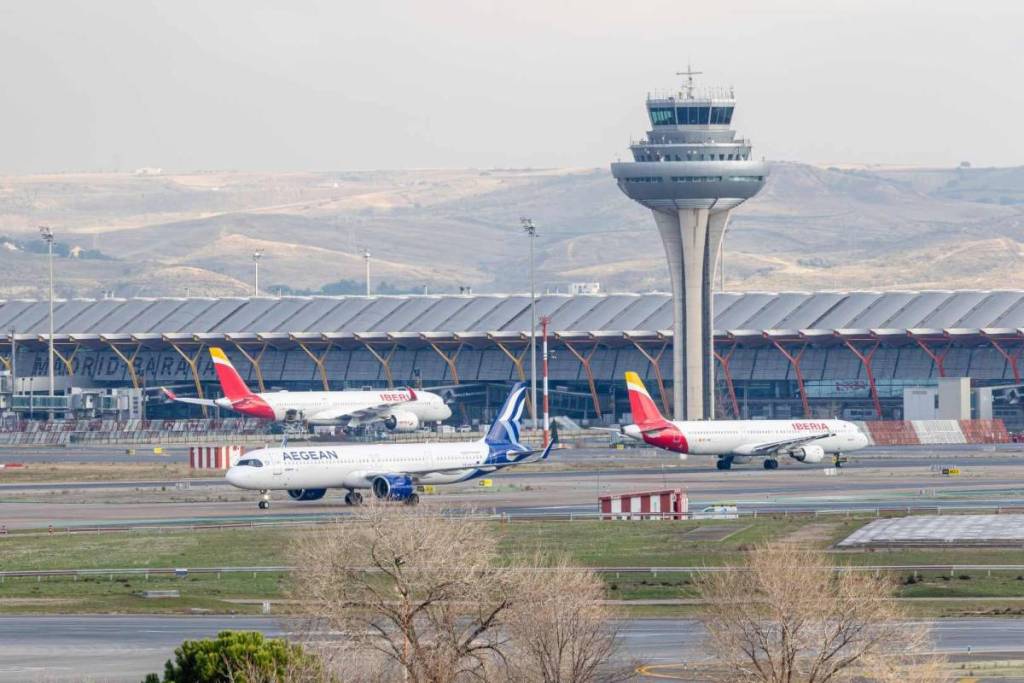

For months, the idea of a second airport in Madrid has served as a constant background noise: private plans to convert Casarrubios del Monte into a commercial airport, debates over whether the capital needed another large-scale runway, and speculation about how the region’s aviation landscape would change. That scenario has now received a clear response from Aena. The airport operator has made it clear that it does not consider a new commercial airport for Madrid to be viable, nor does it consider it necessary from an operational standpoint.
At the same time, it has accelerated the expansion of Adolfo Suárez Madrid-Barajas with new tenders for T4 and T4S totaling more than 146 million euros, as part of an investment plan worth billions.
Casarrubios will not be the “second airport”: incompatibility with airspace
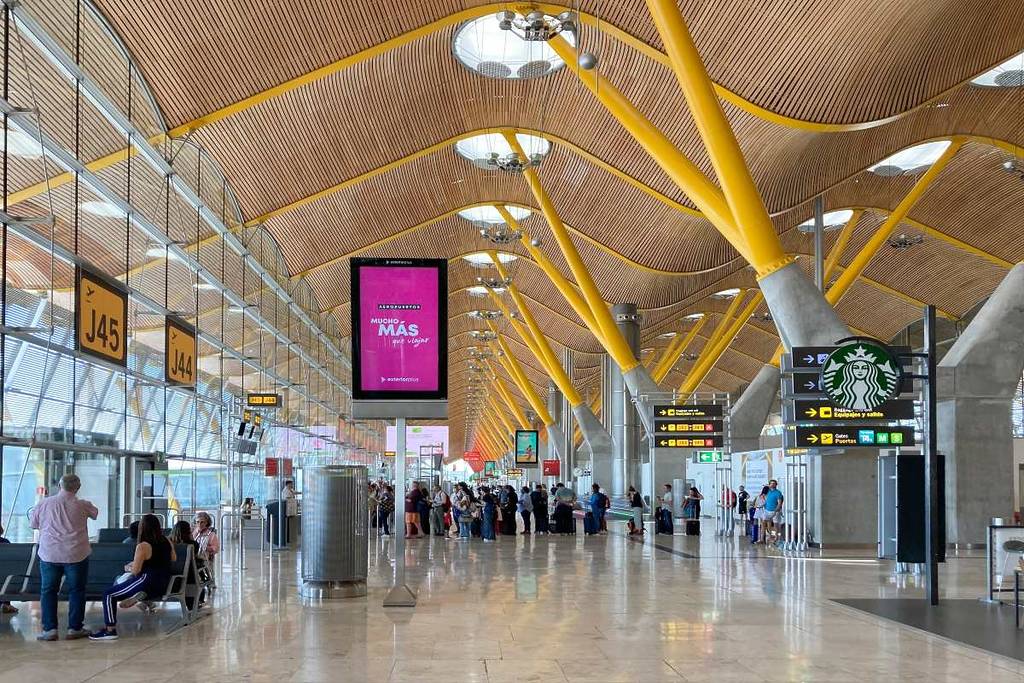
Aena itself has provided the key statement: the project to convert the Casarrubios del Monte airfield into Madrid’s second commercial airport presents “airspace compatibility issues” and “makes no sense from an operational standpoint.” The company points out that the proposed location would interfere with takeoffs and landings at Barajas, create conflicts with current flight paths, and require a complex reorganization of Madrid’s airspace—which, in practice, would jeopardize the safety and efficiency of the system. cincodias.
While ruling out a second airport, Aena has taken an important step in the expansion of Barajas. The Board of Directors has authorized projects at T4 and T4S totaling more than 146 million euros: the expansion of the T4 North Platform (89.97 million, with a 35-month construction period) and the expansion of the T4S South Pier (56.5 million, with a 24-month construction period). The goal is to add remote parking positions in T4 and new contact positions for non-Schengen traffic in T4S, thereby increasing operational capacity during peak hours and flexibility in managing long-haul flights.
These works are part of a much broader expansion project, valued at over 4,000 million euros, which aims to increase the airport’s capacity to around 90 million passengers per year. Within the DORA 2027–2031 regulatory framework, Aena plans to invest nearly 2.96 billion in key initiatives: the expansion of T4 and T4S, the construction of a new processing building, the renovation of the boarding area in T1-T2-T3, improvements to roads, parking lots, and associated aprons, and new thermal power plants and power stations to serve the entire complex.