
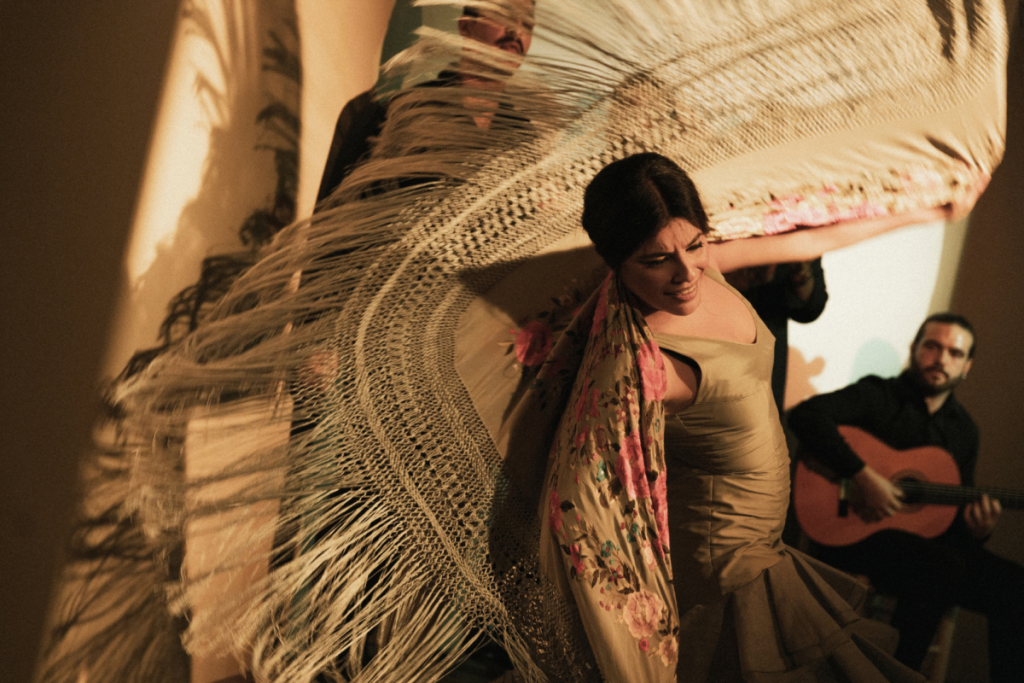

In Chueca, just a few steps from Barbieri Street—where Manolo Caracol opened the legendary tablao Los Canasteros in 1963—a small venue has chosen to stick to the essentials: 50 seats, no distracting food, and flamenco taking place just one meter from the audience. It’s the Centro Cultural Flamenco Madrid, one of the most authentic havens for experiencing this art form in the capital. You can book your ticket here.
CENTRO CULTURAL FLAMENCO DE MADRID
A tablao with a neighborhood spirit run by two seasoned dancers
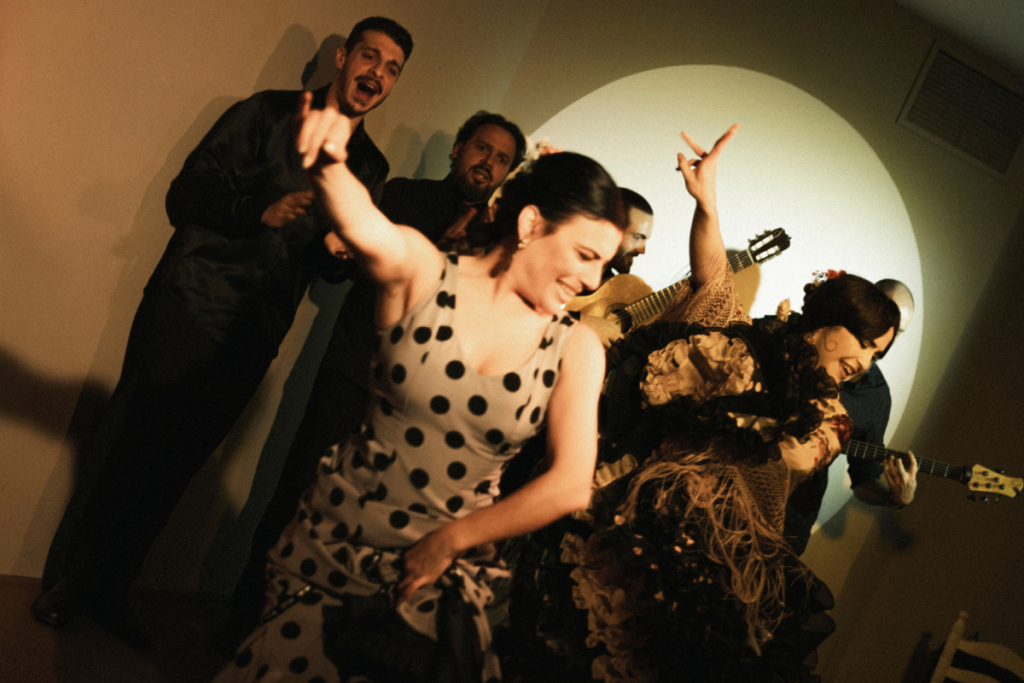
The Centro Cultural Flamenco Madrid carries on the flamenco tradition in Madrid from Calle del Conde de Xiquena, with a very clear vision: to bring back the experience of flamenco as it was once lived in the traditional tablaos—up close and with the respect and solemnity it deserves. It was founded in 2019 by Rosana de Aza, who for years directed the Casa de la Memoria in Seville. In April 2022, it embarked on a new chapter with a fresh vibe, yet without losing sight of the tradition of the classic tablao.
This new chapter bears the mark of Lisi Sfair and Pedro Córdoba, the owners, directors of the venue, and artists who continue to take the stage. She, the general director, brings a long career of tours, competitions, series, and tablaos to the table. He, the artistic director, balances his stage work with teaching at Amor de Dios, one of the most prestigious flamenco schools in the country.
A rotating cast of more than 30 dance, singing, and guitar artists takes the stage here, featuring the city’s most talented and renowned performers. This lineup is complemented by the Cultural Series, which bring leading figures of flamenco art to the city once a month. Dancers of the caliber of Paula Comitre and Lucía la Piñona, guitarists such as Yerai Cortés, dancers like Marco Flores and Jesús Carmona, and singers such as Montse Cortés—who for a decade lent her voice to Paco de Lucía’s tours around the world—have all been part of these cycles.
Fifty seats and nothing to distract from the rhythm
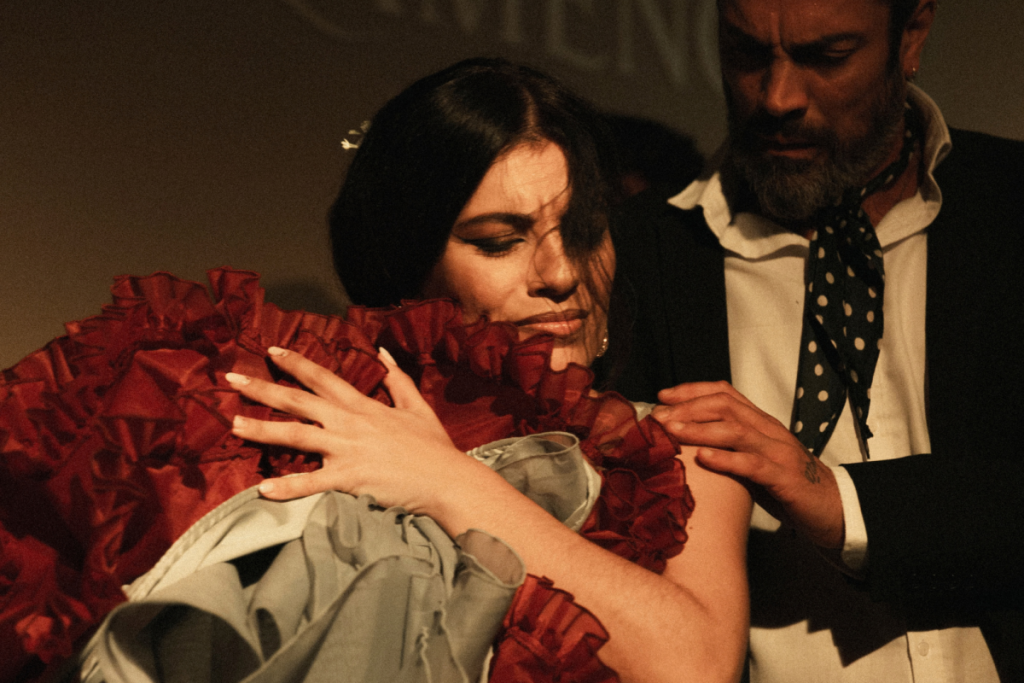
It’s an immersive show with no food service. And that’s by design. With no cutlery or waitstaff crossing the room, the 50 seats are just one meter from the stage, and everything revolves around the dance, the singing, and the guitar. You can hear every breath.
What’s more, the Center goes beyond the stage. It offers grants and awards for artists, opens its gallery to other disciplines linked to flamenco, and publishes its own magazine that preserves testimonies of its living history.

Afternoons of Tablao Flamenco
CENTRO CULTURAL FLAMENCO DE MADRID