

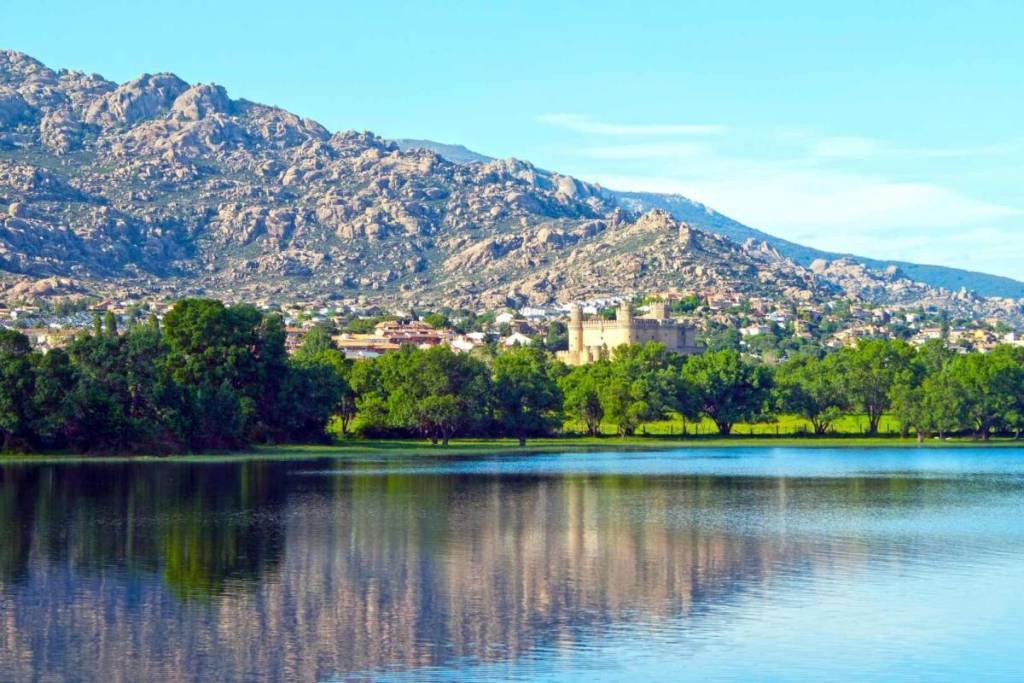
At the foot of La Pedriza and next to the Santillana Reservoir, Manzanares el Real boasts one of the most breathtaking landscapes in the Community of Madrid. This town in the Sierra de Guadarrama is about a 45-minute drive from the capital and combines medieval heritage, nature, hiking trails, and one of the region’s most recognizable landmarks: the Mendoza Castle, considered the best-preserved medieval fortress in the region and the site chosen for the signing of the Statute of Autonomy of the Community of Madrid.
The town is part of the area surrounding the Cuenca Alta del Manzanares Biosphere Reserve, a protected area that encompasses forests, pastures, granite formations, reservoirs, and some of the most characteristic landscapes of the Madrid mountains. The proximity of the castle, the town, the water, and the mountains makes Manzanares el Real the perfect day trip destination without having to travel too far from the city.
The castle overlooking the mountain range
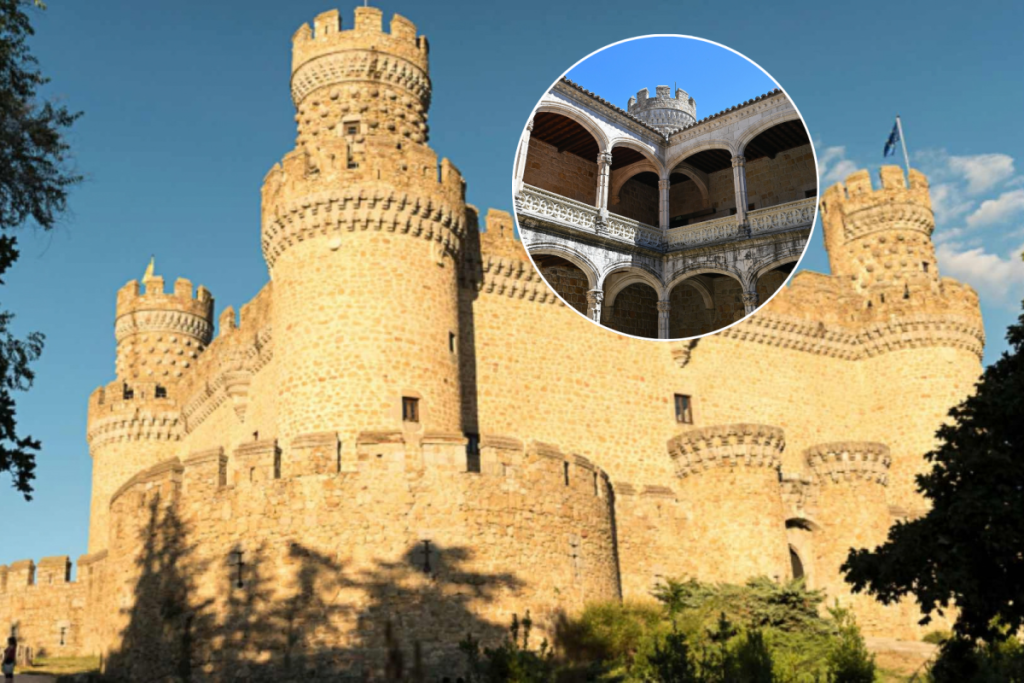
The main attraction in Manzanares el Real is the Mendoza Castle, also known as the “new castle.” The fortress was built in the 15th century on the initiative of Diego Hurtado de Mendoza, the first Duke of Infantado, and was designed by Juan Guas, one of the most important architects of the late Middle Ages in Castile.
Its exterior retains all the elements one would expect from a castle: granite walls, cylindrical towers, battlements, arrowslits, machicolations, and a large keep. However, behind this defensive appearance lies a building also designed as a noble residence. The central courtyard served not only as a military space but also as a palatial courtyard, featuring a double gallery of Gothic arches—a feature rarely seen elsewhere in the Community of Madrid.
The castle is one of the finest examples of late medieval architecture in the region. Its style blends Gothic and Mudejar elements, evident in the geometric and floral decorations, the large windows, and the overall lines of the structure. The castle’s significance extends beyond its appearance: it served as a model for the later Palacio del Infantado in Guadalajara, another of the great works associated with the Mendoza family.
From the rampart—the elevated walkway protected by battlements that runs along part of the wall—you can enjoy some of the best views of the surrounding area. On one side lies La Pedriza, with its granite rocks and unmistakable contours; on the other, the Santillana Reservoir and the open landscape of the Upper Manzanares Basin.
The castle has been restored in several phases. The first major restoration took place in 1914, led by architect Vicente Lampérez. In 1931, it was declared a Historic-Artistic Monument, and in 1964, a new restoration was carried out under the direction of Manuel González Valcárcel.
The building also holds a unique place in the region’s recent history: in 1982, it hosted the committee tasked with drafting and signing the Statute of Autonomy of the Community of Madrid, which went into effect the following year.
A getaway amid water and granite
A visit to Manzanares el Real is rounded out with a stroll through the town and around the Santillana Reservoir. The water, the mountains, and the stone buildings come together to form one of the most photogenic landscapes in the Community of Madrid, especially on clear autumn days.
La Pedriza, located next to the town, is one of the top hiking destinations in the Madrid mountains. Its enormous granite boulders, gorges, trails, and overlooks attract hikers, climbers, and families year-round. However,it’s important to choose routes suited to the group’s fitness level, bring enough water, wear appropriate footwear, and check the weather conditions and access restrictions beforehand.
For those who prefer a more leisurely outing, the town center itself offers a good mix of history, restaurants, and places to stroll. The Church of Nuestra Señora de las Nieves, the area around the town square, and the streets near the castle allow you to extend your visit without having to tackle a demanding mountain hike.
The interior of the castle
In addition to its architecture, the Mendoza Castle houses a collection of Flemish tapestries, paintings, suits of armor, and furniture from the 16th to the 19th centuries. These objects allow visitors to imagine what life was like in a noble residence and add a domestic dimension to a building that, viewed from the outside, appears to be exclusively military in nature.
The residential courtyard, the galleries, the chapel, and the interior rooms show how the fortress was adapted to the tastes of an elite that needed to project power, but also to live in the building. This blend of stone, defense, art, and daily life is one of the reasons why the castle is such a special place to visit.
However, before planning your trip, it’s a good idea to check the current status of the monument. The official tourism website of the Community of Madrid warns that visits to the castle are temporarily suspended. The exterior, the town center, and the surrounding landscape are still reason enough to visit, but it’s advisable to check the reopening date, visiting conditions, and hours before traveling.