
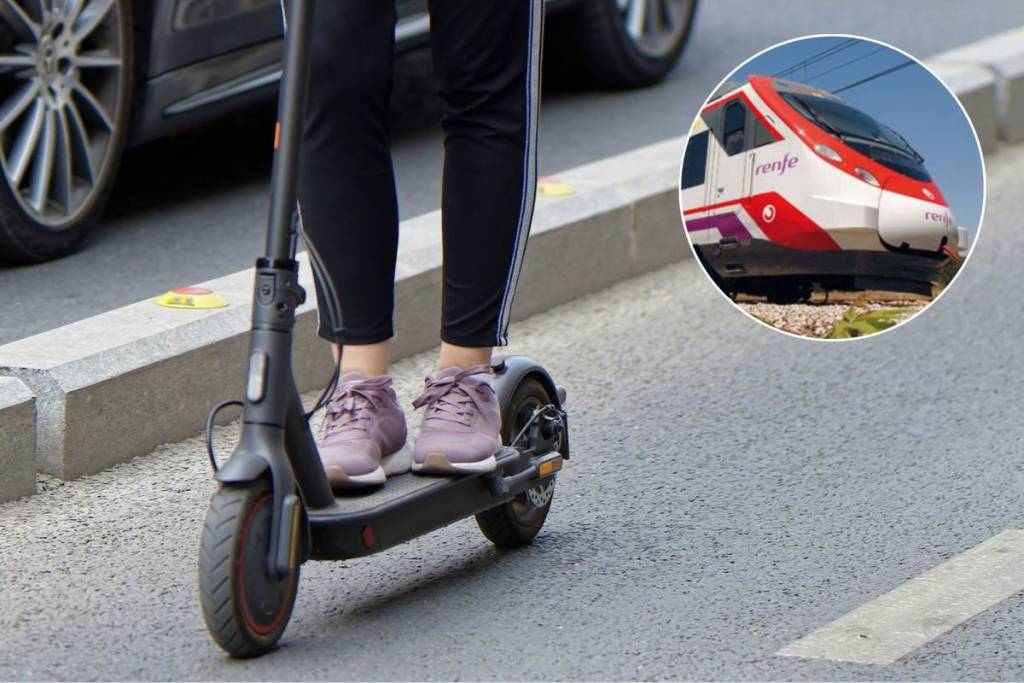

Starting this Monday, September 7, public transit users will once again be able to travel with electric scooters and Personal Mobility Vehicles (PMVs) aboard Renfe trains, including commuter, medium-distance, and long-distance services. The only exceptions, for now, are Rodalies in Catalonia and Cercanías Euskadi, where the restriction remains in place.
The ban has been lifted nearly three years after it was implemented in 2023 and following the approval last June of a new nationwide regulatory framework regarding the use of these types of vehicles. The regulations, which will take effect on October 1, include mandatory identification, registration, and insurance requirements for Personal Mobility Vehicles.
According to Renfe, the lifting of the restriction is primarily intended to facilitate travel for people who use these types of vehicles to complete the journey between train stations and their homes or their workplaces and schools. However, not just any electric scooter is permitted, and Renfe has established a series of requirements to ensure safety inside its trains.
Requirements that electric scooters must meet to be allowed on Renfe trains
To board a Renfe train car with an electric scooter or VMP, the device must be certified in accordance with current legislation and meet the requirements established by the DGT, namely:
- Being registered in the DGT’s official vehicle registry.
- The vehicle must display a visible identification plate or label ( or, where applicable, a license plate). It must correspond to an official registration, and if it is determined that the vehicle has been tampered with, is damaged, or does not comply with regulations, access may be denied, even if it bears a label.
- Having valid mandatory civil liability insurance.
- You must also have a certificate of roadworthiness as proof that the vehicle is approved and meets the technical requirements.
Furthermore, even if DGT regulations are followed, not everything is permitted inside the train. Renfe has established a series of mandatory conditions that must be observed by anyone traveling with electric scooters or PMVs:
- Passengers will have to transport their scooters or PMVs folded up and turned off.
- Passengerswill not be allowed to recharge their batteries on board.
- It is prohibited to place them where they may obstruct aisles, doors, emergency exits, or spaces reserved for people with reduced mobility.
The ban remains in effect on the Madrid Metro and EMT buses.
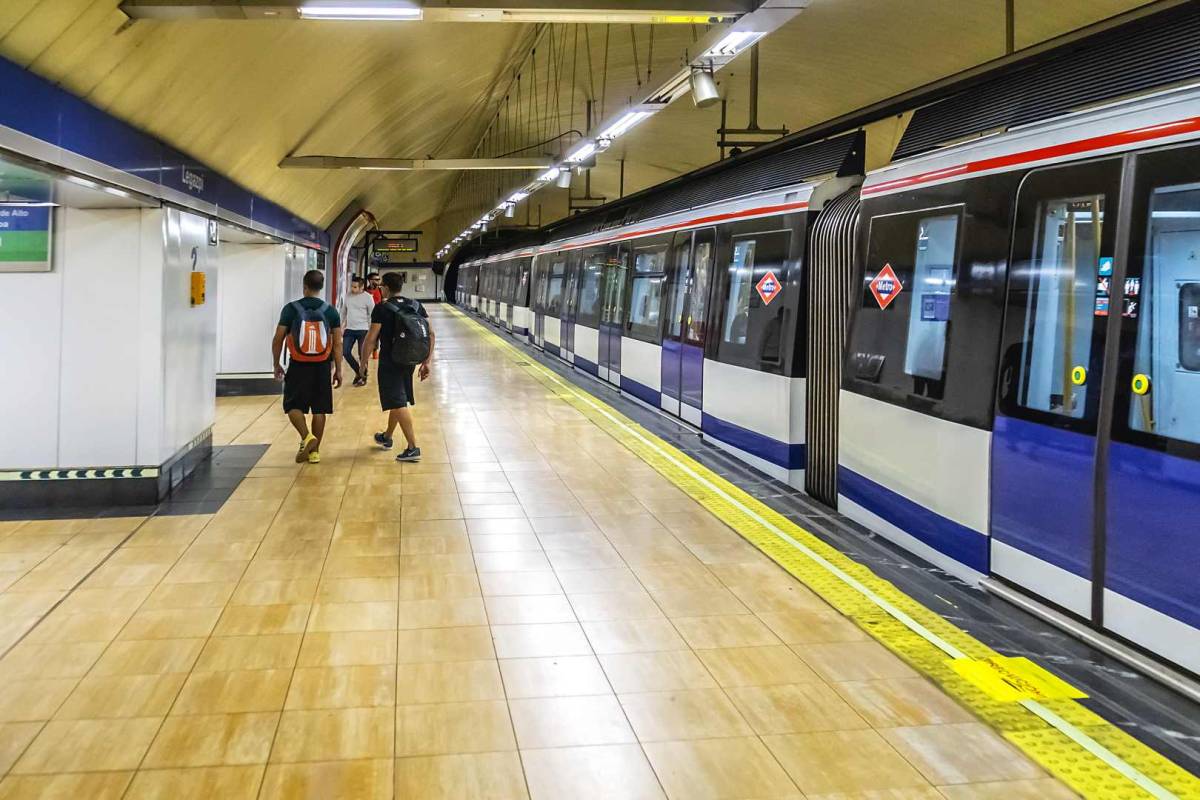
Renfe’s lifting of the ban applies only to its own trains; however, there is no single nationwide rule governing the use of these vehicles on public transportation. Therefore, passengers planning to transfer from the Cercanías must keep in mind that bringing an electric scooter onto the Metro or EMT buses remains prohibited.
In May 2024, the Community of Madrid decided to extend the ban on bringing electric scooters and unicycles onto the regional public transit network until 2027 . This restriction applies to:
- Both the facilities and the trains of the Madrid Metro (including light rail systems).
- EMT buses, as well as intercity and city buses operated by other municipalities.
- The Parla Tram.
- The transit hubs at Plaza de Castilla, Moncloa, Príncipe Pío, Plaza Elíptica, and Avenida América.
The measure had already taken effect on a provisional basis in October 2023 following the explosion of an electric scooter’s battery inside a Metro train at La Elipa station.
For the time being, and despite the approval of the new regulatory framework, the Board of Directors of the Regional Transportation Consortium has not yet reviewed the ban. In 2027, the characteristics and potential risks associated with this type of vehicle will be reevaluated to consider lifting the restriction on the Metro and the rest of the transportation modes integrated into Madrid’s public transit network.