
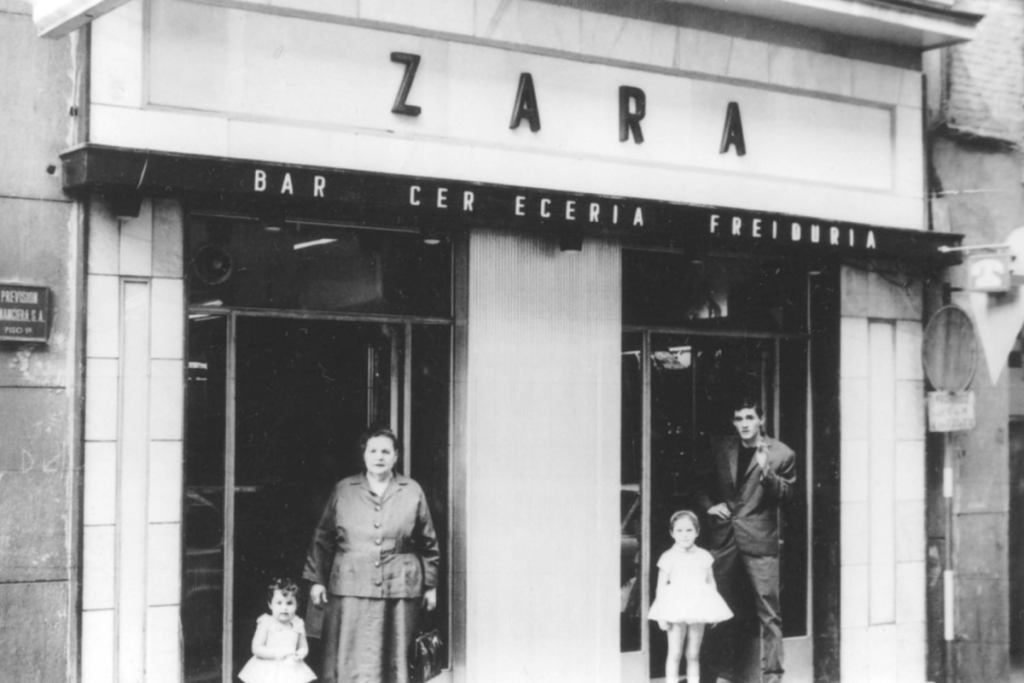

In 1964, when Zara opened its doors at 5 Calle Infantas, it would still be decades before Chueca became the neighborhood that anyone strolling through downtown Madrid recognizes today. There were no chocolate-dipped strawberries served in cups, no cinnamon rolls meant to be eaten on the go, and no shops specializing in açaí. Nor did the Chueca that would eventually become a haven and epicenter for Madrid’s LGBTQ+ community exist yet.
There was, however, a small café called Zara that Inés Llanos and Pepe Martínez had just taken over, a couple who had left Cuba a few years earlier. Sixty-two years later, the restaurant that grew out of that business will serve its last meal on Saturday, October 17, 2026.
Recommended Articles
 A show featuring 500 drones will light up the sky over downtown Madrid: the Christmas lights ceremony kicks off this weekend
 How the Renfe, Iryo, and Ouigo strike will affect Madrid this Tuesday, the 17th: critical commuter train schedules and the new strike set for November 23
The closure was first reported by Pedro Zuazua in *El País*, which has reconstructed the history of the business and the family that has kept it open for three generations. Its current owners, Inés—the founders’ daughter—and her husband Jorge have decided to retire and not sell the restaurant.
From a café to a renowned Cuban restaurant
Zara was founded by Inés Llanos and Pepe Martínez, who had met in Cuba and arrived in Spain in the early 1960s.
In 1964, they took over a café called Zara on Infantas Street. There, they began incorporating the Cuban dishes they used to prepare for themselves, such as ropa vieja, picadillo, arroz congrí, and fried plantains.
The business eventually became a gathering place for Madrid’s Cuban community and, according to El País, served up to 160 meals a day.
In 2014, after 50 years on Infantas Street, the restaurant moved just a few blocks away to Barbieri Street. Inés (the founder’s daughter, who shares her name) and Jorge (her husband) then took over from the founders.
A Chueca very different from that of 1964
Zara’s closure isn’t directly linked to the neighborhood’s commercial transformation. Inés explains in *El País* that the decision stems from retirement, changing habits following the pandemic, and the death of her parents in 2021.
But their farewell takes place in a Chueca that is very different from the one the family encountered in the 1960s.
In May, El Gris—one of the historic bars on San Marcos Street—also closed after 42 years as a fixture of the neighborhood’s alternative and LGBTQ+ nightlife. At the same time, Chueca’s commercial landscape is increasingly filled with shops specializing in fast-food items: açaí, specialty coffee, pastries, cookies, and chocolate-covered strawberries.
This contrast sums up part of the neighborhood’s transformation: family-run businesses that had remained open for decades now coexist with more specialized establishments that are also geared toward takeout.
Zara will serve its last meal on October 17. This marks the closing of a restaurant that had been open in the same neighborhood since 1964 and had survived a move and two generations of owners.