
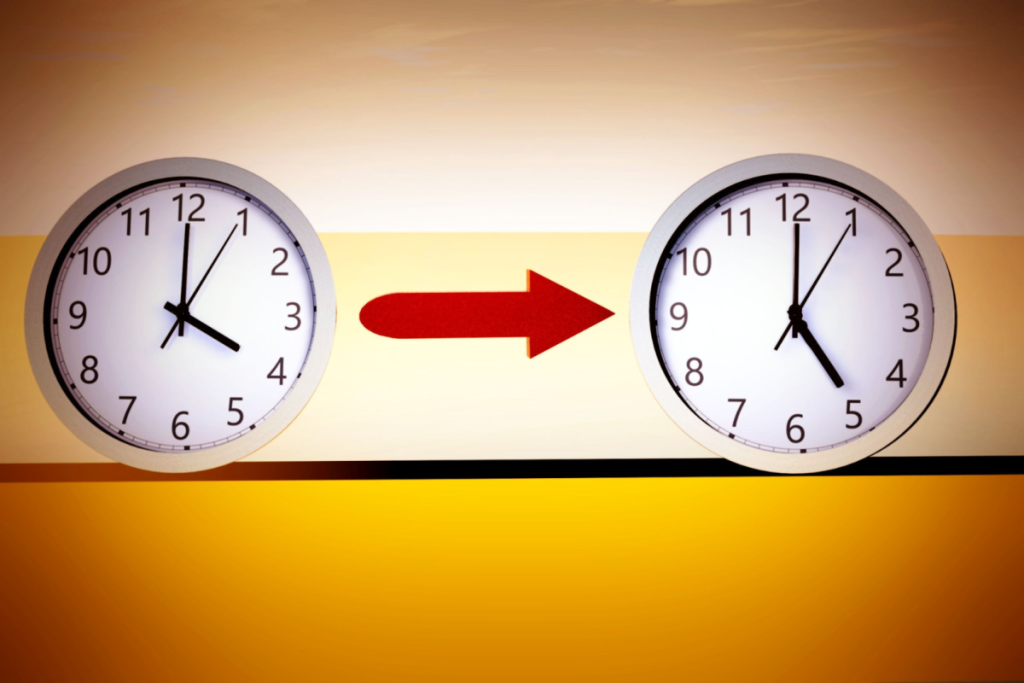

On Sunday, October 25, at 3:00 a.m., the clocks will be set back to 2:00 a.m. Spain will return to standard time, but it will continue to maintain a peculiarity that has persisted for 86 years: Madrid is in the same time zone as Berlin, despite being much closer to the Greenwich Meridian.
The explanation dates back to 1940, during Francisco Franco’s dictatorship, when a decision was made to set Spanish clocks forward one hour. That decision ended up becoming permanent.
Why does Spain follow Germany’s time zone?
Until then, peninsular Spain had used Greenwich Mean Time as its reference, the same time zone currently used by the United Kingdom and Portugal.
On March 16, 1940, Franco’s government set the clocks forward 60 minutes via an order published in the Official State Gazette (BOE). The document justified the decision on the grounds that it was convenient to harmonize Spanish time with that of other European countries.
Although that measure is often linked to Franco’s desire to align himself with Nazi Germany, there is no conclusive documentary evidence to support that motivation. Astronomer Pere Planesas, who researched the history of Spain’s official time, has questioned this interpretation.
The 1940 measure was presented as temporary, but the previous time was never restored. Since then, the Iberian Peninsula and the Balearic Islands have shared Central European Time with Berlin: UTC+1 in winter and UTC+2 in summer. The Canary Islands remain one hour behind.
Will this be the last time change?
Although October 25, 2026, is the last date included in the calendar published in the Spanish Official State Gazette (BOE) in 2022, that does not mean the seasonal time change will disappear.
In fact, the European Commission already published a new calendar in March 2026 outlining scheduled time changes through 2031. As long as European regulations remain unchanged, clocks will continue to be set forward in March and set back in October.