
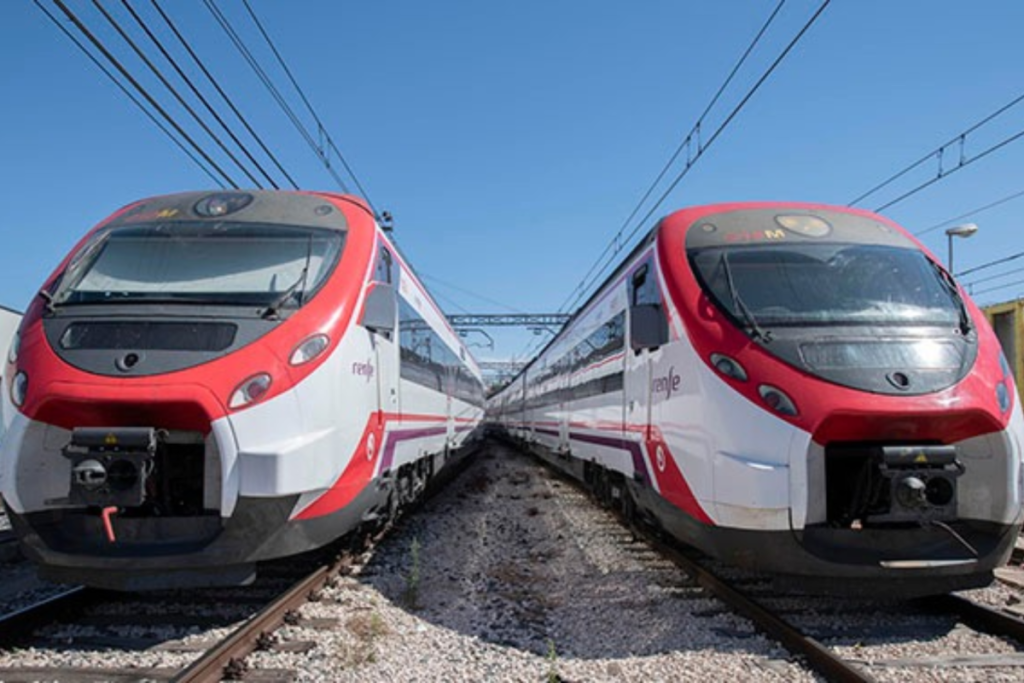

The Renfe train drivers’ strike on Thursday, October 29, is causing significant disruptions to travel in Madrid. The strike, called by the Spanish Union of Train Drivers and Assistants (Semaf), will last 24 hours and affects the group’s train crews. This morning, service suspensions have been reported on Cercanías lines C-1, C-3, C-4, and C-8, in addition to delays, route changes, and longer-than-usual travel times across the rest of the network. Given this situation, Cercanías Madrid recommends seeking alternative modes of transportation.
The Ministry of Transportation has established minimum service levels for Cercanías of 75% during peak hours and 50% during the rest of the day. The time slots with the highest coverage are from 6:00 a.m. to 9:00 a.m., 1:30 p.m. to 3:30 p.m., and 6:30 p.m. to 8:30 p.m. These percentages correspond to the minimum schedule set for the strike and should not be confused with real-time confirmation of train operations: due to incidents reported this morning, it is necessary to check the status of each line before beginning your trip.
Renfe High-Speed and Long-Distance Services
On Renfe’s high-speed and long-distance services, service levels are at a minimum of 73% of normal operations, while on medium-distance services, they average 65%. The resolution covers 253 high-speed and long-distance trains out of the 346 affected by the strike, and 425 out of the 653 medium-distance trains. However, the inclusion of a train in the strike’s minimum service does not guarantee that it will be able to run if its route is affected by another incident. The high-speed connection between Madrid and Andalusia is also suffering the consequences of the train accident in Toledo.
To plan a trip today, it is advisable to check Cercanías’ updated notices and verify the status of a specific train with Renfe, especially if you have connections or a specific arrival time you must meet. The company has information on scheduled service during the strike, which allows passengers to identify the services included in the minimum service levels. In Madrid, Metro has reported that it has put all available trains into service during rush hour to meet the potential increase in demand, although it is advisable to allow extra time for travel and review alternatives before leaving.