
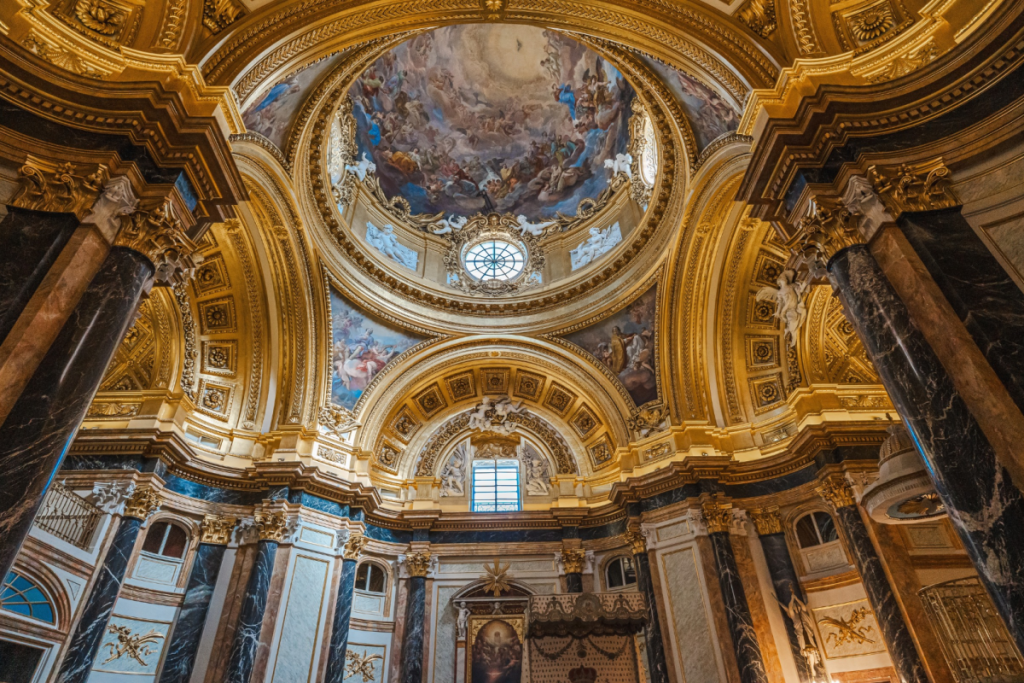

Christmas Eve 1734 marked a turning point in the history of Madrid. A fire ravaged the Real Alcázar, the royal residence that stood on the site where the Royal Palace stands today. The flames consumed the building for several days and caused an irreparable artistic loss: more than five hundred paintings from the royal collection were lost, according to the Prado Museum. During rescue efforts, paintings were removed from their frames, and furniture and canvases were thrown out the windows. Many pieces were saved, but the old palace was reduced to ruins.
The destruction paved the way for a transformation of the complex. Philip V decided to build a new residence that would embody the power and French taste of the Bourbon dynasty and commissioned the project to the Italian architect Filippo Juvarra in 1735. After Juvarra’s death, Giovanni Battista Sacchetti continued the work, and construction of the current building spanned the years 1738 to 1764. Charles III was the first monarch to reside there. Nearly three centuries after the fire, its scale remains one of its greatest attractions: the Royal Palace of Madrid is the largest in Western Europe, a monumental complex that replaced the old Alcázar and forever changed the skyline of this part of the city.
Royal Palace of Madrid
10 November 2026 11:30 + more dates
Palacio Real de Madrid
The Treasures of Europe’s Largest Palace

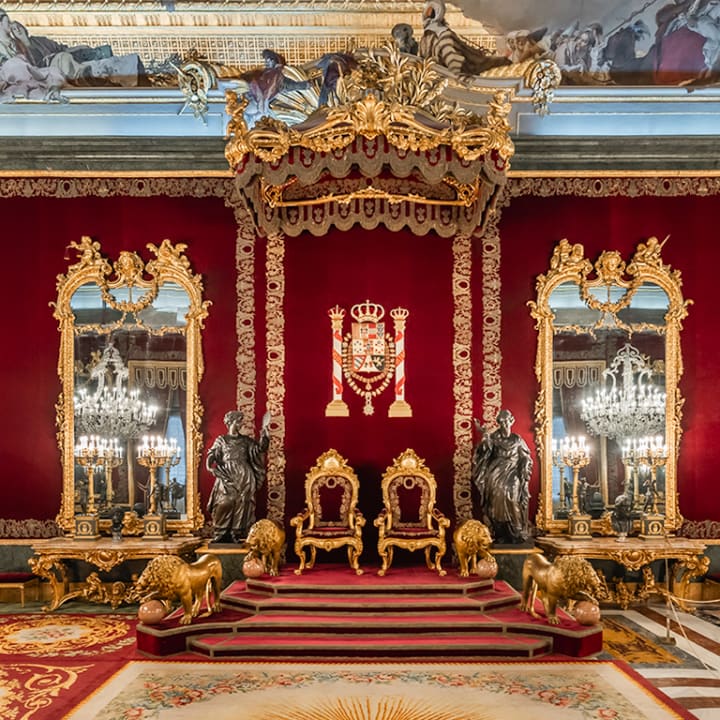
Visiting the palace means discovering how architecture, painting, and the decorative arts combined to shape the image of the new Spanish monarchy. The Throne Room, conceived as the most important room in Charles III’s quarters, remains one of its most iconic spaces. Throughout the tour, the rooms, hallways, and their finishes give visitors a glimpse into the ceremonial life of a residence that has not lost all of its original functions: the palace continues to host official receptions, chamber concerts, and state ceremonies.
When planning your visit, please note an immediate exception: National Heritage has announced that the Royal Palace will be closed from November 2 through 6. Aside from these special closures, the winter hours—from October through March—are Monday through Saturday from 10:00 a.m. to 6:00 p.m. and Sundays from 10:00 a.m. to 4:00 p.m., with last admission one hour before closing.