
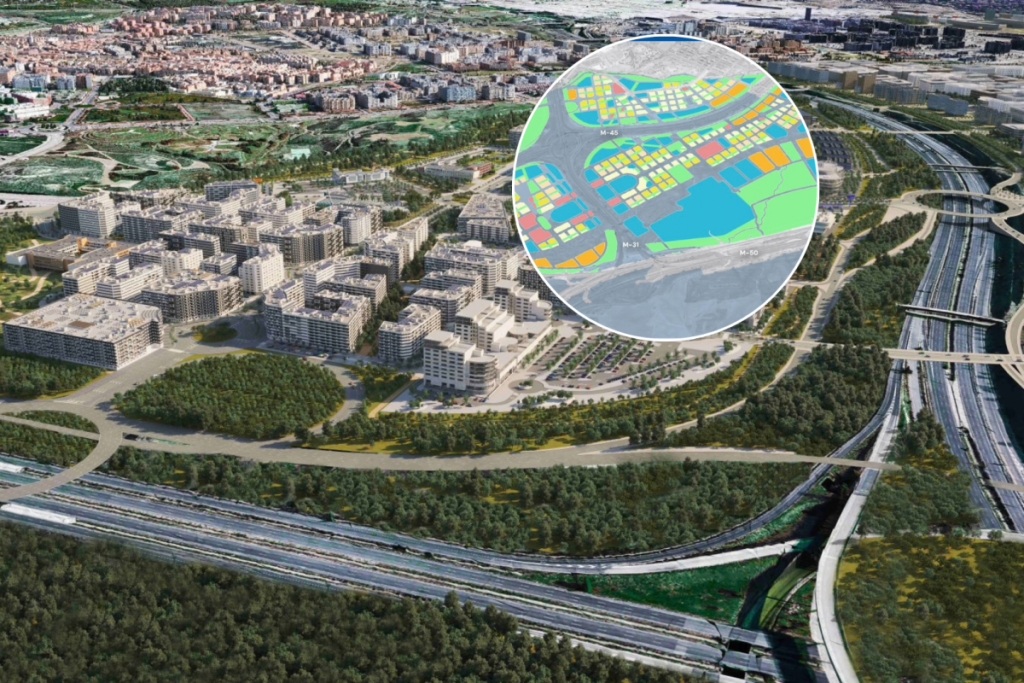

Madrid is kicking off what is being billed as the largest residential urban development project in all of Europe. On Thursday, the Governing Board approved the Valdecarros land-readjustment project, the last major area pending development in the southeast, thereby definitively zoning the land for the construction of 51,656 housing units in the Villa de Vallecas district. Deputy Mayor and municipal spokesperson Inma Sanz described it as “a decisive step” in the Madrid City Council’s commitment to expanding the city’s housing supply.
The new neighborhood will cover 19.2 square kilometers, an area comparable to that of the Malaga municipality of Torremolinos, and is designed to accommodate a population of 150,000 residents, similar to that of Badajoz. Of the total number of planned housing units, 55% (28,410) will be subject to some form of public housing protection, either through affordable sales or rentals. The development will be carried out in eight phases, three of which are already underway, and construction on the first developments—approximately 13,300 units—will begin in early 2027.
Public transportation: buses only
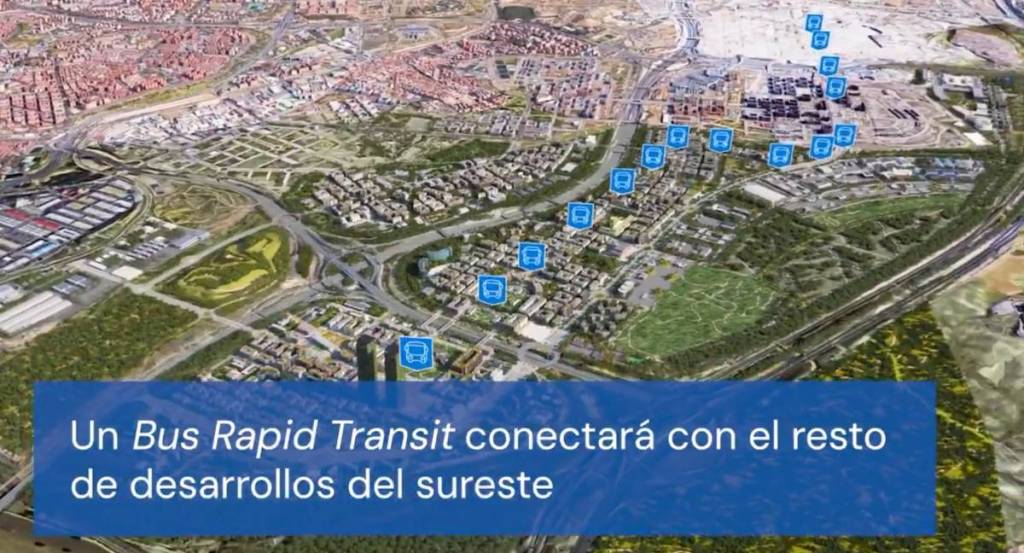
The project presented by the City Council includes 127 kilometers of pedestrian and bicycle paths and the implementation of an electric bus line with a dedicated lane and traffic light priority, with stops every 300–500 meters and a minimum service frequency of three minutes. However, no further details have been announced, nor does it appear in future Metro or Cercanías projects.
In terms of urban green space, the area will gain 700 hectares of green spaces—equivalent to six times the size of Retiro Park—and plans call for the planting of 110,000 trees, which will reinforce Madrid’s status as one of the most tree-lined cities in the world.
A major real estate investment
According to the report presented by the city government, the anticipated economic impact is significant: Valdecarros will mobilize more than 8,000 million euros in investment and generate up to 480,000 direct and indirect jobs during its construction.
The plan sets aside 349 hectares for social amenities, notably including the construction of at least one large hospital, several senior living facilities, and schools. In addition, there will be three large shopping centers, two office towers up to 44 stories tall, and 69 hectares for industrial use. The project is part of the “Southern Strategy,” the urban transformation plan that the City Council is promoting in nine districts in the southern part of the capital.