

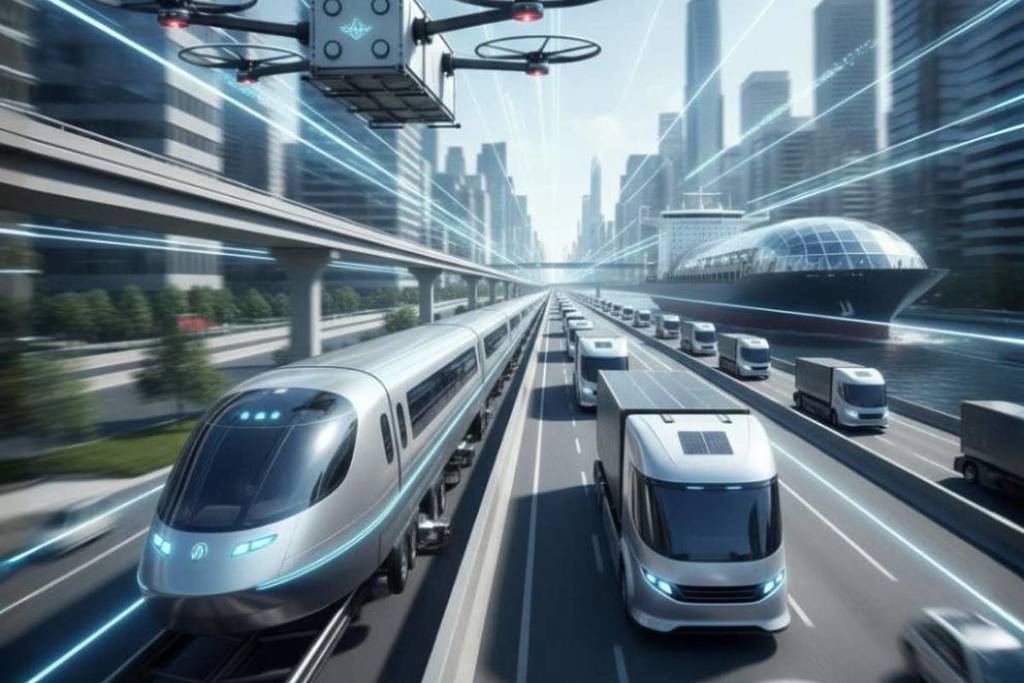
The dream of connecting Madrid and Valencia in just half an hour, traveling at speeds close to 1,000 kilometers per hour, since 2017 is not a mere sketch of science fiction. This ambitious project is based on hyperloop technology, a concept of ultra-fast transport that is being promoted with remarkable fervor in Spain by the Valencian company Zeleros. However, the promise coexists with the reality of a sector that faces gigantic technical, financial and regulatory challenges at a global level.
Zeleros, founded by former students of the Polytechnic University of Valencia (UPV), has become the main Spanish player in the hyperloop race. Its proposal is based on a system of magnetically levitating capsules that move inside tubes with air at very low pressure (almost vacuum). By eliminating friction with the rails and drastically reducing air resistance, these capsules can reach hypersonic speeds, promising to connect the two major Spanish capitals in approximately 30 minutes.
In recent weeks they are being talked about again thanks to influencers like @clau_qsi (Clau, I want to be an engineer) who recently dedicated a lengthy half-hour YouTube video to the project. But the reality at a global level is that the project that Elon Musk awakened ten years ago is not going through its best moment, and Zeleros laid off half of its staff in 2024.
The global reality: Hyperloop is faltering
Despite the Spanish progress, it is crucial to put this project with the context of the global hyperloop technology landscape, which has experienced significant setbacks, underscoring the complexity and risk inherent in this type of radical innovation.
Hyperloop technology is in a critical development phase, where commercial viability and passenger safety certification remain the biggest challenges. The closure of projects in 2023 such as Virgin Hyperloop One, the U.S. bet on this type of transportation, is a warning sign of these difficulties.
In addition, since last year there have been critical voices from experts such as Carlo van de Weijer, director of Intelligent Mobility at the Technical University of Eindhoven, who in a report in the newspaper El País explained that the hyperloop does not respond to a real problem and that according to him the idea cannot be considered “a serious transport system”.