
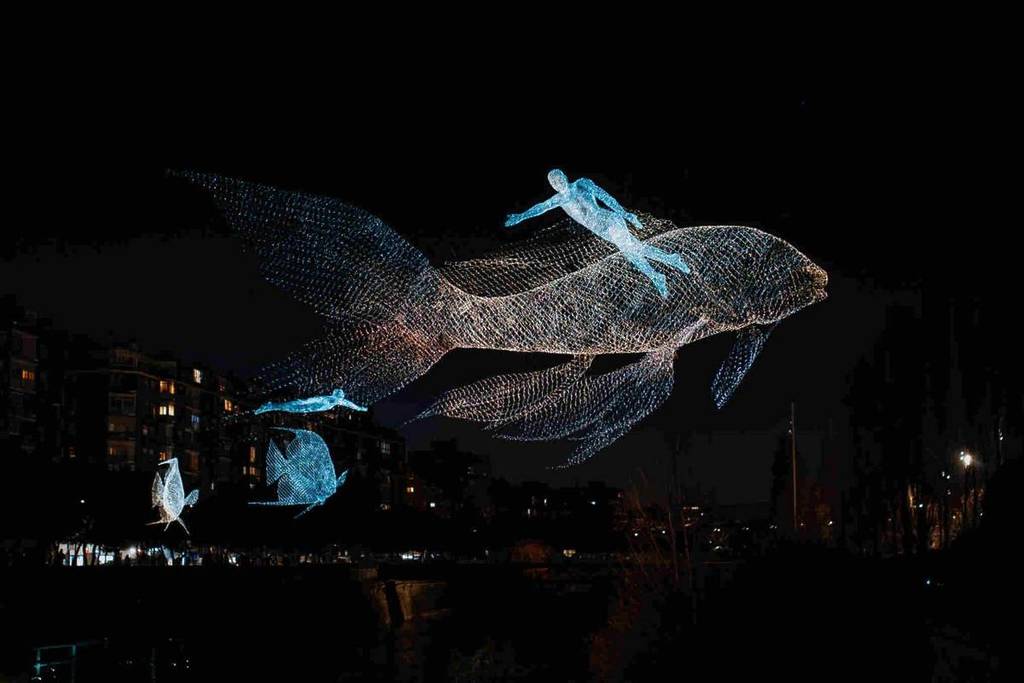

Since yesterday, Madrid has taken on a different look, a little more creative, a little more artistic. LuzMadrid 2026 celebrates its third edition from March 12 to 14 with 15 free installations that will transform Arganzuela and the Paisaje de la Luz into an open-air light art museum. Over three nights, national and international artists will turn facades, squares, bridges, dams, and historic buildings into canvases of light, sound, and projections, with a program designed for strolling, discovering, and seeing the city through new eyes.
The main focus of this edition shifts to Arganzuela, a district that preserves some of the best examples of the capital’s industrial past and Neo-Mudéjar architecture, and also extends to the Paisaje de la Luz, the area around the Prado and the Retiro, declared a World Heritage Site by UNESCO. The idea is to emphasize that the urban landscape is not just buildings, streets, or parks, but also what we experience, do, and feel within them, and that light can highlight that shared identity.
15 installations between Arganzuela and Paisaje de la Luz
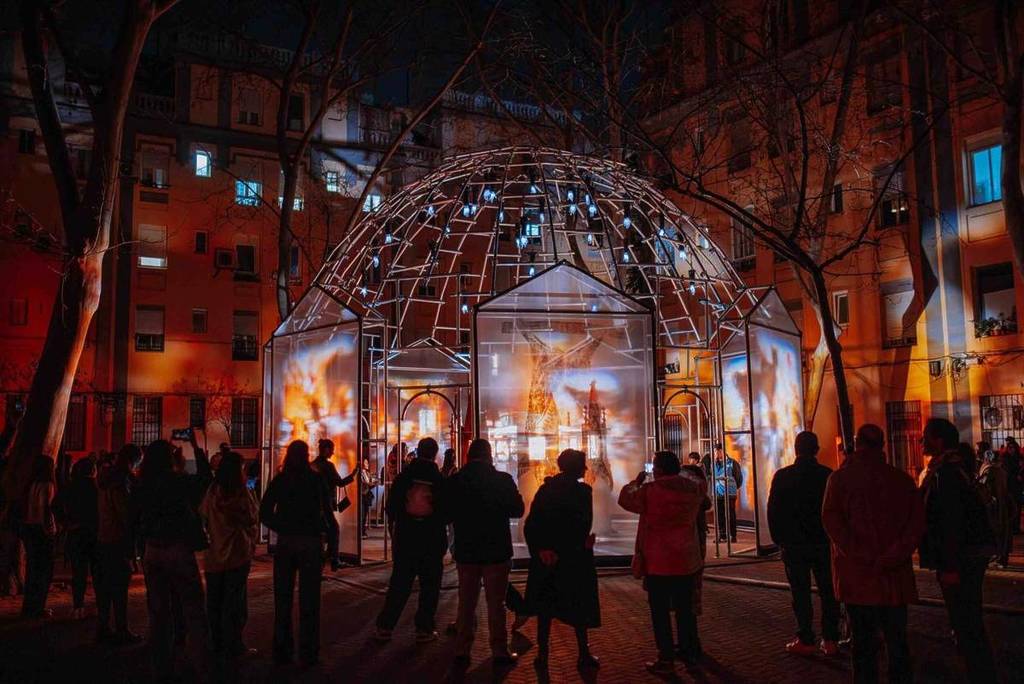
In total, 15 artistic interventions will be spread across two large areas:
- Arganzuela and Madrid Río: Glorieta de San Víctor, Matadero Madrid (Central de Diseño, Nave Una, Cineteca), façade of the Casa del Reloj, Nave de Terneras, black esplanade of Madrid Río and dam number 8 on the Manzanares River.
- Paisaje de la Luz and the historic center: the façade of the El Águila Complex, IES Cervantes, the Crystal Gallery of the Cibeles Palace, Plaza de la Villa, the Beti Jai pelota court, CentroCentro, the façade of the Círculo de Bellas Artes, and the recently inaugurated Museum of Light, as well as several associated galleries and studios.
Among the artists are names such as Gonzalo Borondo, cabosanroque + Studio Animal, Luzinterruptus, Cédric Le Borgne, Joanie Lemercier (Studio Lemercier), Sébastien Lefèvre, Quiet Ensemble, Collectif Scale, and Rafael Lozano-Hemmer, who will present works created specifically for the city or adapted to these spaces. There will be pieces that play with large projections mapped onto facades, light sculptures suspended over the river, sound installations that envelop the viewer, and “low-tech” interventions made with fabric, wind, and the smell of cleanliness, such as the proposal by Luzinterruptus.
Art, technology, and memory through the lens of light
The central theme of LuzMadrid 2026 is the dialogue between art, technology, and memory. Many of the works rely on advanced projection, programming, and lighting control systems to generate real-time experiences, yet without losing sight of the context: Arganzuela’s industrial history, the cultural memory of the Prado–Cibeles axis, or the role of water and the river as elements that shape the city.
The program also includes the Luces Emergentes (Emerging Lights) project, in collaboration with universities and design schools in Madrid (UDIT, Escuela Superior de Diseño, IED Madrid, Universidad Politécnica), which present installations designed by students and young creators within Matadero itself. With this, the festival also seeks to be a laboratory and a platform for new perspectives, not just a showcase for established names.
LuzMadrid is designed to be explored on foot, with a map in hand or downloaded to your phone, linking points of light as if they were stops on a nighttime route. The City Council emphasizes that all installations are free and open to the public, although indoor spaces such as the Galería de Cristal de Cibeles or the Central de Diseño de Matadero may have capacity limits.