

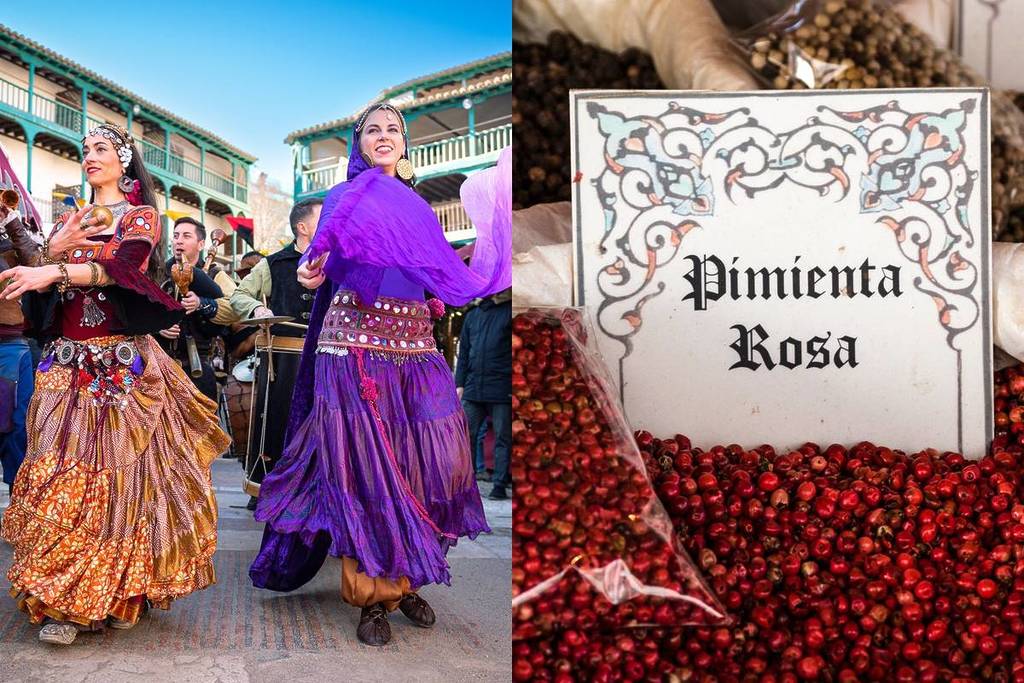
As if there weren’t enough reasons to take a trip to Chinchón, one of the best-known and most visited towns in the Community of Madrid due to its uniqueness and charm, every February another essential event is added to the list : the celebration of its great medieval market, which, incidentally, already has a date set for its 2026 edition.
Between February 13 and 15, the historic center of this Madrid town goes back in time to become an authentic medieval setting for three days, attracting thousands of visitors every year.
With locations such as its hugely popular medieval Castilian Plaza Mayor as the epicenter and backdrop, period characters and artisans fill the town with their craft stalls, traditional cuisine, and typical products in the market.
Added to this is a medieval-inspired atmosphere —including period music, decorations with banners, and characters dressed in traditional clothing— and a full program of activities for all ages, which the Chinchón City Council will announce shortly.
 Image courtesy of: Madrid City Council
However, year after year, there are usually events such as knight fights, falconry exhibitions, workshops, storytelling, parades, theater, and other traveling shows that tour the market during the three days of festivities.
Chinchón, one of the region’s “material wonders”
 Editorial credit: Shutterstock
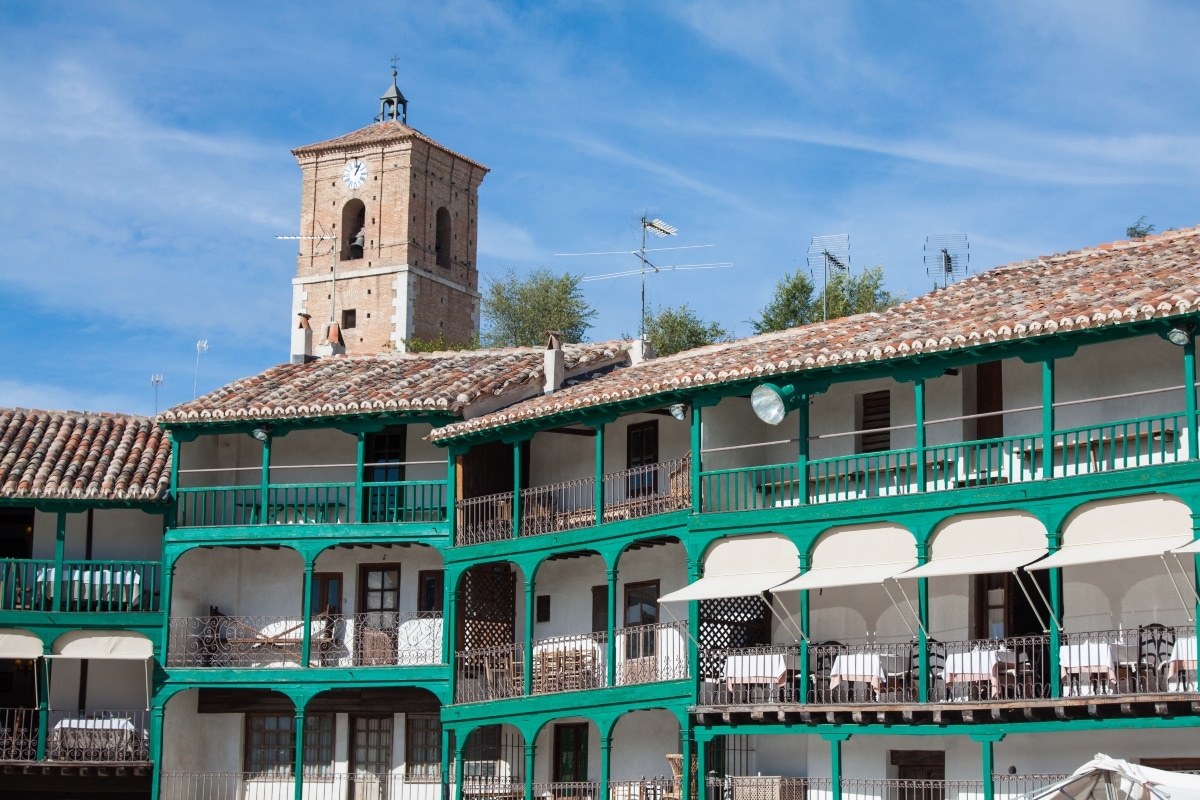
Just 45 kilometers from Madrid, this town in the southeast of the region has a main square that has been considered since 2008 (after a popular vote among 25 monuments) as “the fourth material wonder of the Community of Madrid” —for the curious, it was ahead of the University of Alcalá de Henares, the Royal Palace of Madrid, and the monastery of El Escorial.
But that’s not its only attraction: other places of interest include the Monastery of the Augustinians (partly converted into the current Parador de Turismo hotel), the Clock Tower (the only surviving part of the old Parish Church of Nuestra Señora de Gracia) and the Casa de la Cadena, where Philip V stayed one night on his way through Chinchón in 1706.
All this, together with its gastronomy—which draws on typical products such as anise, oil, garlic, and wine— makes it an attractive destination at any time of year for soaking up the Castilian history of its streets, which have even inspired film directors such as Wes Anderson.