
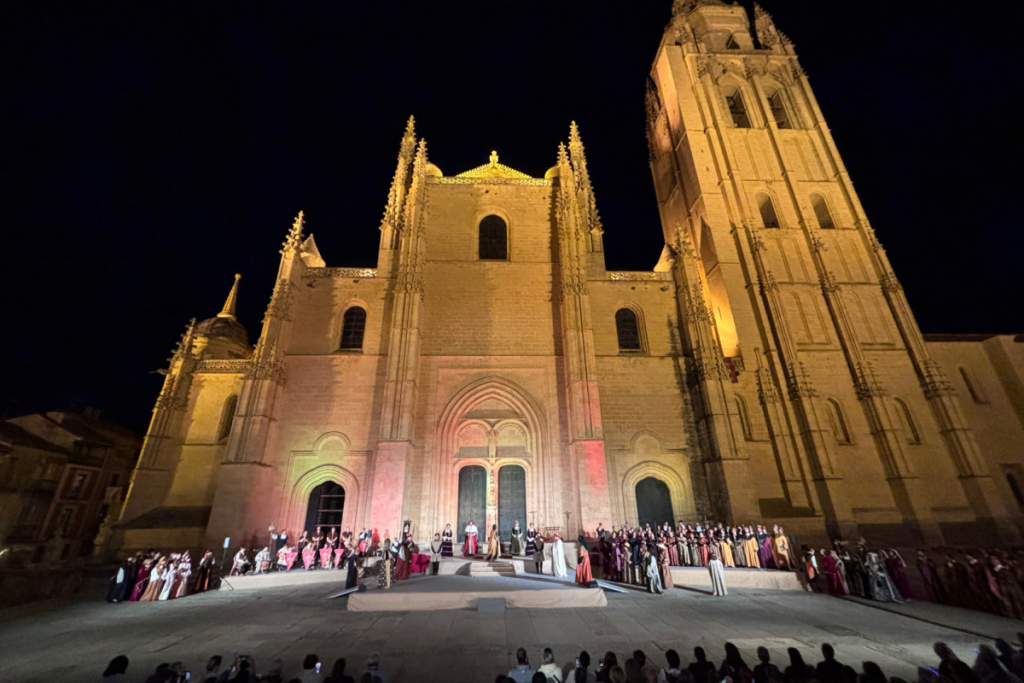

Segovia, 1474. Isabella has just been proclaimed Queen of Castile, and the entire city is preparing to relive the moment. On Saturday, October 3, this historic moment will be celebrated: the reenactment of the Proclamation of Isabella the Catholic. Despite the forecast of bad weather for that date, the event will still take place in the Aula Magna at IE University in Segovia, the former Convent of Santa Cruz la Real. (Purchased tickets remain valid, and no changes are necessary.) And for those who can’t wait until Saturday, there’s plenty to do, because the entire week leading up to it—from September 28 to October 4—Segovia will be filled with free activities set in the 15th century.
Why did this coronation change the course of Castile’s history?
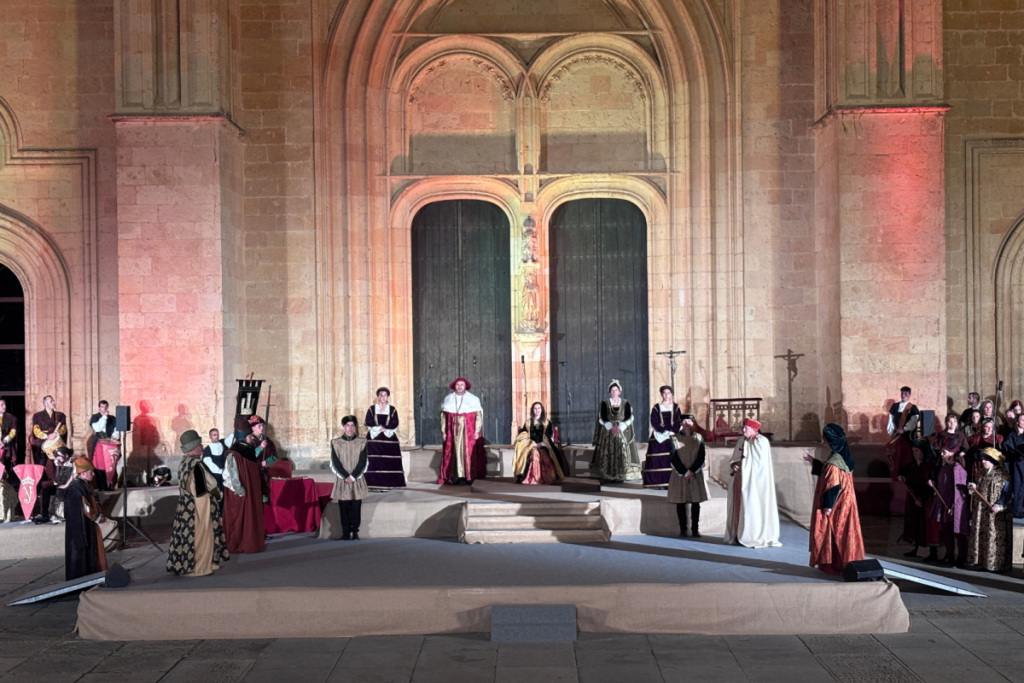
It was no ordinary coronation. When Henry IV, Isabella’s brother, died in 1474, the line of succession to the throne of Castile was far from clear. Isabella was in Segovia at the time, and she acted quickly: she had herself proclaimed queen right there, on December 13, 1474, before anyone could challenge her claim to the throne. It was the first step in a reign that, later combined with that of Aragon alongside Ferdinand, would ultimately change the map of Spain and the entire world. That is why Segovia is not just any setting for this reenactment. It is the exact place where it all began.
The day Segovia returns to the 15th century
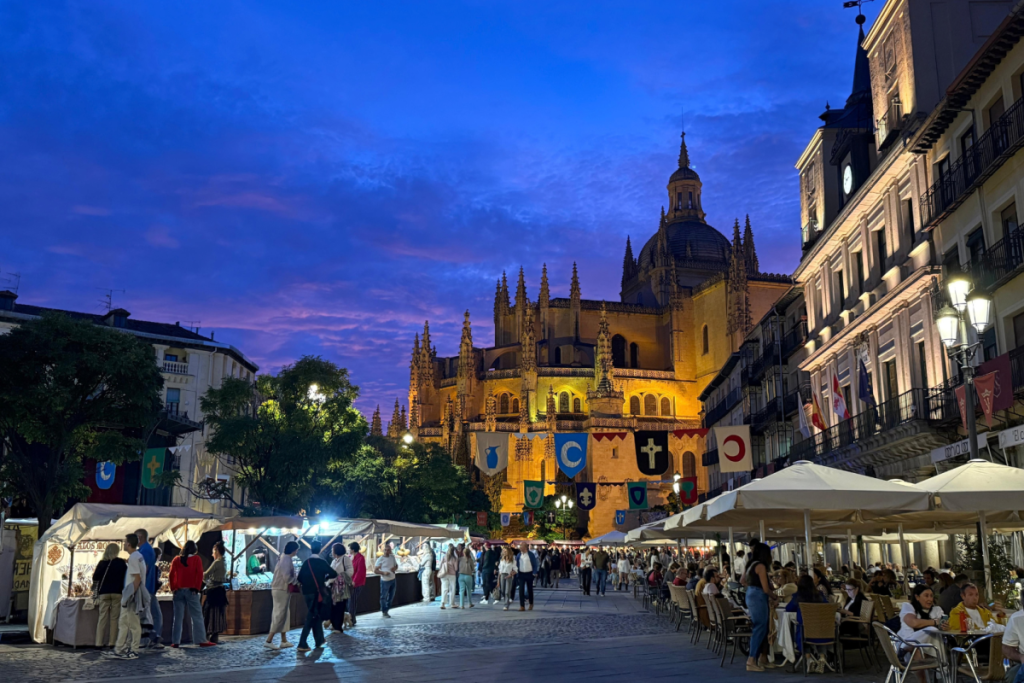
On Saturday, October 3, the city will stop time. At the Aula Magna, the Proclamation of Isabella the Catholic will be reenacted exactly as it took place on December 13, 1474, with the royal procession winding its way through the streets from the Real Alcázar to the Plaza Mayor.