

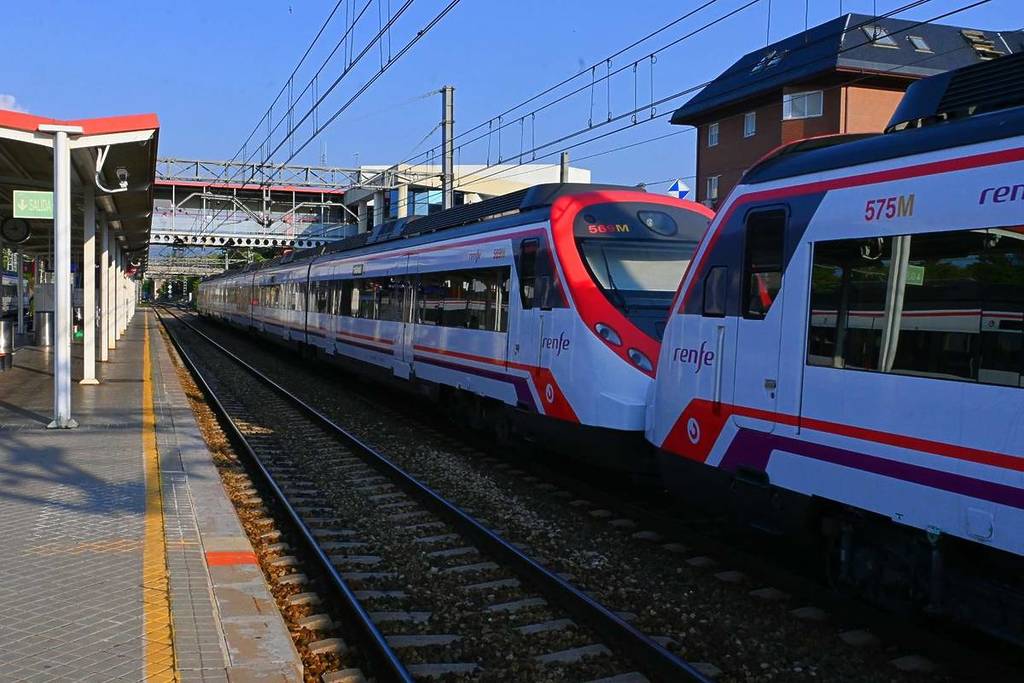
The story of the train to Warner, one of the greatest exponents of the waste of infrastructure in the Community of Madrid, adds a new chapter: the regional government has been ordered to pay 7.56 million euros more for a commuter train line that has not been used for 13 years and whose construction cost about 85 million. The infrastructure, the C-3a branch line between Pinto and San Martín de la Vega, was inaugurated in 2002 to connect Warner Park and the municipality with the Cercanías network under Gallardón’s government, but his successor, Esperanza Aguirre closed it definitively in 2012 due to lack of passengers and low profitability.
The new bill comes from a judgment of the High Court of Justice of Madrid, which obliges the Community to pay a compensation of 7,560,102.77 euros to a mining company for the expropriation of the rights to exploit gypsum in the area of Monte Espartinas, land necessary to lay the track at the time. The court considers “insufficient” the compensation of just over one million euros that the Territorial Jury of Expropriation had fixed in 2022, and also reproaches the Madrid Executive for the delay of two decades in resolving the compensation.
A train that will still not work
The line, which came to have 15.3 kilometers of electrified double track, catenaries and specific stations for the theme park, was already partially dismantled years ago to save about 3 million per year that meant its maintenance, despite being closed. Renfe stopped operating it in 2012, and since then the Community has unsuccessfully sounded out both the central government and private operators to reopen the service; a year ago, the regional executive itself admitted that the reopening is unfeasible without state support.
With this new compensation, the “train to Warner” reinforces its reputation as a fiasco. It is a millionaire work, with a total cost close to 100 million if we add infrastructures and other associated commitments, which has not been in service for more than a decade, but continues to generate judicial and political costs. For San Martín de la Vega, which has been calling for years for the recovery of the line as a tool for mobility and development, the ruling is yet another reminder of a lost opportunity that today seems more distant than ever.