
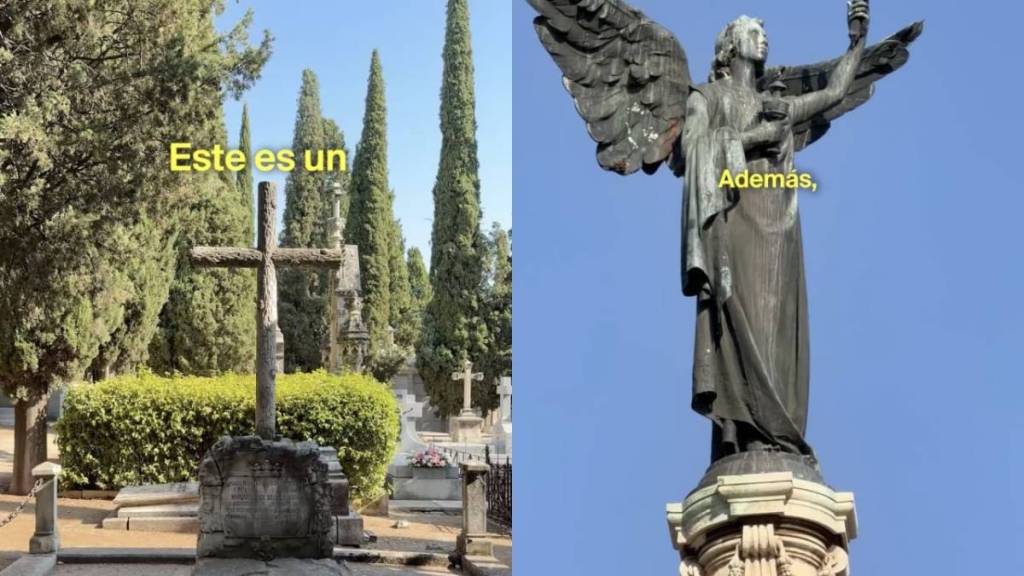

A small reptile carved from stone rests discreetly on a grave at the San Isidro Sacramental Cemetery. It is a decorative element characteristic of so-called “rustic-style” tombs, a design inspired entirely by Romanticism that sought to imitate the aesthetic of graves found at crossroads or in small villages. These graves, adorned with crosses carved to resemble logs and surrounded by wildflowers, evoke the landscapes that captivated Romantic-era writers.
A few meters away, a second grave of a similar style features another carved lizard, though in this case it is decapitated, a testament to the ravages of time or the wars that have ravaged the monumental site.
Bronze Survivors from the Front Lines
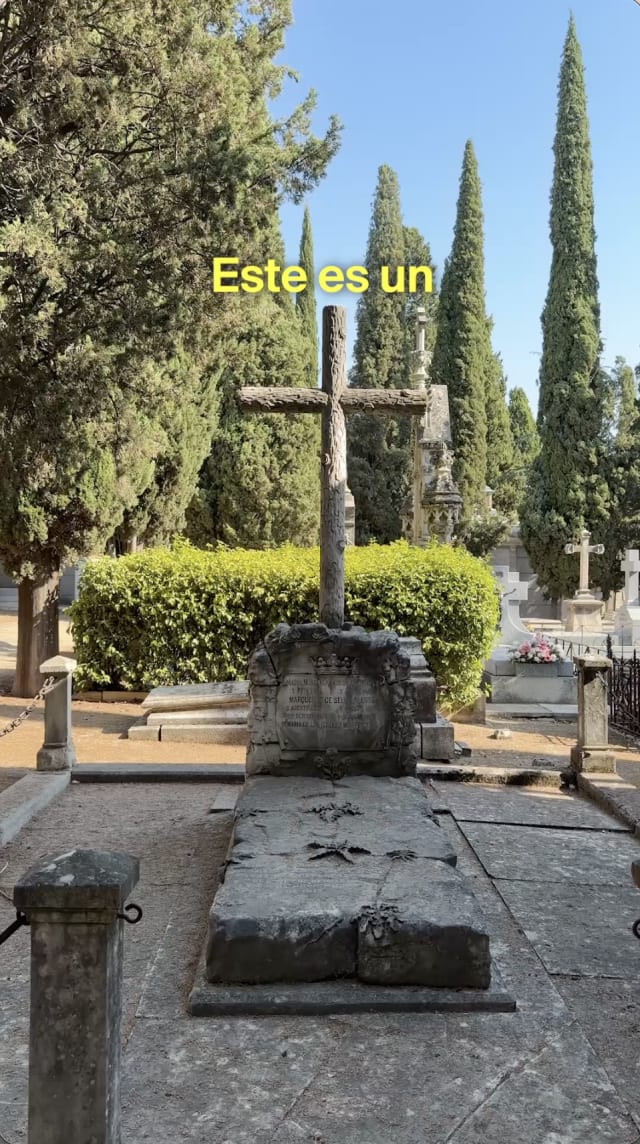
Beyond the details carved into the stone, this Madrid cemetery stands out for what is present and what is absent from its mausoleums. An imposing figure of an angel rises above one of the domes, one of the very few original bronze pieces still preserved here. During the Civil War, the cemetery found itself on the front lines, resulting in the loss of much of its monumental metal heritage. The sculptures and ornaments were removed and sent to foundries to be transformed into military equipment and weapons.
The confirmation that this angel survived the conflict without being melted down is due to the meticulous documentation of the era. The inauguration of these imposing mausoleums was no minor affair; rather, it constituted a true social event widely covered by the press. Thanks to photographs published in historical newspapers, it has been verified that the current figure is, in fact, the original sculpture erected more than a century ago.
Pyramids, Shipwrecks, and the Architecture of the Capital
The bronze angel does not stand alone but engages in a visual dialogue with other unique monuments. Right next to it, a pyramid-shaped tomb reflects the strong early 20th-century trend of establishing stylistic connections with Ancient Egyptian architecture, an aesthetic movement that left its mark on the city.
Completing this unique architectural ensemble, the mausoleum belonging to one of the few Spanish survivors of the Titanic tragedy stands opposite the pyramid. The heritage value of this funerary structure takes on a new dimension once you learn about its creator: the architect Eduardo de Adaro. Not only did he design the final resting place for the shipwreck survivor, but he was also responsible for designing and constructing one of the capital’s most important institutional buildings, the iconic Bank of Spain building.