

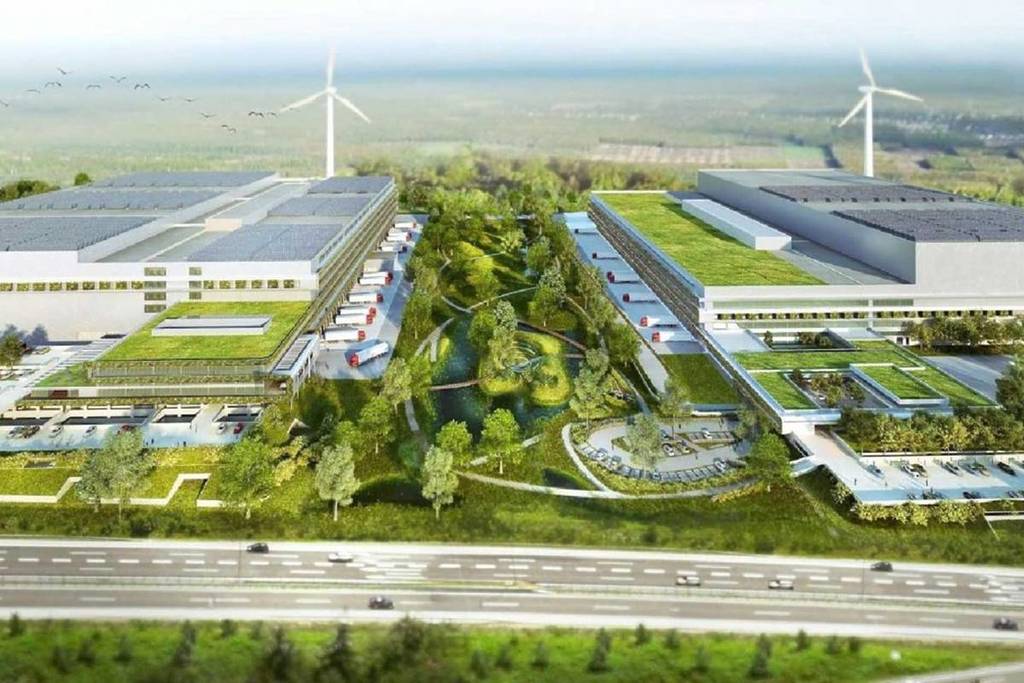
The south of Madrid is about to experience an unprecedented transformation in the logistics and economic sphere with the arrival of two private mega-initiatives: Ergon Park Valdemoro and Ergon Logistic Park A-42, in Torrejón de Velasco. Both projects, promoted by Ergon Group, represent the largest investment and job creation project in the recent history of the region, positioning these municipalities as future hubs for transport, logistics and industry 4.0 in the center of the peninsula.
Ergon Park Valdemoro is positioned as the largest logistics park in the area, with a planned extension of more than 250 hectares and a strategic location next to the A-4 and the M-506, in a key junction of road and rail connections. The complex is conceived as an integral business ecosystem: in addition to storage and distribution warehouses, it will include an intermodal terminal (dry port), circular economy and environmental regeneration facilities, green areas, bicycle lanes, electric charging infrastructure and spaces for university education and logistics entrepreneurship.
A few kilometers away, the Torrejón de Velasco park (Ergon Park A-42) is moving forward with a similar strategic profile, although it is differentiated by an even deeper commitment to digitalization. Covering 161 hectares, the park will incorporate 68 hectares of state-of-the-art logistics warehouses using “digital twin” technology: comprehensive management of operations and services in real time -from 24/7 security and environmental control to maintenance and internal traffic- with energy efficiency systems, coworking areas and a joint logistics training platform in collaboration with the Carlos III University.
The new logistics parks in southern Madrid
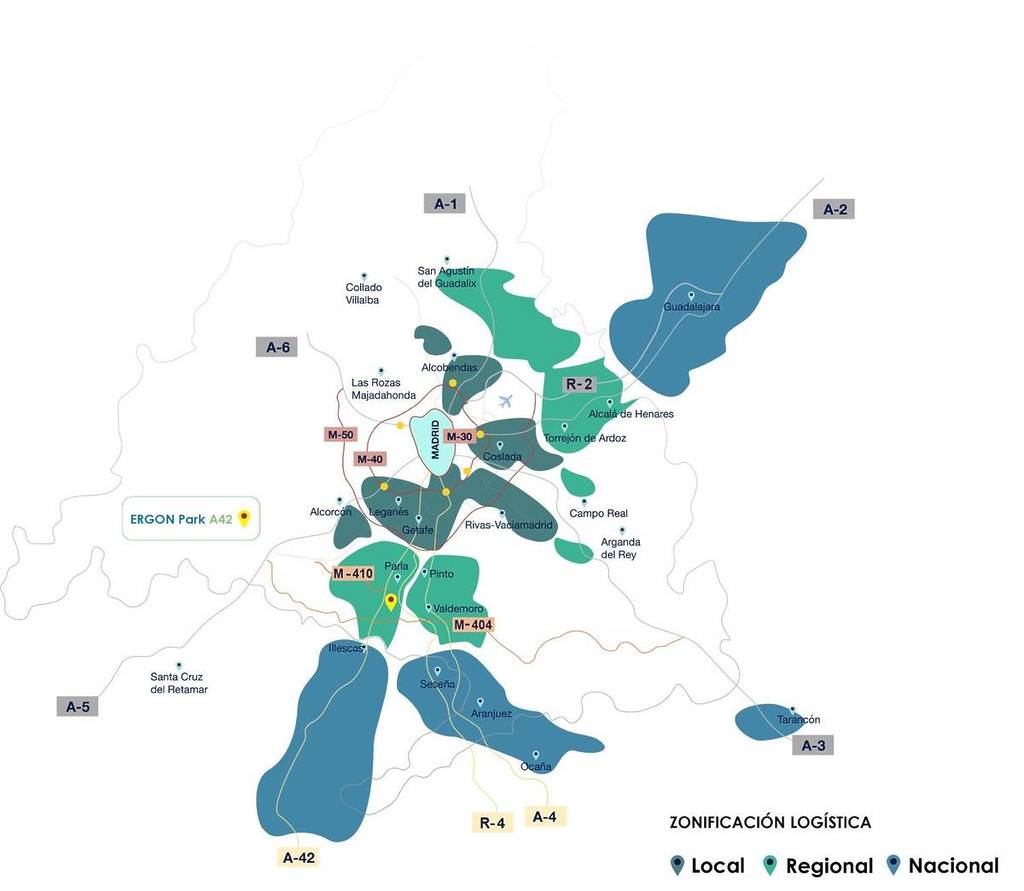
Between the two complexes, tens of thousands of jobs are expected to be created: in Torrejón de Velasco alone, close to 11,500 direct and indirect jobs are estimated (20% of unemployment in the region), with an annual fiscal impact of more than 22 million euros and the projection of a new axis of dynamism for other nearby municipalities.
These parks, approved as Regional Scope Projects due to their strategic interest, also include agri-environmental commitments and natural regeneration actions in collaboration with custodian entities to minimize the impact on the environment and on protected species.
However, the macro-project also faces criticism from environmental groups, such as the Asociación Ecologista del Jarama, who warn of its impact on urban planning (doubling the current extension of the municipality and affecting the environment of protected steppe birds such as the common bustard) and on local mobility, as it foresees the circulation of thousands of vehicles, including trucks, less than 100 meters from sensitive areas such as the El Catón school.
The company explains on its website that it is “developing a formula of sustainability that integrates”, thanks to the fact that all the roofs of the buildings will have photovoltaic installations, and the residents of the municipality themselves will be able to join a future local energy community linked to the park.
The construction phase will begin at the end of 2027 after the initial approval and the urban planning process. Their location and state-of-the-art technology aim to turn both areas into a key pole for investment and employment in southern Madrid, which has traditionally been relegated to the north of the region.