
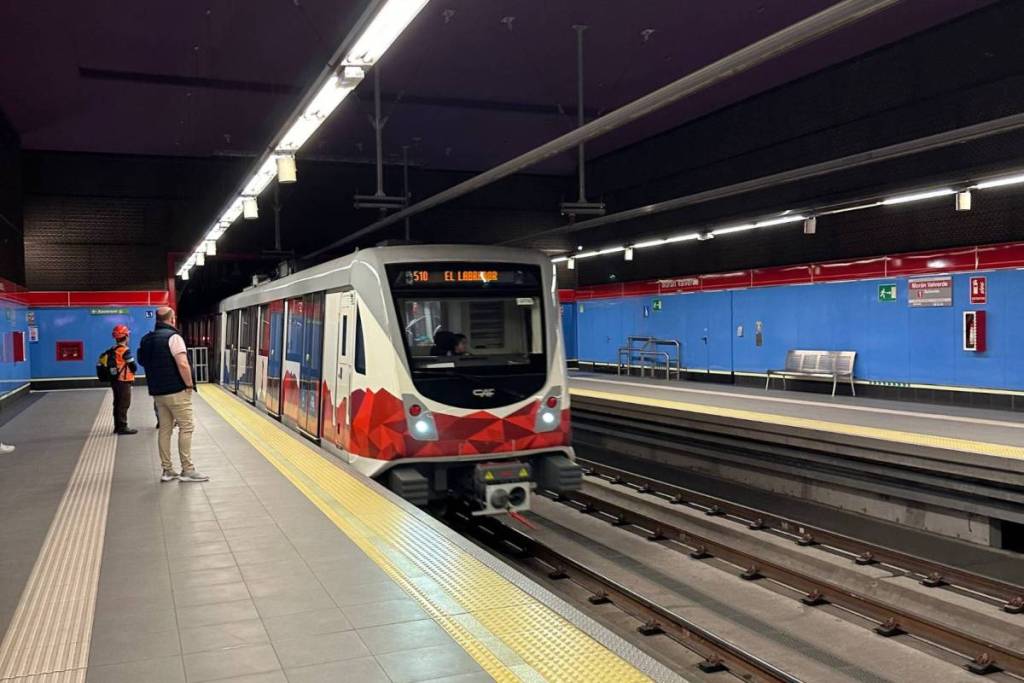

Travelers from Madrid who use public transportation in Quito or Santo Domingo may experience an immediate sense of familiarity when they step onto the platforms. On the other side of the Atlantic, thousands of kilometers away, the subways in these two Latin American capitals feature the same color codes, identical directional signs, and an overall aesthetic that seems straight out of Madrid’s subway system. These visual similarities, which turn the three systems into parallel universes, are due to the direct involvement of Spanish professionals and institutions in their creation.
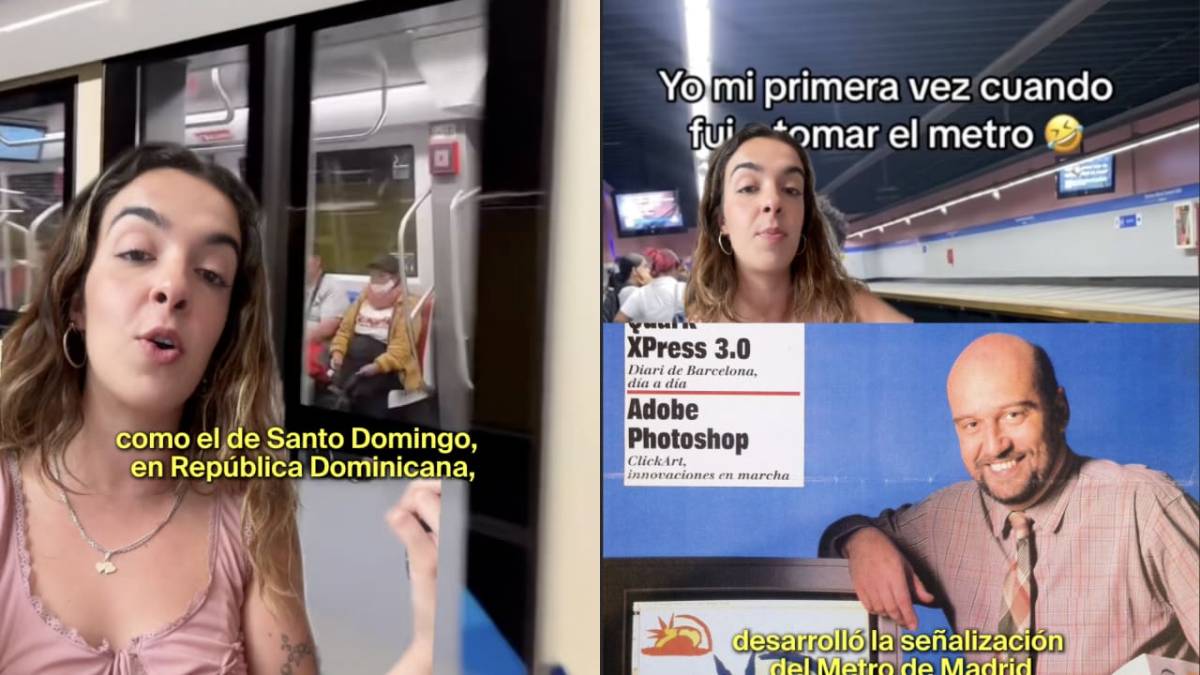
The creator of Madrid’s visual identity, in Ecuador
The person responsible for the fact that Quito’s infrastructure in Ecuador shares virtually all of its visual elements with the Spanish capital is designer Arcadi Moradell. During the 1980s, Moradell was commissioned to revamp and develop the entire signage system for the Madrid Metro. His studio produced designs that are now icons of the city, most notably the well-known diamond-shaped logo, as well as the corporate typography and the structure of the signage systems that guide passengers through the corridors and stations.
After establishing the visual identity of Madrid’s transit system, his connection to rail design once again proved pivotal nearly four decades later. In 2019, Moradell was commissioned to work on the visual identity of the new Quito Metro project. His direct involvement in the Ecuadorian design led to the replication of the same aesthetic and functional patterns he had already implemented in Spain, thus explaining the striking resemblance between the two subway systems.
Corporate consulting in the Dominican Republic
The similarity seen in the Santo Domingo Metro has a different origin, though one equally linked to the Spanish transit network. In the Dominican Republic, the shared elements reminiscent of Madrid’s design stemmed from a collaboration that accompanied the Caribbean network from its earliest stages.
Since 2006, the Madrid Metro has provided direct consulting services for the Dominican project. During this process, operational plans and visual elements were shared and ultimately incorporated into the final infrastructure. This transfer of knowledge resulted in Santo Domingo’s stations adopting a design that closely mimics the style of the facilities in the Spanish capital.
In both the Ecuadorian and Dominican capitals, the legacy of Madrid’s original design remains visible in the daily use of the facilities, maintaining a tangible link through their passenger guidance systems.