
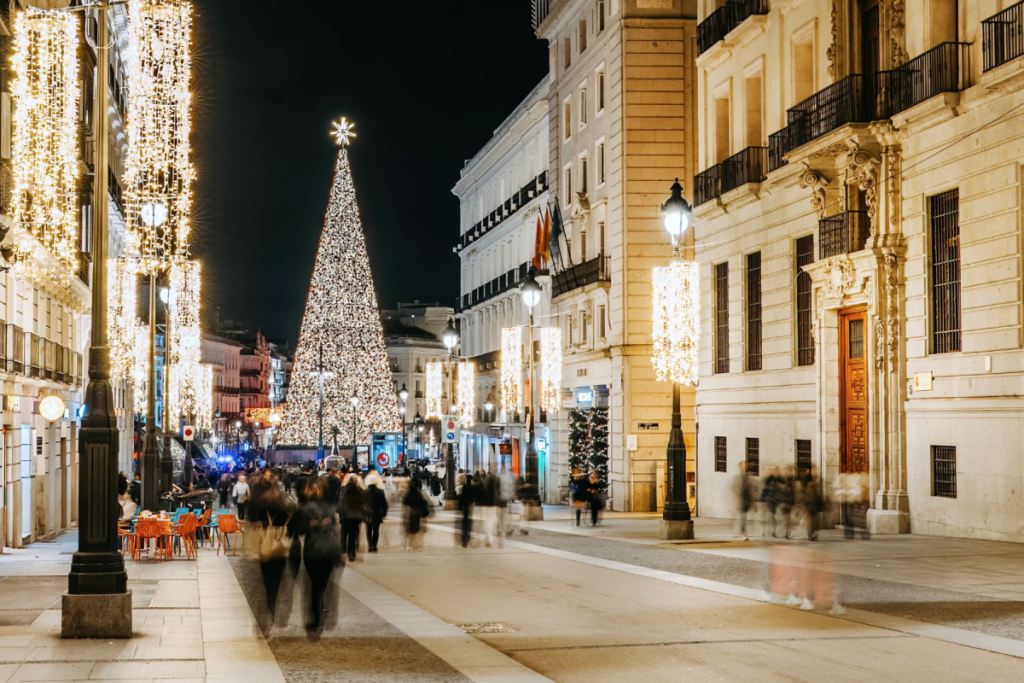

Spain will switch to standard time in the early hours of Saturday, October 24, to Sunday, October 25, 2026, leaving any trace of summer behind. In Madrid, as in the rest of the Iberian Peninsula, the Balearic Islands, Ceuta, and Melilla, clocks will be set back one hour: at 3:00 a.m., the time will revert to 2:00 a.m. In the Canary Islands, the adjustment will take place at 2:00 a.m., when the time will be 1:00 a.m. The date is set forth in Order PCM/186/2022, published in the Official State Gazette, which establishes the schedule for time changes between 2022 and 2026.
The delay will mean that Sunday will officially last 25 hours and will provide an extra hour of rest for those who maintain their usual wake-up time. Starting that day, sunrise and sunset will occur one hour earlier according to the clock than they would without the adjustment. The change does not alter the amount of sunlight each day, but rather its distribution throughout the day. It is especially important to check analog clocks and devices that do not have automatic time updates enabled.
Standard time will remain in effect for about five months, until Sunday, March 28, 2027. That early morning, daylight saving time will begin again: on the mainland, at 2:00 a.m. it will be 3:00 a.m., while in the Canary Islands, the time will change from 1:00 a.m. to 2:00 a.m. The date is already listed in the European calendar published in March 2026, which also sets the next return to standard time for October 31, 2027.
Although October 25 is the last date included in the Spanish calendar for 2022–2026, that does not mean it will be the last time change. The end of that schedule does not eliminate the system: the European Commission has already published the dates for the adjustments between 2027 and 2031. Therefore, under current regulations, Spain will continue to set clocks forward on the last Sunday in March and set them back on the last Sunday in October.