


There is nothing more ungrateful than opening an article with a truism, but when you leave Ancestral you can’t help but think about it: bringing simplicity to excellence is probably the greatest challenge in the kitchen. Not because the cooking here is simple -it is not-, but because the dishes that shine the most refer to a deeply recognizable part of the Castilian recipe book: tripe, garlic soup, ear, bread with chocolate. Cooking from memory, taken to a terrain of precision, technique and uncommon ambition.
You come to Ancestral with a palate ready to understand that here you come to eat what you have always eaten, but never as you have eaten it before. You don’t eat like in your grandmother’s house -if your grandmother were Castilian- because that would be unfair to Victor Infantes’ cuisine; but without that domestic cuisine, without that tradition passed on, Ancestral simply wouldn’t exist.
Smoke, fire and clay
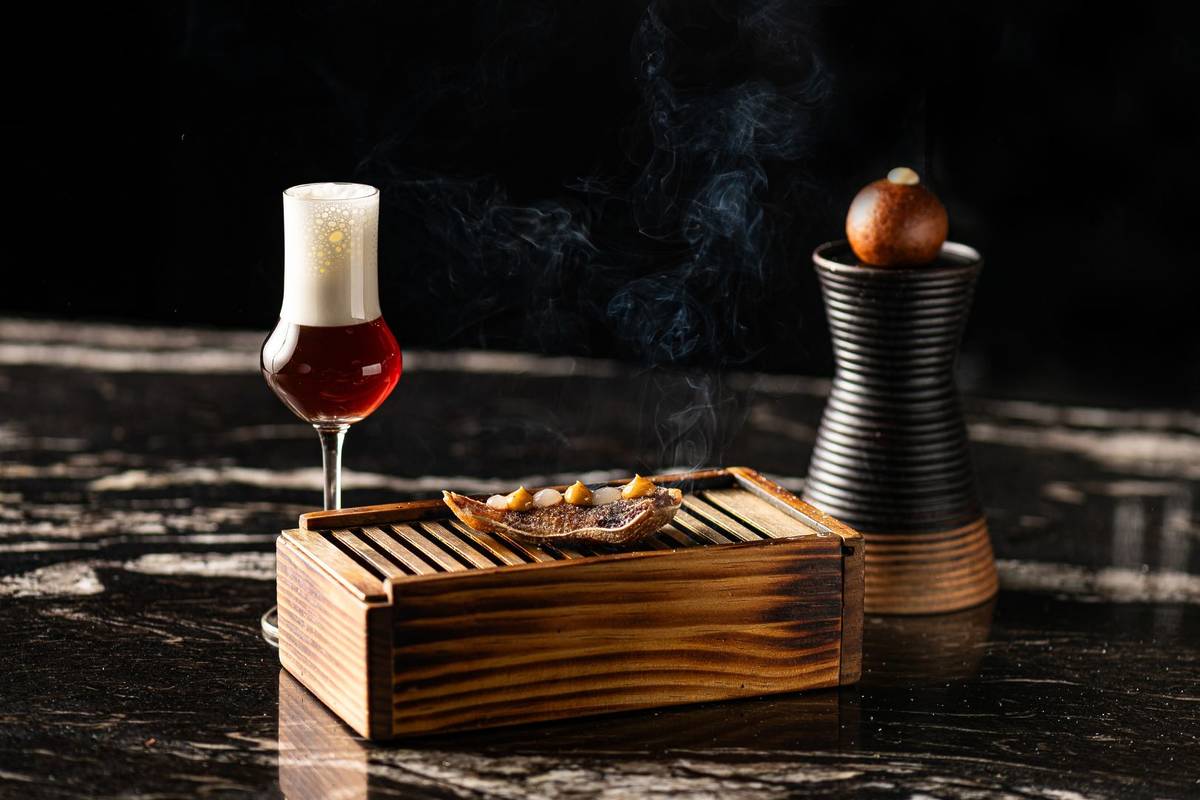
The proposal is articulated around three very clear axes: smoke, fire and mud. These are not aesthetic concepts or hollow words, but real tools that run through the menu. The clay, for example, is not a wink: it is technique. Garlic soup served in a clay pot, light but deep, with well-measured bacon, is one of those dishes that explain an entire restaurant. The same goes for the onion in three textures, directly memorable.
The menu has a narrative, internal logic, temporality and self-imposed limits. Here you don’t eat anything you wouldn’t eat in Castile. The only concession to the sea comes in the form of a cod cococha, salted and desalted at home. There is no need to go to the Strait of Gibraltar for tuna when the chef works with uncommon brilliance with products such as trout, eel or crayfish.
Because a great menu is also that: imposing restrictions and playing within them.
After dishes like the Castilian black hen yolk with trumpets, the beef tongue with jerky or the ear reinterpreted with absolute respect for the product, one does not come out the same person. Nor after that garlic soup that, without being heavy, leaves a lasting impression.
Uncompromising desserts and a cuisine with ambition
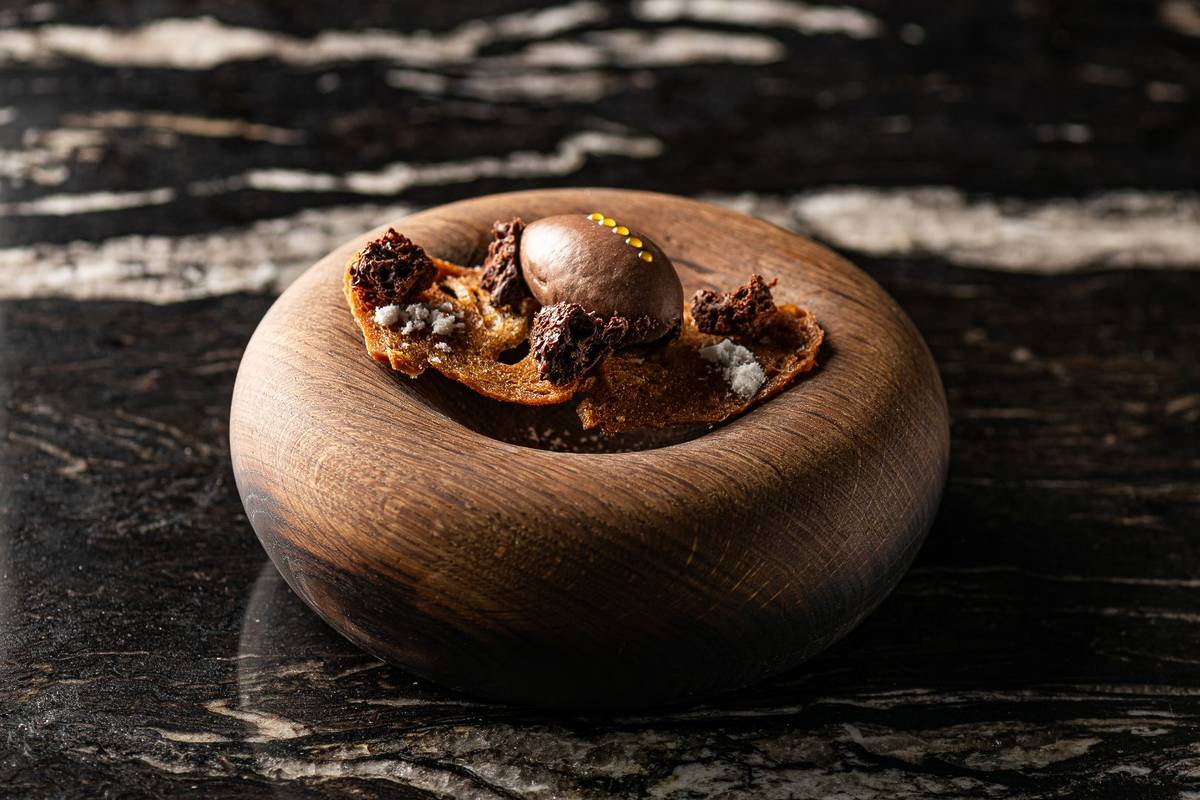
The sweet chapter maintains the level of the tour: a real festival of ice cream, which dismantles the false idea that desserts are a formality in gastronomic menus. Lemon ice cream with sheep yogurt, burnt milk ice cream, chocolate ice cream… simple in appearance, extraordinary in execution. Once again, a look at the product with a precise technical twist, never gratuitous.
Víctor Infantes creates traditional dishes deeply rooted in the land, using ancient techniques -such as cooking in clay pots- reinterpreted from a contemporary perspective. His career partly explains this maturity: he has worked alongside big names such as Marcos Granda at Skina, spent time at Madrid’s Club Allard and was part of the Azurmendi team with Eneko Atxa, with whom he also worked in London. In 2019, at the helm of Clos, he earned his first Michelin star.
Ancestral yesterday, today and tomorrow
Ambition is an explicit part of his chef’s discourse. When asked about goals, Infantes doesn’t hide: a Michelin star is not enough for him. And when asked where he sees himself in ten years, he answers without hesitation: with three stars.
Ancestral, the project of Víctor Infantes and Saúl González, has obtained a Michelin star in its new location in Madrid, consolidating a meteoric trajectory: born in Illescas in 2022, star in its first year, move to Pozuelo and new confirmation by the guide.
If Ancestral were in Velázquez or Gaztambide, it would be a place of pilgrimage. The distance should not deceive anyone.
The restaurant has a dining room for 30 diners and a private space for another 10. Annexed to the main project is Brassafina, a more informal proposal focused on grilled meats and fish, with the vocation of a terrace.
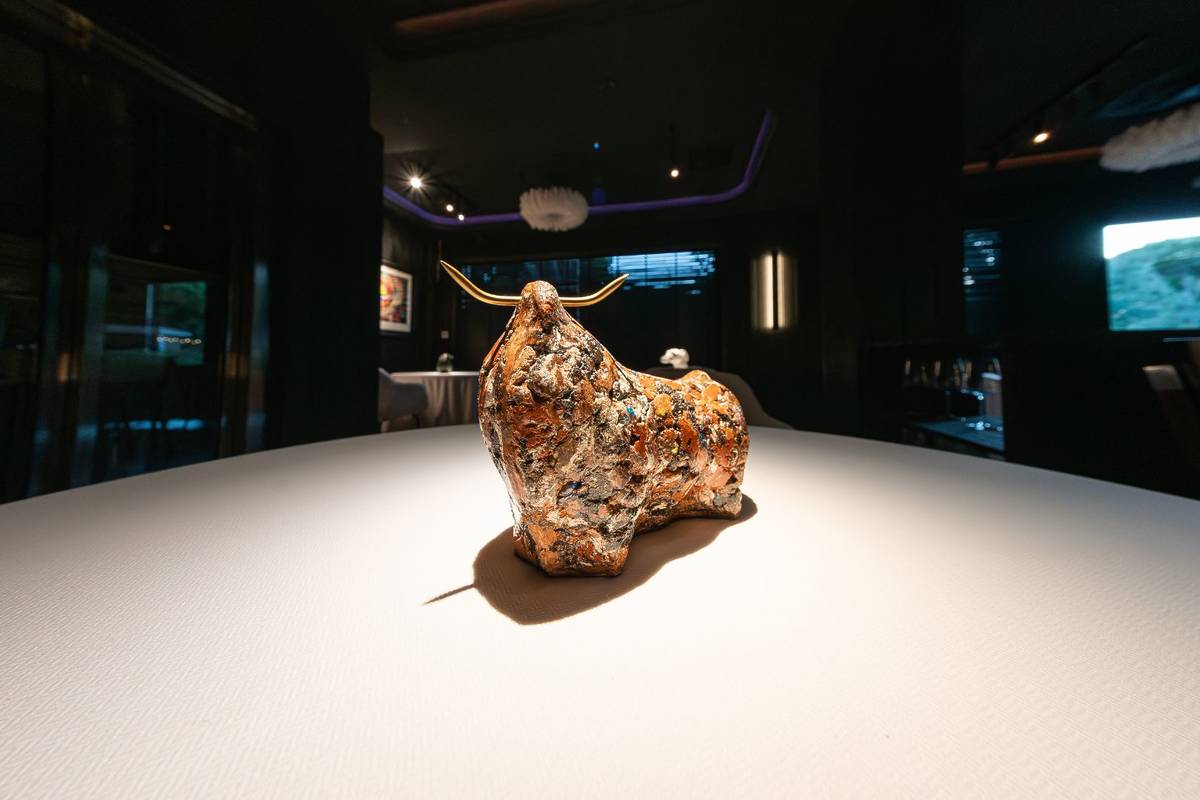
The decoration, sober and elegant, maintains artistic references to the Ancestral de Illescas: sculptures by Pedro Rodríguez “Pedrín” on the tables, exposed kitchen, wine cellars and a palette of natural and dark tones. The tableware -with unique pieces of wood and stone- and the glassware have been completely renovated. On the walls, serigraphs by Miguel Caravaca, with rotating temporary exhibitions.