
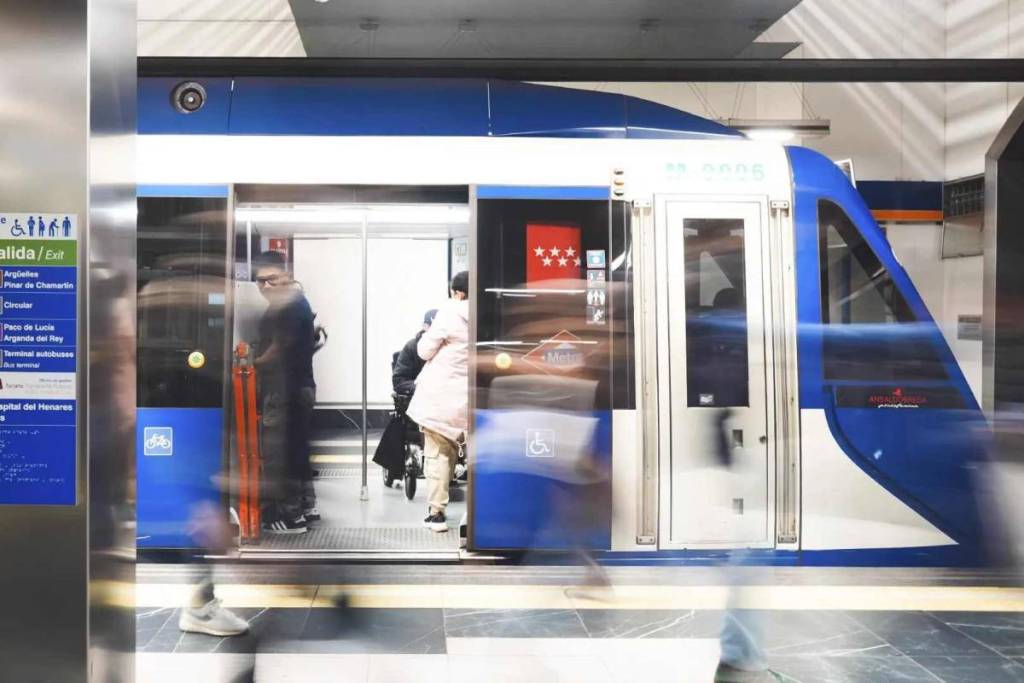

Madrid Metro Line 6 will again experience service disruptions over two consecutive weekends due to the tests required to complete its automation. On Saturdays and Sundays, September 26 and 27, as well as October 3 and 4, no trains will run between Cuatro Caminos and Lucero, a section that includes stations such as Moncloa, Argüelles, Príncipe Pío, Puerta del Ángel, Alto de Extremadura, and Lucero.
The suspension will last for continuous 48-hour periods and is part of the safety testing program for the new automated trains on the line known as the Circular. Metro will provide a special, free bus service on the surface to cover the affected route during both weekends.
Which stations will be affected
The suspension will affect the section of Line 6 between Cuatro Caminos and Lucero, passing through Moncloa. Therefore, the following stations on the Circular Line will be without Metro service: Cuatro Caminos, Guzmán el Bueno, Metropolitano, Ciudad Universitaria, Moncloa, Argüelles, Príncipe Pío, Puerta del Ángel, Alto de Extremadura, and Lucero along the route affected by the tests.
Cuatro Caminos and Lucero will remain open but will serve as temporaryterminal stations. In other words, passengers will be able to use Line 6 from both ends to travel to the sections that remain operational, but they will not be able to cross the closed section between those two stations via the Metro.
Free buses during the service interruption
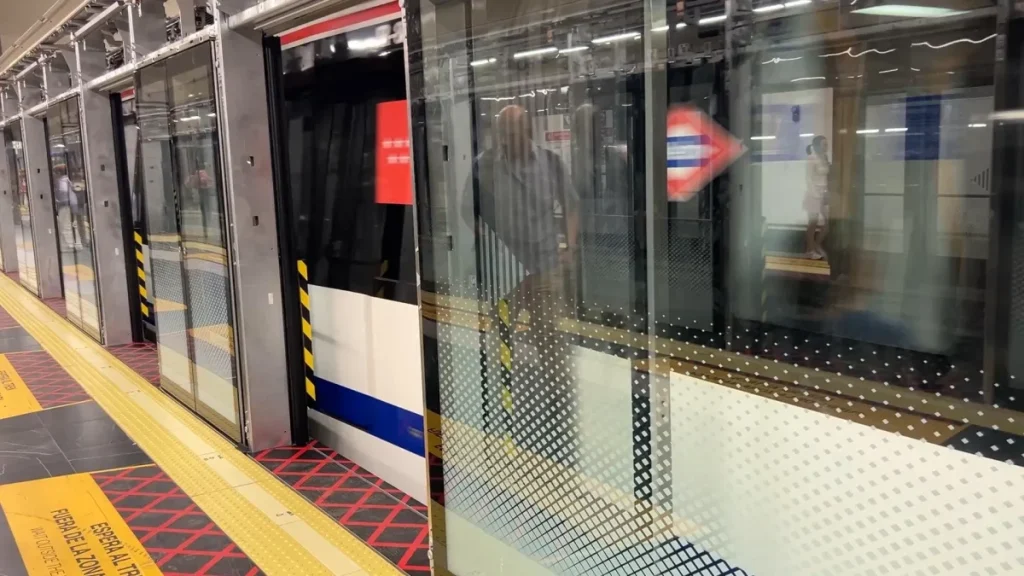
To minimize inconvenience, Metro de Madrid will launch a special, free bus service that will run along the route affected by the closure. The buses will connect the Cuatro Caminos and Lucero stations, with stops near the intermediate stations on Line 6 that will be without trains during the tests.
Passengers are advised to allow more time than usual for their trips. The replacement bus service will maintain connections between the affected neighborhoods, but the surface route will be subject to traffic conditions and may be slower than the usual underground route, especially around Moncloa, Ciudad Universitaria, Príncipe Pío, and Paseo de Extremadura.
Those who need to travel between downtown and the university area may consider alternatives such as Line 3 at Moncloa, Line 7 from Guzmán el Bueno, Line 10 at Príncipe Pío, or the network of city and intercity buses. The best combination will depend on your starting point and destination, so it’s a good idea to check your route before leaving.
Why Line 6 Is Closing Again
This new service interruption comes after a summer of intensive work on Line 6. The Circular has undergone several phases of partial suspension since August to install platform doors, adapt stations, and prepare for the arrival of new driverless trains. The line resumed full service in early September, but the construction work now requires specific safety tests to be conducted on weekends.
During the scheduled closures, two of the new automated trains will run along the route without passengers to test the coordination between the trains, the signaling system, the platform doors, and the station control systems. These tests will be conducted at various speeds and are necessary before the automation system goes into service.
The choice of Saturdays and Sundays is intended to minimize the impact on regular commutes to work and school. Even so, the service interruption will coincide with leisure activities, sports games, college visits, trips to the Casa de Campo, and journeys between downtown and the city’s western neighborhoods.
More service disruptions through the end of the year
The closures on September 26 and 27 and October 3 and 4 are the first in a series of service interruptions on Line 6 that will continue over several weekends through the end of 2026. The Community of Madrid has not yet provided details on all the dates and sections that will be affected following these first two closures.
Therefore, passengers using the Circular line on Saturdays or Sundays should check the service status before beginning their trip. Updated information will be available on the official Metro de Madrid app, through its passenger information channels, and at the stations.