
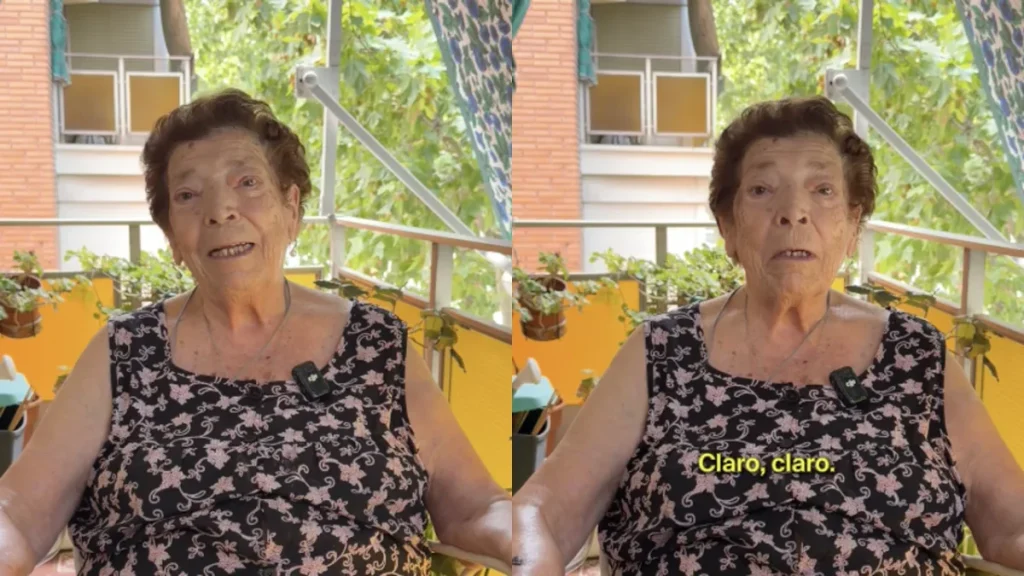

Goya, now 91, still remembers the heavy ironing irons with which she and her colleagues smoothed out soccer player Alfredo Di Stéfano’s curtains and Dr. Gregorio Marañón’s shirts. For years, she worked in the now-defunct trade of ironing. It was physically demanding and meticulous work that women like her performed for some of the leading figures in mid-20th-century Madrid, at the height of Franco’s dictatorship.
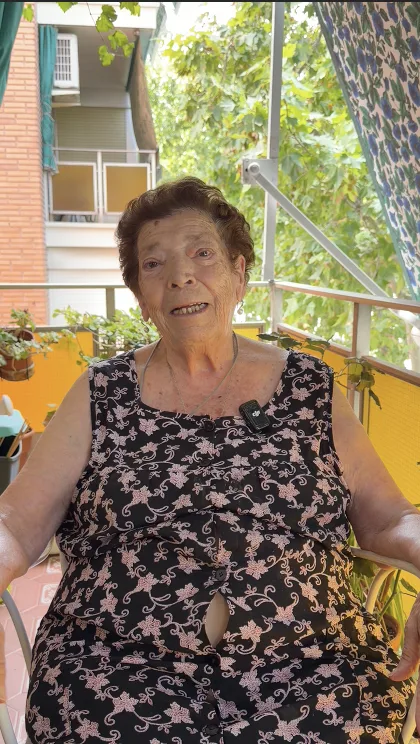
Her first foray into the profession came about unexpectedly. Initially, she had been hired as a housekeeper, but the lady of the house where she worked suggested that she learn the trade of ironing instead.
At just twenty years old, Goya began working in a workshop located at number 4 on Marqués de Villamagna Street (in the Salamanca neighborhood, right next to Paseo de la Castellana). It was “a large room, where there were four workers ironing, and the boss,” she recalls. There, Goya lived on the premises; she slept and went about her daily life in the same workshop where she worked during the day.
A demanding job for which she was paid only 150 pesetas a month
Goya’s days began by lighting a large stove, called the “infiernillo.” In those days, when electric irons were not yet available, the workers heated the solid-iron irons over the fire. The clothes were treated with starch to give them stiffness and structure, so the metal irons would get dirty from constant use. Once they cooled down, the maids had to wash them carefully before putting them back on the heat, the woman explains.
Using small heated curling irons, the ironers would “curl” the clothes—that is, create cylindrical folds (called “rizos”) in the fabric. The craft also involved bringing out the proper sheen in the garments, a task that required great physical effort, as the women had to press the heavy irons against the ironing boards with great force.
If the job itself was demanding, the hours were no less so. Goya and her colleagues’ workday stretched from 9:00 a.m. to 7:00 p.m. For this technical and exhausting work, her monthly salary was around 150 pesetas (equivalent to €0.90 today, without adjusting for inflation).
Shirts for aristocrats and curtains for soccer players
The clothes of a large portion of the regime’s high society—including marquises and counts— passed through the tables of that workshop in the Salamanca neighborhood. Goya recalls that among the commissions were also the dresses of “the Caudillo’s granddaughters, ” the shirts of Gregorio Marañón, as well as those of bullfighters and rejoneadores (such as the Peralta brothers), and the curtains of the legendary soccer player Di Stéfano.
Over the years, Goya eventually left the ironing shop to take over a doorman’s position. However, she has never lost the skill she acquired with the iron. Now, at ninety-one years old, she recounts that when her sister-in-law suggests she let a younger woman iron her clothes, she is taken aback: “How are they going to iron for me?” The idea still seems unthinkable to her: “I can teach others how to iron, but they’re not going to iron for me.”