
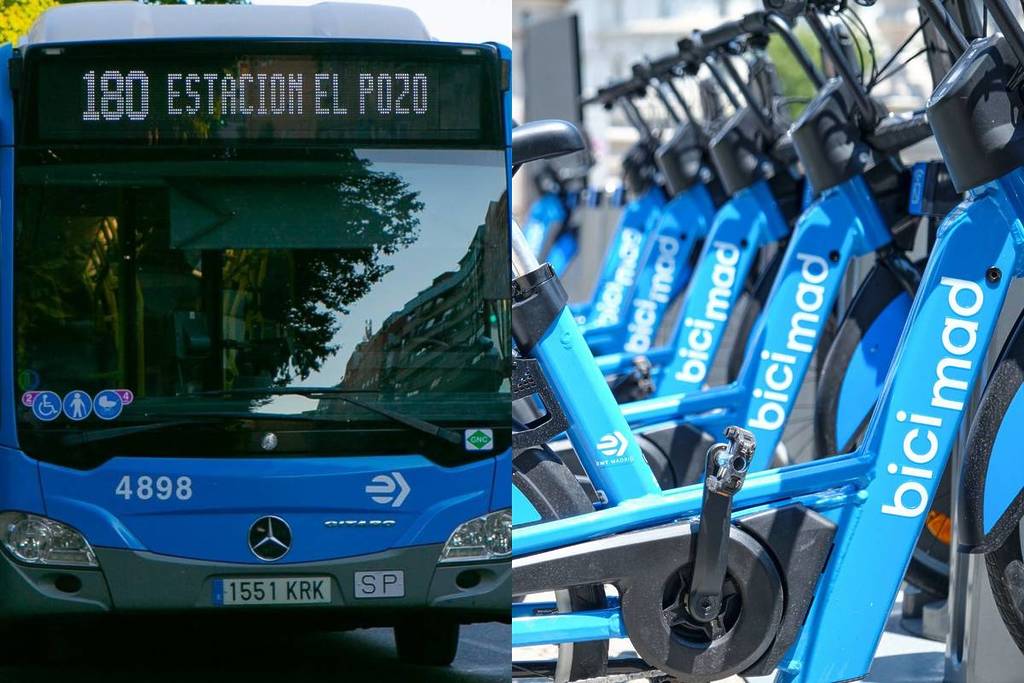

Madrid is preparing for one of the busiest weeks in recent memory. Bad Bunny ’s concerts , the Book Fair, and Pope Leo XIV’s visit, scheduled for June 6–9, will require extensive transportation measures throughout the capital, and City Hall has already confirmed one of the main measures: EMT buses and Bicimad will be free from June 3 to 9.
The decision comes in anticipation of large crowds at various points throughout the city, especially along the Castellana-Recoletos axis, Plaza de Lima, and Cibeles, where some of the main events of the papal visit will take place. Mayor José Luis Martínez-Almeida acknowledged that these will be “challenging” days for mobility in Madrid and has asked companies to facilitate teleworking and offer flexible schedules during that week.
More buses and detours in downtown Madrid
The increase in public transportation will be particularly noticeable during the weekend of June 6 and 7. The Municipal Transportation Company will add up to 184 additional buses, an increase of about 25% over the usual service scheduled for those days.
The measure aims to accommodate the increase in passengers and offset the disruptions that numerous lines will face due to traffic closures. According to the city’s plan, nearly fifty lines will be affected by temporary detours in the most central areas.
City Hall insists that the best option for getting around during those days will be to leave your car at home. It is no coincidence that Madrid is once again turning to free EMT service: the city has already used this approach during periods of high pollution, when people return to work after vacations, or on days with major events to try to reduce private vehicle traffic.
All taxis will be allowed to operate during the main days

The transportation plan will also affect the taxi industry. As an exception, all licensed taxis will be allowed to operate on June 6 and 7, including vehicles that would normally be on their day off. The goal is to increase transportation capacity during peak times when crowds are expected to be largest.
At the same time, the City Council will set up large peripheral areas to manage the arrival of buses and pilgrims. These include IFEMA, Valdebebas, and the Caja Mágica, which will serve as support hubs to prevent overcrowding in the city center.
Traffic restrictions will begin gradually in the days leading up to the Pope’s arrival and will continue until after his departure. The Prado-Recoletos-Castellana corridor will be one of the most affected areas, with intermittent closures and access controls depending on the scheduled events.