
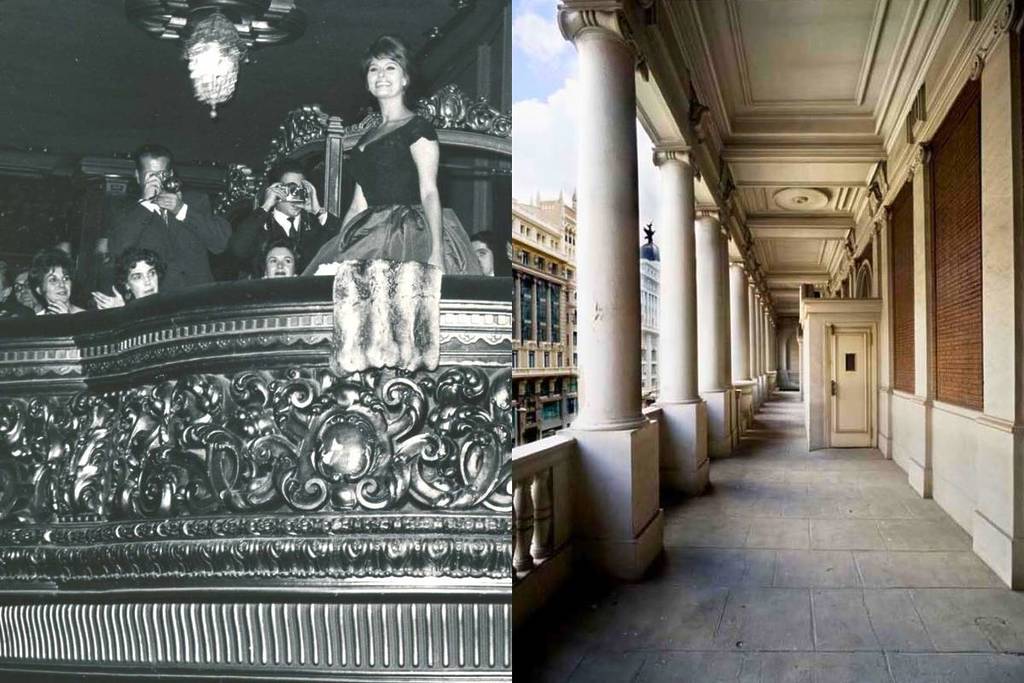

It’s hard to believe there could be any secrets in plain sight of the thousands of people who stroll down Gran Vía every day. But this year marks the 100th anniversary of a building that has long been a bittersweet symbol of the city: a protected palace steeped in history, which has been closed since 2008 and whose reopening was announced for 2026… but which is still waiting for construction to actually begin.
Just a few meters from Callao, its monumental facade remains fenced off and silent on Madrid’s busiest street, while the interior changes hands and projects, amid failed plans to turn it into a store, promises to restore it to cultural use, and, more recently, the arrival of a new owner who claims to want to reopen it as a major 21st-century performance venue.
A century of history right on Gran Vía
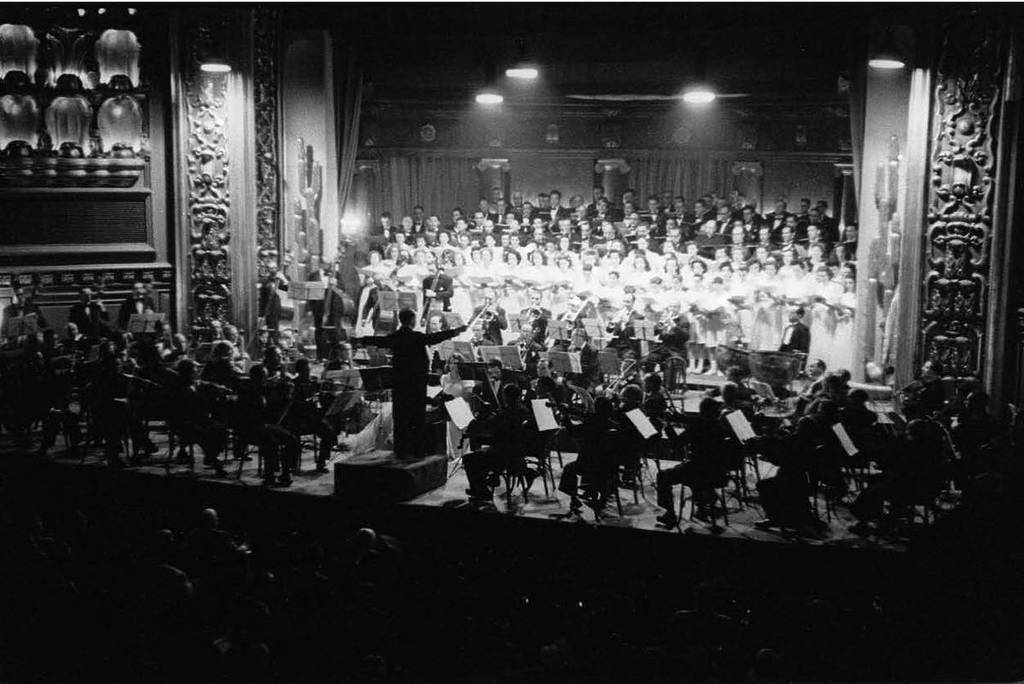
The Palacio de la Música opened in 1926 at 35 Gran Vía, designed by architect Secundino Zuazo, with the intention of serving as a concert hall and movie theater for the Sociedad Anónima General de Espectáculos (SAGE). For decades, it was one of the great temples of Madrid’s entertainment scene: first as a concert hall, then as a movie theater where legendary films such as “Gone with the Wind” and “Gilda” were screened, and later as a two-screen complex following a renovation in 1982. It closed its doors for good on June 22, 2008, after more than 80 years of continuous operation, at the height of the boom that saw the cinemas on Gran Vía transformed into stores and other commercial uses.
That same year, the building was acquired by what was then the Caja Madrid Foundation (now the Montemadrid Foundation), with the stated aim of restoring it and maintaining its cultural use. Since then, the Palacio has gone through more than a decade and a half of plans, permits, and projects: a time during which its façade has remained part of the Gran Vía landscape while the interior lay in darkness, with the public wondering if they would ever again walk through those doors to attend a concert or a musical.
Closed for nearly 20 years: what has happened inside
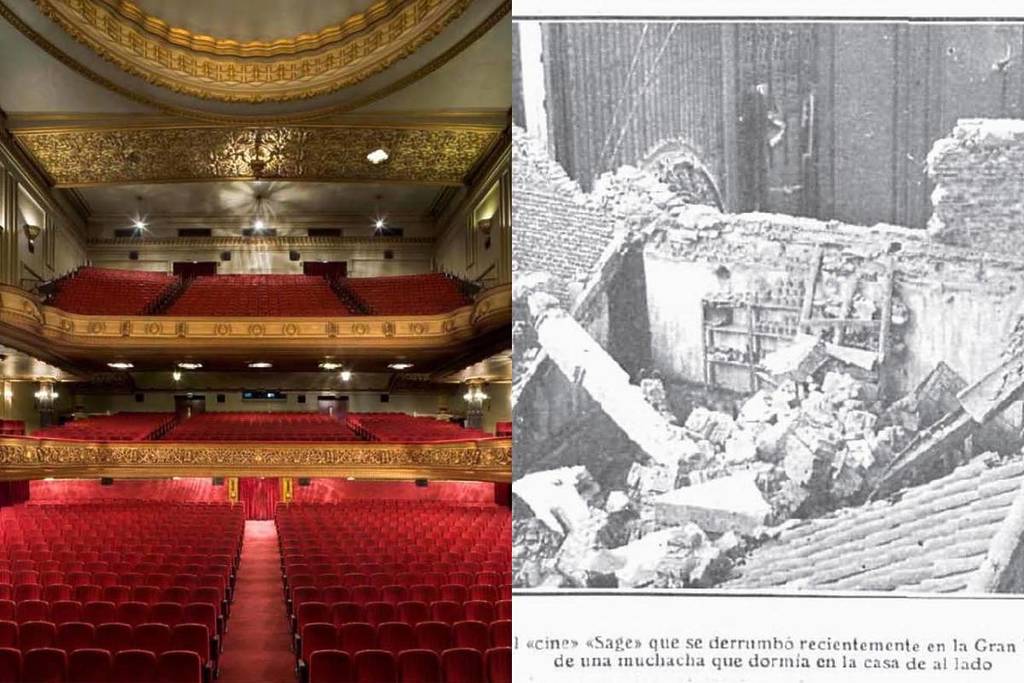
The timeline of its closure helps explain why it is perceived as a symbol of broken promises. In 2005, the City Council changed the building’s designated use, allowing for its commercial conversion, but plans to turn it into a large fashion store ran into public opposition and were blocked by the building’s heritage protection status. In 2020, twelve years after its closure, the City Council’s Urban Development Department gave the green light to the Montemadrid Foundation’s project to renovate it as a theater and performing arts venue, with permits covering a renovation area of approximately 6,600 m² and an estimated construction period of 24 months.
The Foundation itself explained that its goal was to respect the building’s original elements—which are part of the comprehensive preservation catalog—and restore it as a cultural landmark on Gran Vía, featuring a large performance hall, a multipurpose room on the upper floor, and a glass-enclosed space opening onto the street at the balustrade. However, the process took longer than expected: first, the project had to be adapted to meet heritage and safety requirements; then, permits had to be processed; and by 2025, the foundation acknowledged that it had focused on “obtaining a permit for a renovation project in accordance with Madrid’s institutions,” having secured the final permit just a few months prior.
The reopening promised for 2026
For years, the City Council’s official tourism website and various media outletspointed to 2026 as the expected reopening date, coinciding with the centennial of its inauguration. The idea was to bring the Palacio de la Música back to life as part of Madrid’s “Broadway,”adding it to the Gran Vía theater and musical circuit in the year of its 100th anniversary.
As the centennial approaches, however, the situation is far from clear. Despite the permit and plans on paper, no significant transformations or visible construction work can be seen on the building from the street—a fact that makes it difficult for the construction schedule to align with an actual reopening in 2026. The Montemadrid Foundation itself admitted in 2025 that the construction contract had not yet been awarded and that the board of trustees was reviewing bids and management models to ensure that the Palace would once again become a cultural and leisure landmark in the capital.
Following this hiatus, the Palacio de la Música was sold last year to the Swiss investment group Zephyros, with the commitment that the building would be restored as a cultural space and that the proceeds would be used to bolster the foundation’s activities. The new owner has committed to undertaking an extensive renovation over the next three years to transform the building into a state-of-the-art facility, while respecting its heritage value and architectural history.
The proposed project envisions a versatile and contemporary space, with more than 7,000 m² spread across several floors, a large auditorium with around 1,200 seats (expandable to accommodate up to 1,800 attendees thanks to a retractable seating system), and a program combining music, theater, exhibitions, and conferences. The City Council has given the green light to this new plan, which emphasizes maintaining the building’s cultural use despite the temptation to transform it into a mere commercial space—a decision that sets it apart from other former movie theaters on Gran Vía that have been converted into stores.
An architectural and emotional icon
Beyond deadlines and permits, the Palacio de la Música is a building steeped in symbolism for Madrid. Designed by Secundino Zuazo —the same architect behind the Casa de las Flores and part of the Nuevos Ministerios complex—it combines a monumental neoclassical façade with an interior hall that, in its day, was a paragon of modernity and acoustics. The Ionic gallery cornice, the columns, the decorative vases, and its corner location at the intersection of Gran Vía and Calle de la Abada have established it as one of the most recognizable landmarks along this thoroughfare.
For several generations, moreover, the building is not just architecture: it is memory. It was the site of film premieres and concerts; it witnessed the transition from large-scale movie theaters to more compartmentalized spaces; and it hosted great international artists of the caliber of Sophia Loren.