
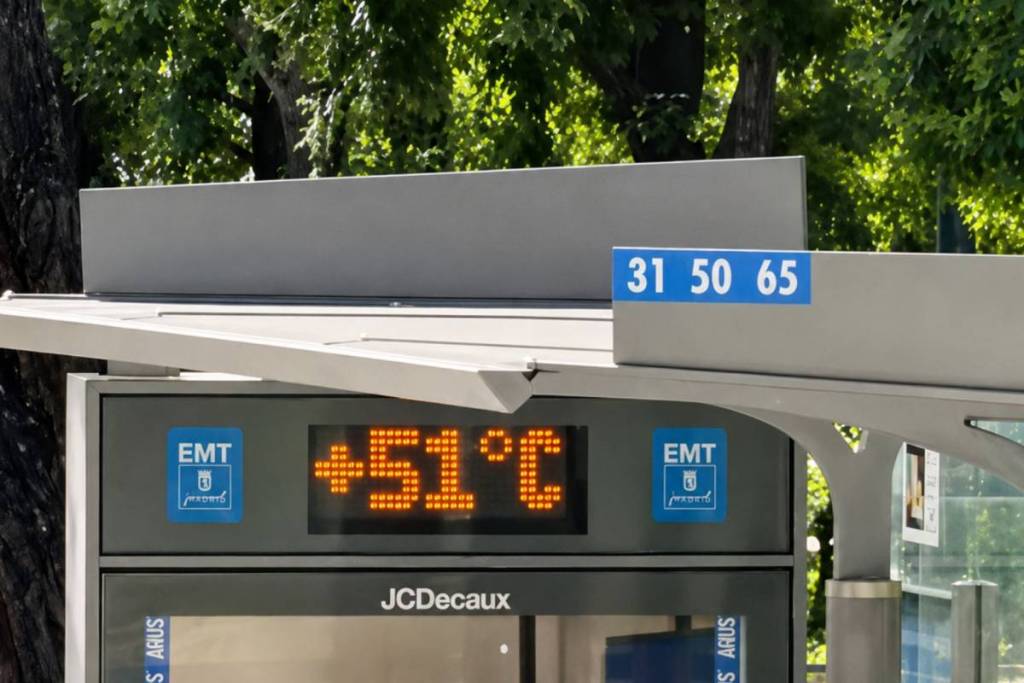

It is common to see information panels at bus stops in Madrid displaying alarming temperature readings, reaching as high as 51 degrees Celsius. However, this reading does not correspond to the actual temperature of the air breathed on the street, but rather is due to the characteristics and materials of the structure itself.
The sensor responsible for measuring the temperature at these bus shelters is strongly influenced by its immediate surroundings. On days with intense sunlight, solar radiation heats the materials used to build the structure, primarily metal and glass. The entire structure absorbs this energy, so the thermometer ends up recording the heat accumulated on the surfaces rather than measuring the ambient temperature in isolation.
The Impact of Electronic Components
Added to this structural overheating is the heat emitted by the bus stop’s equipment itself. Many of these facilities incorporate digital advertising, illuminated screens, and various electrical components that, because they operate continuously, generate an additional source of heat just a few centimeters from the sensor.
This combination of factors causes a significant discrepancy in the final reading perceived by users. For this reason, on days when the actual outdoor air temperature is between 36 and 38 degrees, the bus stop’s information panel may display a reading exceeding fifty degrees.
Although the figure displayed on the screen is actually a distortion caused by the materials of the structure itself, the high temperatures currently being experienced in the city make the reading seem credible at first glance to those waiting for public transportation on the street.