
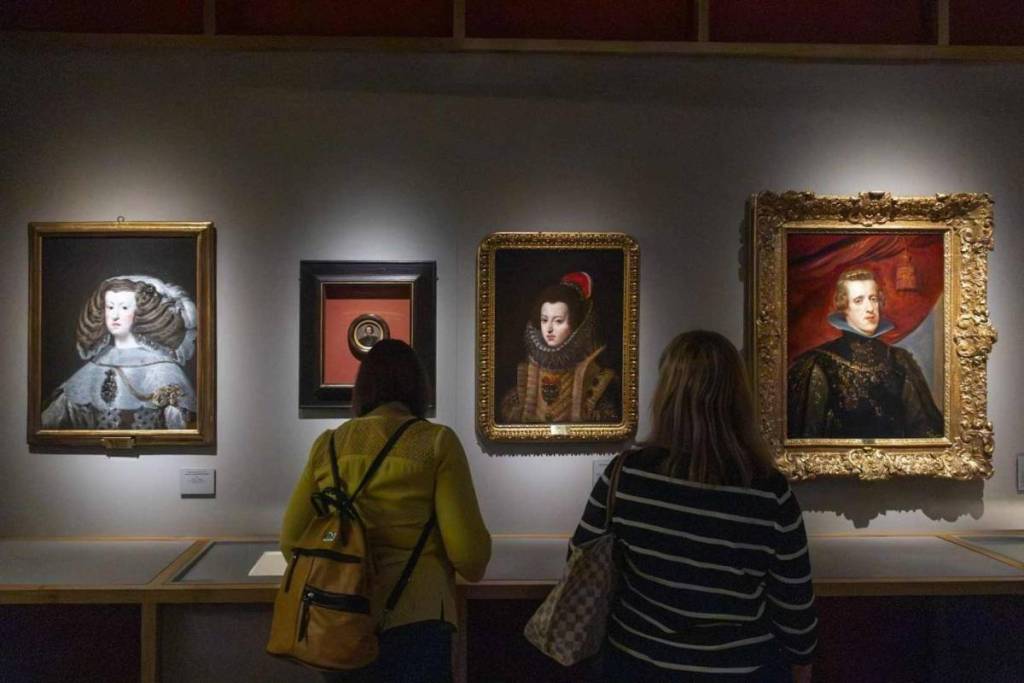

Exhibitions in Madrid, a city brimming with art and innovation, are one of the cornerstones of its vast cultural offerings. From renownedmuseumsto independent art galleries, as well as other less conventional exhibition spaces,the possibilities when it comes to exhibitions—in this case, for the month of October—are practically endless.
That’s why every month we put together a selection of the must-see exhibitions you can’t miss in Madrid. Photography, painting, contemporary art, sensory and immersiveexperiences …There’s plenty to choose from and plenty to discover.
Pedro Moreno. Pro domo sua. Theater and Film Art
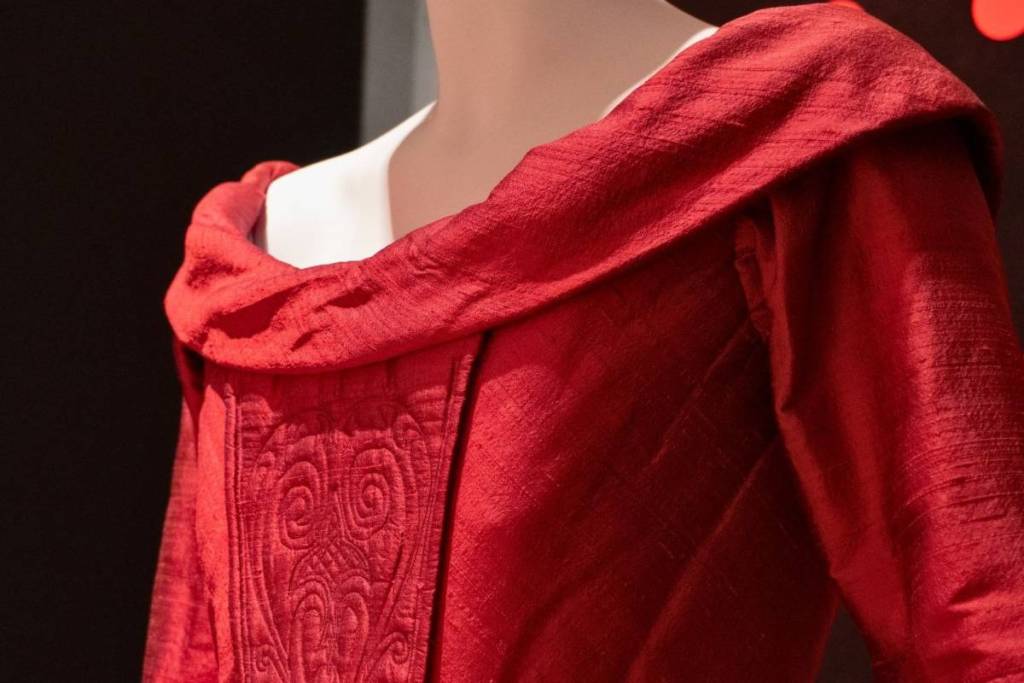
The boundless imagination of costume designer Pedro Moreno is on full display in this free exhibition, where even the venue holds significance: the National Library of Spain (BNE), which he considers his second home, has been a vital source of research for some of his historical works.
The Sala Hipóstila thus becomes a retrospective of the designer’s more than 40-year career, bringing together sketchbooks, testimonials from personalities such as Ana Belén and Emma Suárez, and, of course, his textile creations.

After making its mark in Barcelona, the Banksy Museum is now opening a second location in Madrid. Located very close to the Acacias metro stop, this new Madrid museum houses a permanent exhibition featuring more than 170 replicas of Banksy’s most iconic works, such as *Banksy’s Rage*, *The Flower Thrower *, and *The Girl with the Red Balloon*. This space serves as a tribute to one of the world’s most prestigious street artists.
Sabre-toothed Cat
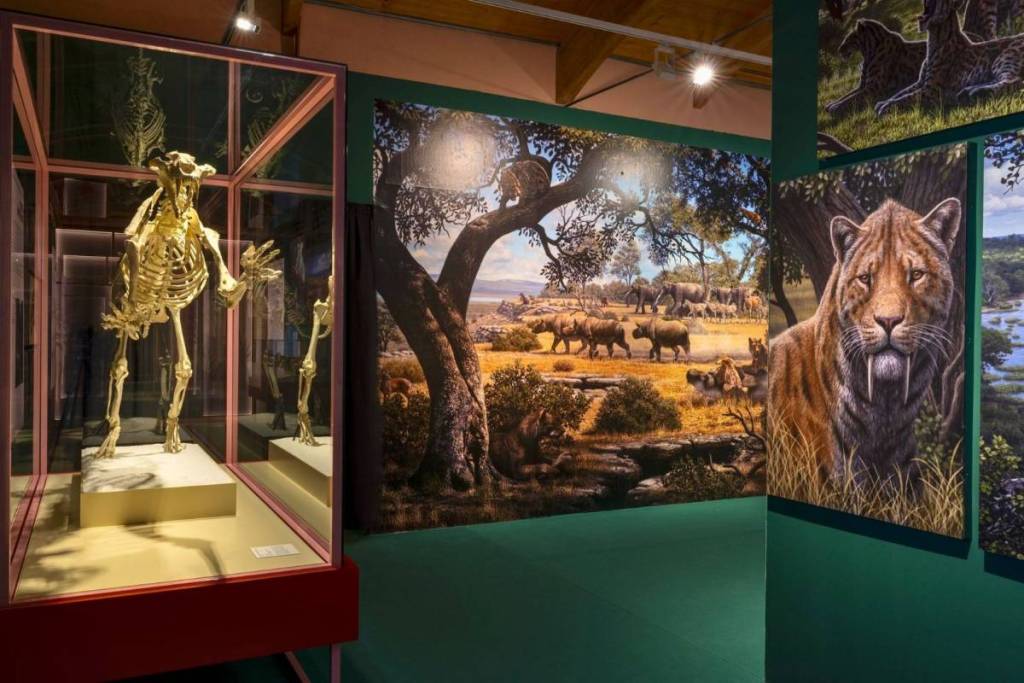
This free exhibition invites you to discover one of the most fascinating predators that roamed the Earth until the end of the Pleistocene: the felids known as “saber-toothed cats.” These animals, incidentally, were very common in our region: Torrejón de Velasco is home to one of the world’s most important archaeological sites dedicated to this subject.
Thanks to the reconstructions that paleontologists have been able to create of these animals—based on fossils preserved in excellent condition—it’s possible to understand what they looked like, how they moved, and how they used their fangs to hunt. And the exhibition, in addition to featuring some of these fossils, presents detailed replicas of skulls and skeletons.

The Royal Collections Gallery is simultaneously hosting two exhibitions that explore both the exterior and the intimate aspects of the Crown’s estates. The first, *Brambila, Painter of the Royal Sites*, documents the appearance of the royal palaces and gardens in the 19th century through the work of landscape painter Fernando Brambila. The exhibition includes the series of oil paintings that Ferdinand VII commissioned from the Italian painter to depict sites such as Aranjuez, El Escorial, and the now-vanished Royal Site of La Isabela.
This month, the institution is also opening *Weaving Court Life*, an exhibition that showcases more than 200 previously unseen textile pieces, along with unusual objects, paintings, and period furniture, highlighting relics such as Queen Berenguela’s pillow (dating from before 1246), a 19th-century cotton-covered float, and a bathtub designed to disguise its hygienic function as a divan.
Madrid in the Golden Age. A Melting Pot of Destinies and a Landing Place for Geniuses
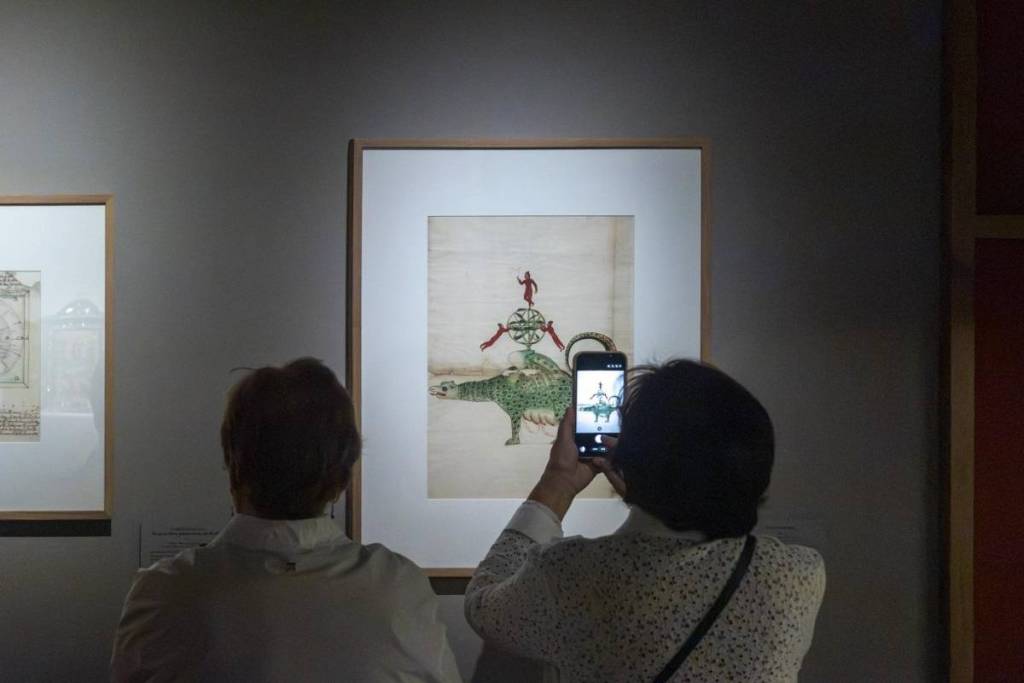
The exhibition *Madrid in the Golden Age: A Melting Pot of Destinies and a Landing Place for Geniuses* invites you to travel back to the Madrid of the Habsburgs in the 16th and 17th centuries, a city transformed following the arrival of Philip II’s court in 1561. The exhibition explores the cosmopolitan spirit of a capital that attracted artists, scientists, merchants, financiers, and writers at the height of the Spanish Monarchy’s cultural golden age.
Amid trade routes, popular celebrations, court life, and open-air theaters, the exhibition highlights figures such as Velázquez, Cervantes, Lope de Vega, Quevedo, Calderón, Juanelo Turriano, and Cosme Lotti. Admission is free, subject to capacity, from September 29 to December 2 at the Royal Academy of Fine Arts of San Fernando, with free guided tours available upon prior registration; the exhibition will be closed on Friday, October 16.
Pre-Raphaelite Art. Women’s Journeys (1850–1914)
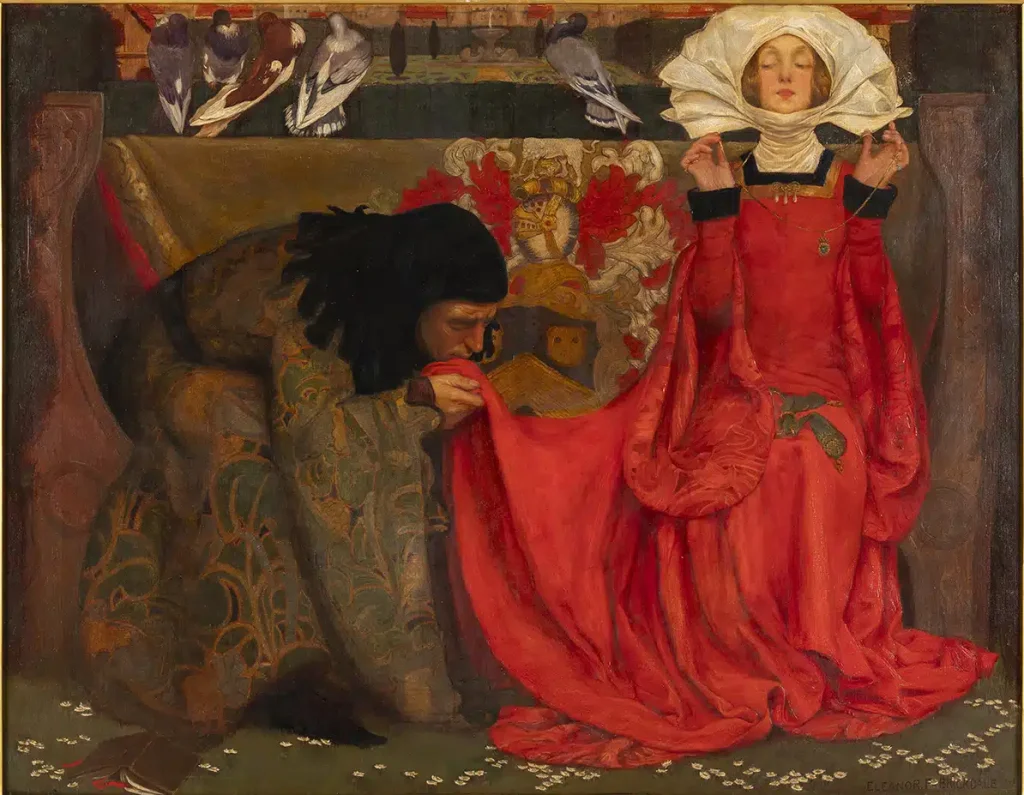
The Sala Recoletos at Fundación MAPFRE is hosting “Pre-Raphaelism: Women’s Journeys (1850–1914),” an exhibition that explores this influential British artistic movement through the works and careers of more than forty female artists. The exhibition brings to light figures such as Elizabeth Siddal, Joanna Boyce, Julia Margaret Cameron, May Morris, Marie Spartali Stillman, Evelyn De Morgan, and Eleanor Fortescue-Brickdale, who for decades were overshadowed by the great male artists of the Pre-Raphaelite Brotherhood.
Curated by Pamela Gerrish Nunn, the exhibition invites viewers to examine Victorian art from a social and feminist perspective, highlighting the challenges and diverse paths these women took to develop their work. It will be open from September 24, 2026, to January 10, 2027, at Paseo de Recoletos, 23. General admission is 5 euros, with free admission on Mondays (excluding holidays) from 2:00 p.m. to 8:00 p.m.; all tickets include an online audio guide in Spanish and English.
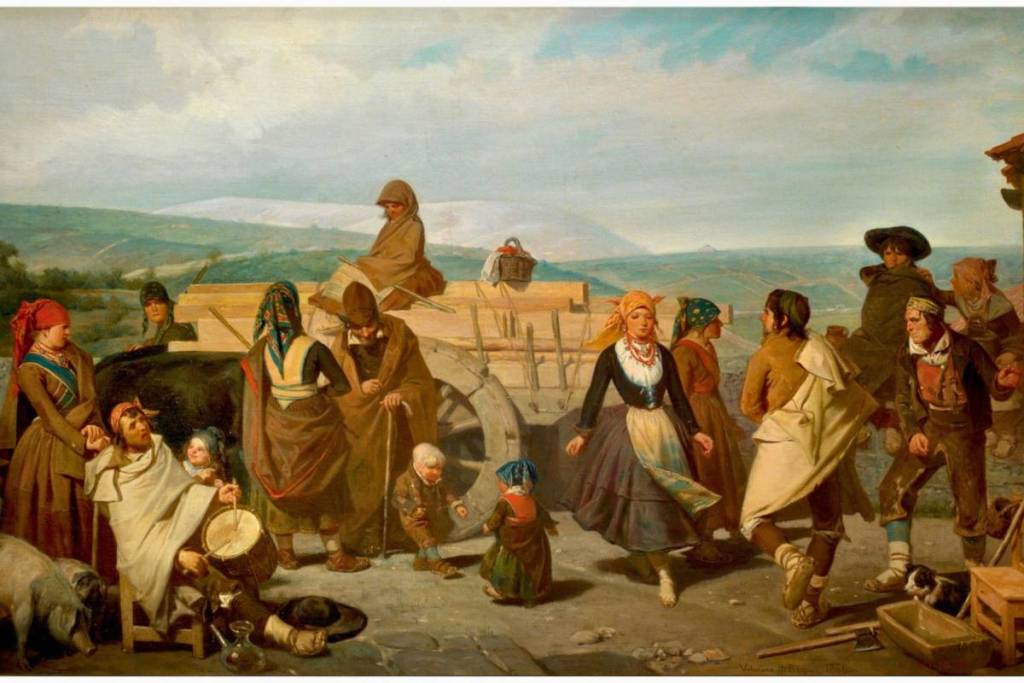
Valeriano D. Bécquer (1834–1870): Genre Paintings
Certain groups are eligible for reduced-price admission (€7.50) or free admission. All admission rates can be found on the Prado’s website.
The quality of an exhibition isn’t determined by the number of pieces or works on display, and the exhibition *Valeriano D. Bécquer (1834–1870): Genre Paintings* may be one of the best examples of this. Comprising just eight paintings, this exhibition brings together for the first time the complete set of oil paintings that Bécquer created as part of a commission for the former Museo de la Trinidad.
Considered one of the finest examples of 19th-century costumbrista painting in Spain, the museum highlights that “the painter’s sincerity and objectivity make him a fundamental figure in pictorial realism in our country.”

10 interactive themed rooms with a world of sweets and color to discover. That’s the concept behind Sweet Space: to offer an immersive experience that engages all the senses, especially taste. You can put it to the test, for example, in their ice cream lab. The various stations along the tour have been designed by different artists to create a unique—and, above all, Instagram-worthy—world.
Cruz Novillo
The exhibition dedicated to Cruz Novillo offers a nonlinear journey through six decades of creation, from his geometric explorations in the mid-1960s to works produced in 2025. The exhibition reveals the breadth of an artist who took drawing from paper into painting, sculpture, and sound, structuring his work around arithmetic, color, time, music, form, and participatory play.
Visitors can explore series such as “Manipulable Structures,” “Squaring the Circle, ” “Modular Constructions,” and “Diaphragms”—synesthetic pieces that associate color and sound through mathematical combinations. It also features sculptures, collages, archives, models, and preparatory drawings, as well as works related to his installation on the façade of the National Institute of Statistics in Madrid—one of the most representative examples of art integrated into the urban landscape.
My whole house is an altar
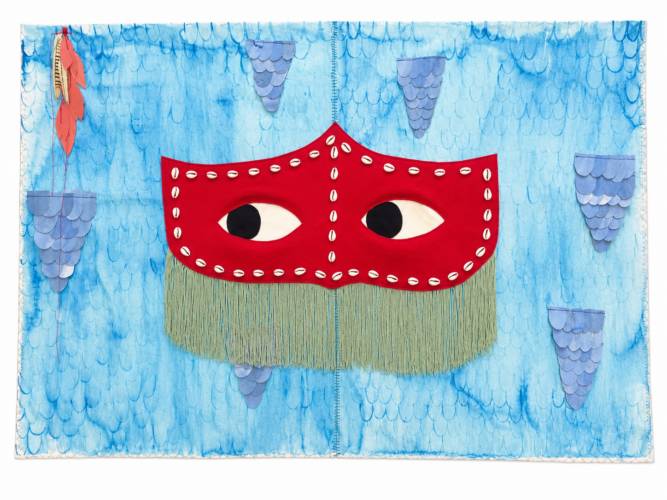
Artist Gema Polanco takes over the National Museum of Decorative Arts to transform it into a universe of giant tapestries, amulets, flags, masks, and reimagined objects.
His new exhibition, created for PHotoESPAÑA 2026, blends craftsmanship, popular culture, domestic memory, and punk spirit in a journey that invites visitors to rediscover everyday objects from an almost spiritual perspective . One of the most original exhibitions of Madrid’s cultural season.
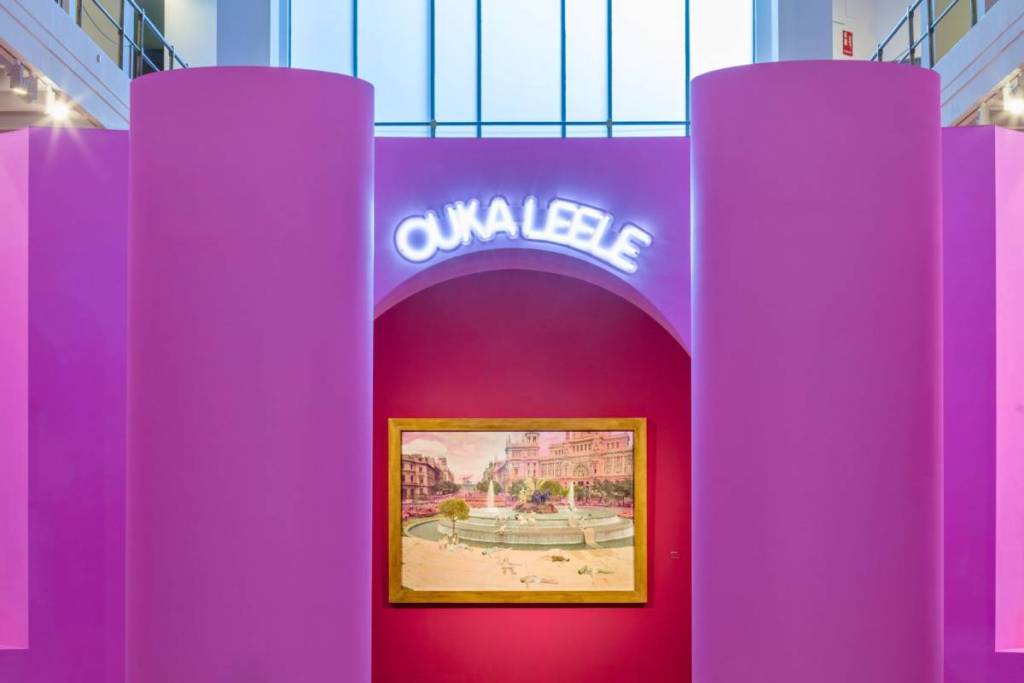
The exhibition traces the role that mythology played in Madrid’s art scene of the 1980s, taking as its starting point *Rapelle toi, Bárbara!*, the performance in which Ouka Leele brought traffic to a standstill at Cibeles in 1987 to reenact the myth of Hippomenes and Atalanta.
Thus, photography, painting, and contemporary visual culture intersect in works by both the artist himself and by artists such as El Hortelano, Ceesepe, Carlos Franco, and Sigfrido Martin Begué.

From laughter machines to walls where you can share with others the things that make you happy. The Museum of Happiness (MüF) features 20 immersive experiences where you can not only learn about but also experience everything related to happiness throughout its various galleries: a space to de-stress, a magic show, or a hug-o-meter.
The Aesthetic Transition. Spain, 1960–2020
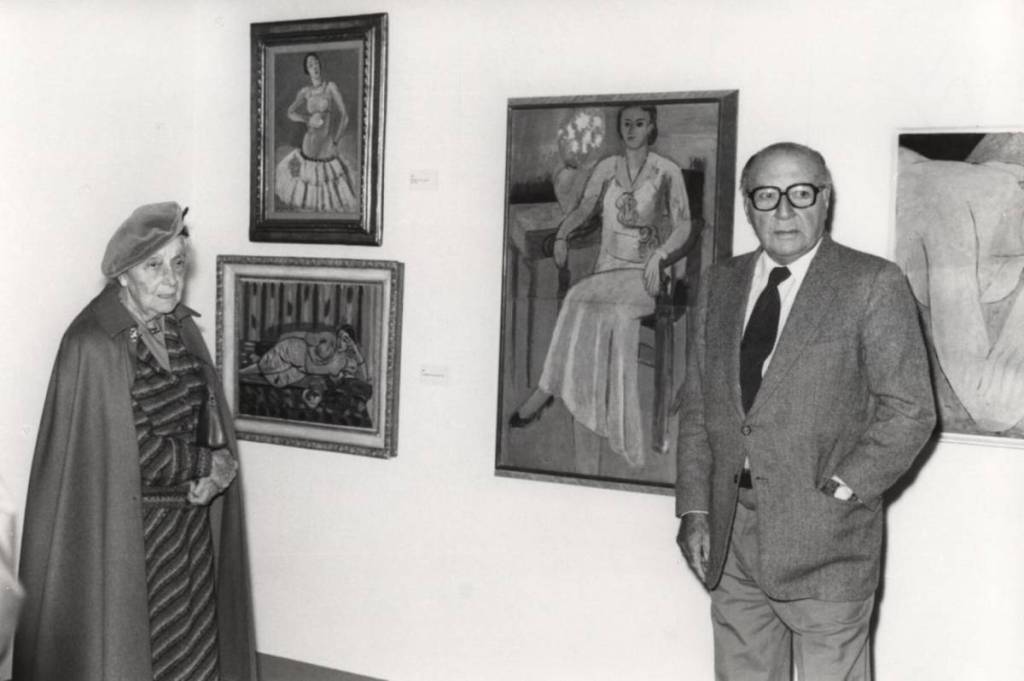
The exhibition *The Aesthetic Transition: Spain, 1960–2020* explores how international modern and contemporary art gradually reached the Spanish public through exhibitions, museums, galleries, cultural institutions, and independent initiatives. Rather than focusing solely on the artists, the Juan March Foundation’s exhibition highlights the experience of exhibiting and the transformation of the collective perspective in the face of new artistic movements.
Through works of art, documents, and audiovisual materials, the exhibition explores a pivotal period: from the limited institutional landscape of the 1960s to the consolidation of new cultural spaces following the democratic transition and recent globalization. It will be open to the public from October 16, 2026, to January 10, 2027, at the Juan March Foundation headquarters, located at 77 Castelló Street. Admission is free, and guided tours are also free, except on holidays.
Robert Frank & The Americans
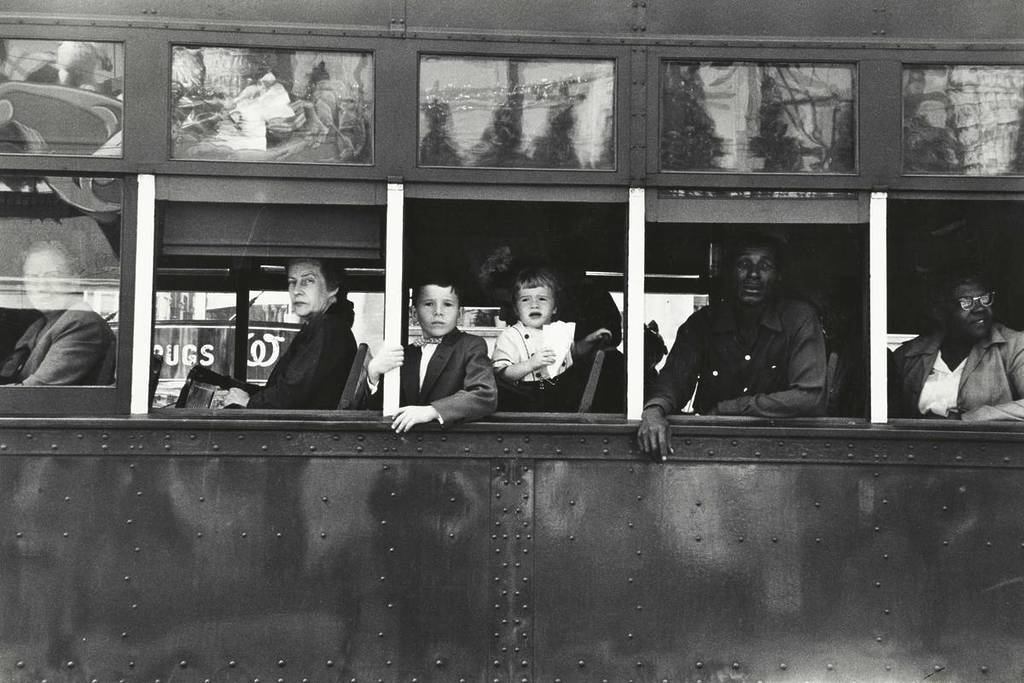
For the first time, the complete collection of photographsfrom Robert Frank’s* * *The Americans* is coming to Spain: one of the most influential works in 20th-century photography, through which the Swiss artist, using an innovative visual language, questioned the “American Dream.” Now, all 83 photographs that make up the original 1958 book are on display at the Telefónica Building, alongside other previously unpublished documents on the author’s creative process.
Madrid Through the Ages
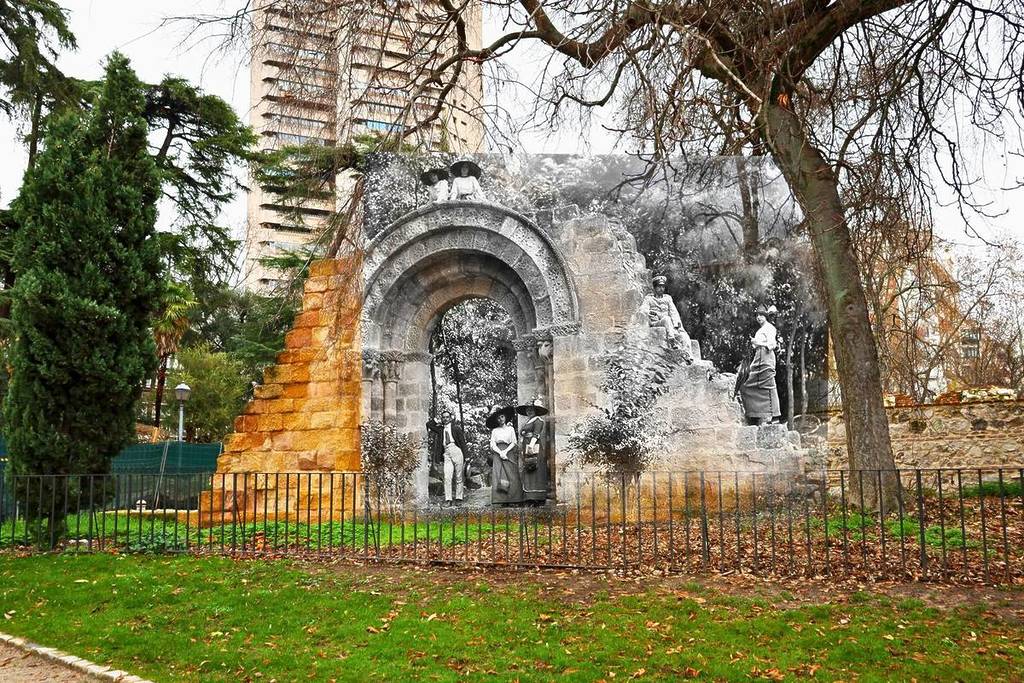
Two eras of Madrid in a single image, where a black-and-white past coexists with a colorful present. This is how Valentín Andrés Pérez Serén (@elpasadodemadrid) has chosen to depict—through photographs that blend two historical moments of the city—this Madrid straddling eras: an exhibition that serves as a dialogue between today’s city and that of our parents or grandparents, or even our own childhood, while revealing its transformations over time.

More than a hundred objects from the British Museum’s collection make up this exhibition, which aims to rescue from oblivion one of the “great forgotten kings of history”—a figure as multifaceted as he was complex, who ruled the great Assyrian Empire between 669 B.C. and 631 B.C.
His realm, which stretched from the shores of the eastern Mediterranean to the mountains of western Iran, experienced a golden age of economic, artistic, and intellectual splendor during his reign.

Free admission
The Thyssen is another museum that offers free evening tours on weekends—specifically on Saturdays— to view its temporary exhibitions on the ground floor and level -1 at no cost from 9:00 p.m. to 11:00 p.m. Admission is free until capacity is reached. Additionally, when there is no temporary exhibition on the ground floor, the Carmen Thyssen Collection will be open.
The Prado by Night

Free admission
The “El Prado at Night” initiative continues in 2026, offering free access to the museum’s temporary exhibitions during evening hours from 8:30 p.m. to 11:30 p.m. on the first Saturday of each month. In addition, the visit is complemented by other activities, such as the opening of Café Prado and the museum shop.