
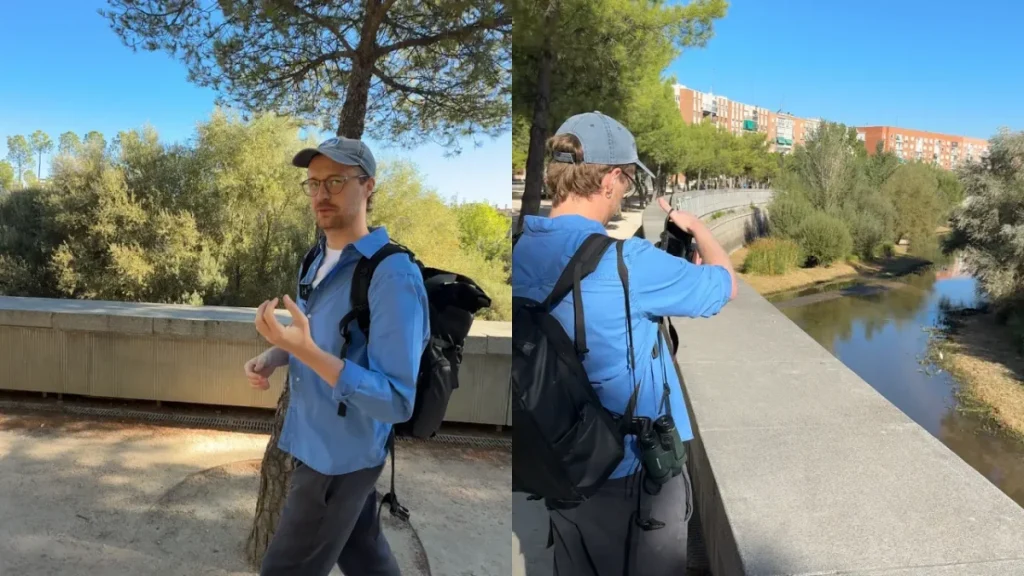

The Manzanares River as it flows through Madrid Río—where the asphalt of the M30 highway once ran decades ago—has been transformed into one of the city’s premier spots for wildlife observation. The restoration of the river environment has brought back species that had disappeared from the area, creating an ecosystem that attracts both resident and migratory birds.
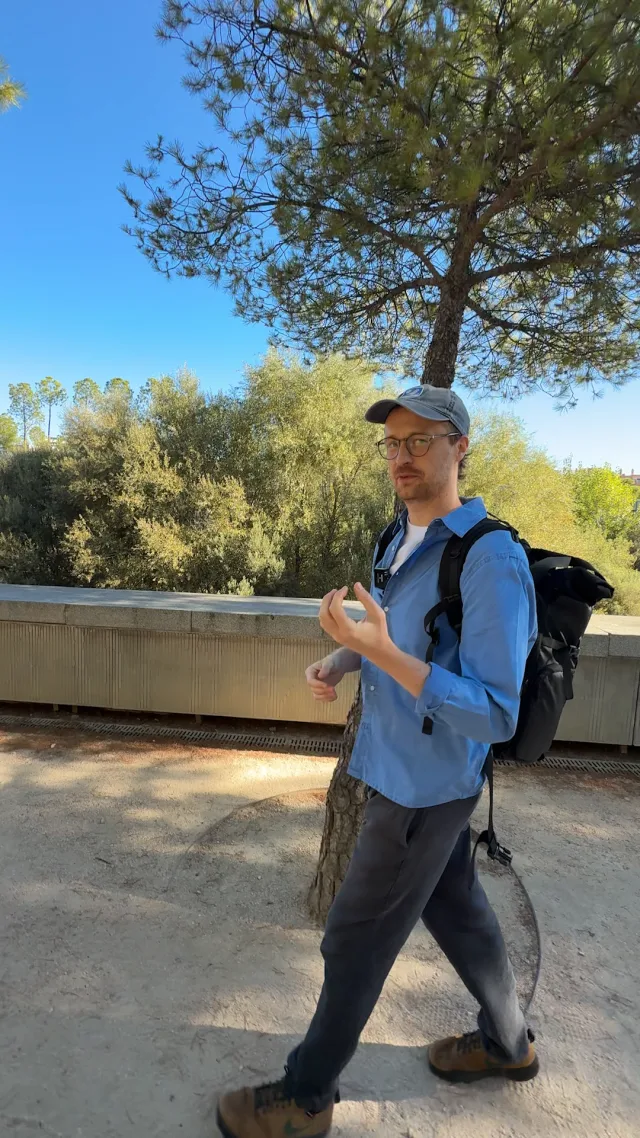
“For me, it’s one of the best places to watch birds in Madrid,” explains Jake, from MadridBirding, in a video dedicated to the river’s biodiversity. The key, he notes, lies in the recovery of the Manzanares River itself: “They’ve restored it, and many birds that were gone have returned.”
The transformation has created a corridor through which various species have been able to move from natural areas located north of the city. Birds that already lived in areas such as El Pardo have followed the river’s course, finding food and discovering that they could also survive several kilometers further south.
Over time, some have gone from being occasional visitors to settling down and nesting right in the heart of the city.
Habitat Diversity and Urban Adaptation
Water is one of the main reasons. The regular presence of birds that fish directly in the river, such as little egrets and kingfishers, indicates that they find sufficient food there.
But the Manzanares’ appeal to birds doesn’t end at the riverbed. Jake particularly highlights the variety of habitats along its banks: there are trees, shrubs, and even areas of pine forest that serve both as sources of food and places to build nests.
That explains why such a wide variety of species can be spotted on a single walk. The great tit coexists with the willow tit, which is particularly associated with pine forests, while the great spotted woodpecker—one of Madrid’s most recognizable woodpeckers—also frequents the riverbank.
Along the water’s edge, it’s common to spot moorhens and grey wagtails. Nile geese, considered an invasive species, can also be seen occasionally.