

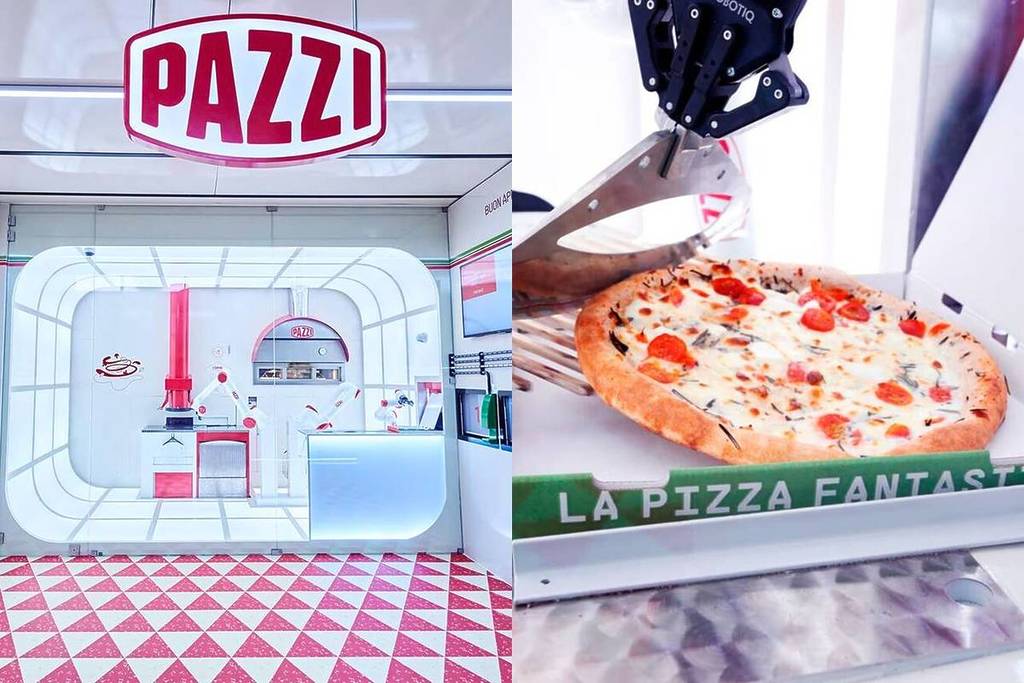
Those with a good memory may remember that pizza vending machine that appeared a few years ago near Moncloa. It worked 24 hours a day, promised to get you out of a hurry with frozen dough and in just three minutes delivered a warm pizza, more useful to calm hunger than to become a memorable meal. It was called Pizzodromo and, at some point, it closed. But the idea – the immediate pizza, without human hands in between – seems not to have gone away entirely. Or, at least, it has come back reformulated.
France’s Pazzi has chosen Madrid to open its first location in Spain – they already had a couple of locations in Paris, which our colleagues at Paris Secret talked about, but they now appear as closed on Google Maps. Pazzi will open on Calle Gaztambide, number 14, in the heart of the Chamberí district, a stone’s throw from the Moncloa interchange and its most obvious clientele: students, late-nighters and those curious about post-human fast food -if that is a category in itself.
The premise is clear: there are no cooks here. There are no waiters either. From the time you place your order on a touch screen until you receive your pizza (in theory, in less than five minutes), the entire process is executed by robots. Literally: they knead, place the ingredients, bake, cut, package and serve.
Pizza with the seal of a champion… and the spirit of a factory.
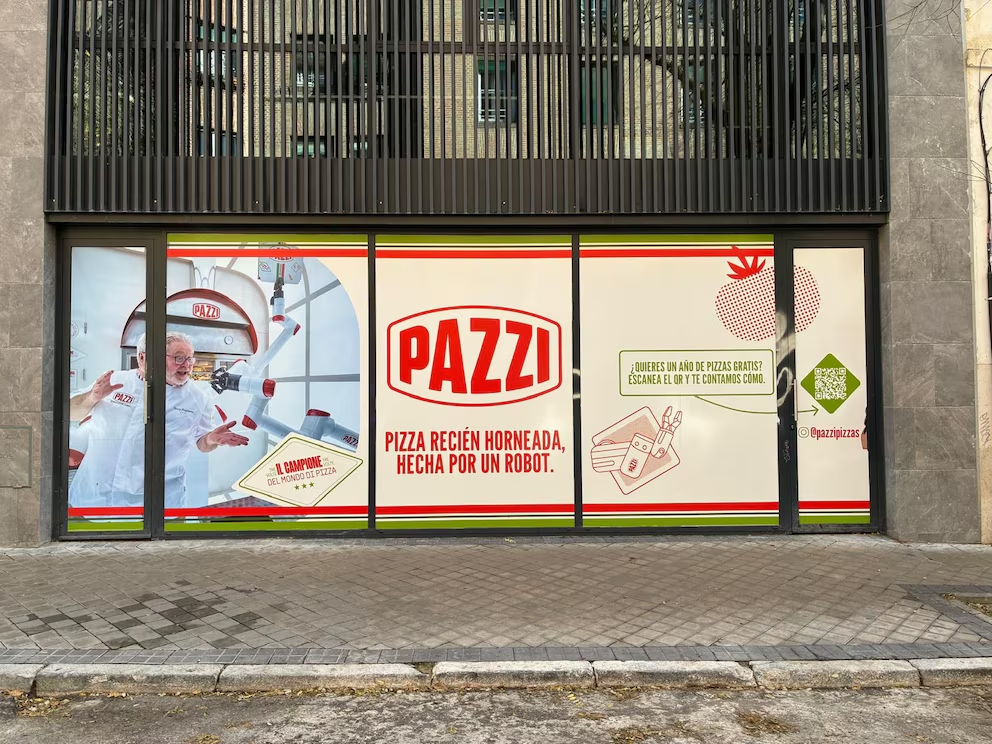
Behind this automated choreography is a technology developed by the Brazilian company Pibra and a reference name to put a face (and legitimacy) to the invention: Thierry Graffagnino, three-time pizza world champion. He signs the recipes, supervises the ingredients and ensures that, at least on paper, what comes out of the machine has a certain standard.
As Pazzi explains, the dough is made with a mix of flours designed to ensure overall consistency, the sauce is signed by Cirio – a respected name in the Italian tomato industry – and the ingredients are deep-frozen using a technology called IQF. All this so that the machine can perform to its full potential: up to 80 pizzas per hour, 24 hours a day, 7 days a week.
The Madrid location also opens with a targeted marketing campaign: a draw for a year’s free pizza (one a week), merchandising and a presence on social networks with videos of the process.
No trattoria, no delivery, no restaurant
What Pazzi proposes is not so much a gastronomic experience as a logistical solution. They say it themselves: their intention is not to compete with neighborhood pizzerias or trattorias that defend Neapolitan pizza as if it were a cultural asset. Pazzi arrives to occupy another space: that of fast food without fissures, without downtime and without margins of error.
Even so, it is hard not to receive this opening with a certain skepticism. Madrid is not exactly a city with a shortage of pizzerias, and the average level has risen notably in the last decade. Artisanal is in fashion, the wood-fired oven is almost a standard, and each neighborhood has several worthy options that offer much more than speed -by the way, some of them you can consult in this article.
Pazzi is betting on another narrative: that of automation as a solution to the structural problems of the sector (lack of personnel, labor costs, impossible schedules). A story that, rather than enthusiasm, invites doubt and suspicion.