

In the archives of the Complutense University’s School of Medicine, the mummy of a young woman is shrouded in rumors. According to a dubious legend, before ending up in the university’s morgue, she had been the dearly beloved daughter of a doctor who, after her death, lost his mind trying to keep her by his side.
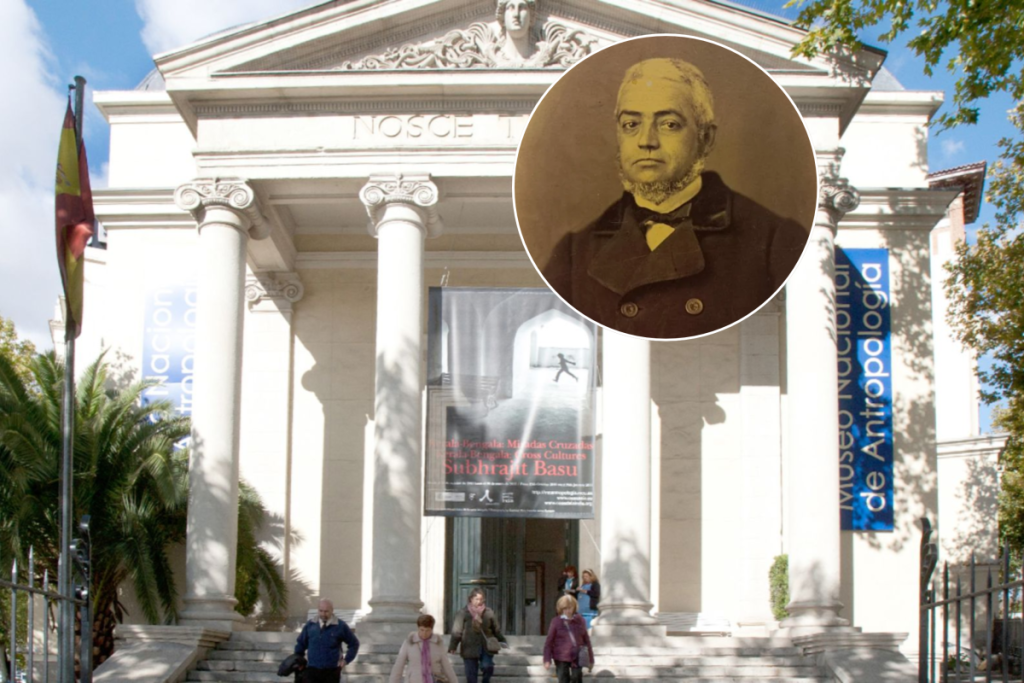
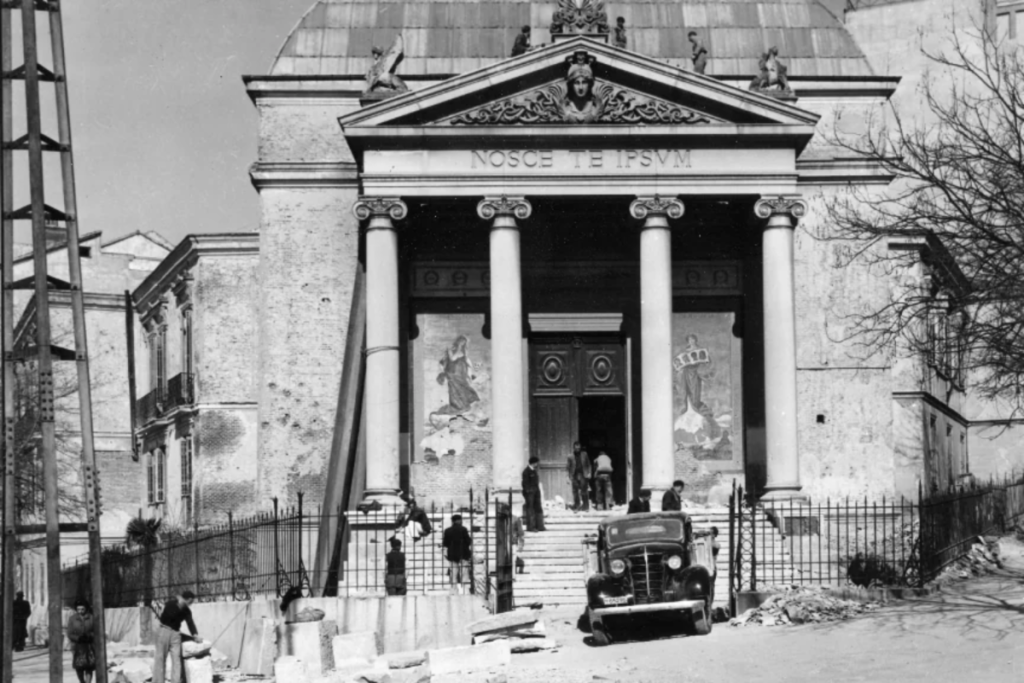
In 1875, King Alfonso XII inaugurated the “Anatomical Museum” at the corner of Paseo de la Infanta Isabel (then Paseo de Atocha) and Calle Alfonso XII (then Calle de Granada) on the initiative of the physician Pedro González Velasco, who also lived there. Initially, that site—which would later be expanded and become the National Museum of Anthropology—housed the doctor’s personal collection.
The neoclassical building had been conceived as a “temple to science” by the Marquis of Cubas (who also designed the Almudena Cathedral) following Dr. Velasco’s instructions. The son of farmers from Segovia had become a renowned physician and, in 1865, the founder of the Spanish Society of Anthropology. His disciple, Ángel Pulido, would say of him that “all he needed was a scalpel, some forceps, and a pair of scissors to work wonders.”
However, life was not all sunshine and roses for the prestigious doctor; in 1864, his only daughter, María de la Concepción (Conchita), had died of typhoid fever at the age of just fifteen. Furthermore, after the museum’s inauguration in 1875, his social and financial standing began to suffer; he had invested his entire fortune in the construction of the building. And then, of course, there were the rumors…
The Legend of the Mummy at the National Museum of Anthropology
Velasco was devastated by his daughter’s death. His grief had been compounded by the guilt that tormented him; he was convinced that he had contributed to his daughter’s death by giving her a medication that her doctor, Mariano Benavente (Jacinto Benavente’s father), had advised him not to administer.
After Conchita’s death, Velasco decided to apply his knowledge of anatomy to the preservation of his daughter’s body. He did so without help: “He wanted to embalm the corpse of that piece of his very being,” Ángel Pulido would later describe. After the embalming, Conchita was buried in the doctor’s family niche at the San Isidro Cemetery.
Velasco’s intention, however, was to take his daughter’s body and mummify it so that it could be preserved in a chapel within the building that would become the National Museum of Anthropology, and that is exactly what he did after the museum’s inauguration in 1875.
That is where her legend began, a legend that grew with surprising stories, such as the one recounted by Ángel Pulido, in which Velasco had commissioned a dressmaker to apply makeup to the mummy and dress her in the latest fashions. There were many more, each more incredible than the last (and likely intended to damage the reputation of Velasco, who was known for his liberal ideas), such as the claim that he took the mummy to bullfights or for carriage rides around the city.
Another rumor is that the mummy ended up in the Complutense University’s Anatomy Museum. However, the truth is that both Conchita’s body and those of her parents are buried in the San Isidro Cemetery, where they can still be visited today.
How to Visit the National Museum of Anthropology: Prices, Hours, and Free Admission
In addition to being the central figure in one of the capital’s most famous legends (which inspired, for example, a short story by Ramón J. Sender), Pedro González Velasco left an important scientific legacy. Upon his death, the government purchased the museum building and all its collections, and today the National Museum of Anthropology (so named since 1993) remains open to the public very close to the Atocha station.
Specifically, the museum’s hours are:
- Tuesday through Saturday: 9:30 a.m. to 8:00 p.m.
- Sundays and holidays: 10:00 a.m. to 3:00 p.m.
- Closed every Monday of the year, January 1 and 6, May 1, December 24, 25, and 31, and one local holiday.
General admission costs €3, and an annual pass can be purchased for €25. Admission is also included with the “Museos de la Ciudad” pass. Admission is free for all visitors:
- Saturdays starting at 2:00 p.m.
- Every Sunday.
- April 18, May 18, October 12, and December 6.
Free admission is also available to, among other groups, those under 18 and over 65, as well as to teaching staff, students between the ages of 18 and 25, and holders of the Youth Card (the complete list of groups eligible for free admission is available on the museum’s website).
Certain temporary exhibitions at the museum are also accessible free of charge, some by prior reservation, as detailed in the National Museum of Anthropology’s program of activities.