

On September 25, 1996, Parque Oeste-Alcorcón (at that time, the largest concentration of big-box stores in the Community of Madrid) welcomed 25,000 people starting early in the morning. There were traffic jams stretching up to nine kilometers on the Extremadura Highway throughout the afternoon, as well as congestion on the M-40 beltway… The reason? The grand opening of the first IKEA in the Community of Madrid.
A few days later, El PAÍS ran the headline: “Another ‘hypermarket’ clogs the access roads to Parque Oeste-Alcorcón.” At the time, the access roads to the retail park were not up to the level of the excitement that the Swedish furniture brand’s arrival had sparked in Madrid: when the doors opened, there were already 400 people lined up at the entrance waiting to get into the store.
The grand opening featured “a jazz orchestra from San Francisco,” as well as “magicians, clowns, mimes, and puppets,” according to a report by Servimedia at the time. That celebration was simply a continuation of the massive advertising campaign carried out by the Swedish company prior to the opening of the first IKEA hypermarkets in Spain—first in Badalona and, three months later, in Alcorcón. Their slogan: “Finally, some Swedes who aren’t here to sunbathe.”
To attract visitors to the Alcorcón store in particular, the advertising campaign included the promise that 680,000 pesetas in gift certificates (about 4,086 euros today, without adjusting for inflation) would be distributed among the first 50 customers to attend the grand opening. EL PAÍS also reported that six people had slept outdoors for three days and three nights to be the first in line (a number that would seem small to us today), all as part of IKEA’s major marketing campaign to establish its first presence in Madrid.
The initiative that changed the furniture market forever
The Swedish brand’s success in Spain depended—no matter how many gift cards were promised—on its offerings truly resonating with local consumers. On paper, IKEA promised to democratize interior design: affordable yet high-quality furniture and home decor. But how could it reconcile two premises that, as a general rule, were contradictory?
In the 1948–1949 catalog brochure, the company’s founder, Ingvar Kamprad (who established it in 1943 as a store selling pens and wallets), explained: “Our low prices—by far the lowest in the region—are made possible by high sales volume, direct delivery from the factory, and very low overhead costs.”
The key lay not only in the narrow profit margins but also in the distribution model from factory to consumer: the furniture was shipped unassembled in flat-pack boxes, and customers assembled it themselves at home. The goal was to reduce costs throughout the entire production chain, right down to the assembly stage. Until then, the norm was for furniture to be purchased and delivered to customers’ homes already assembled.
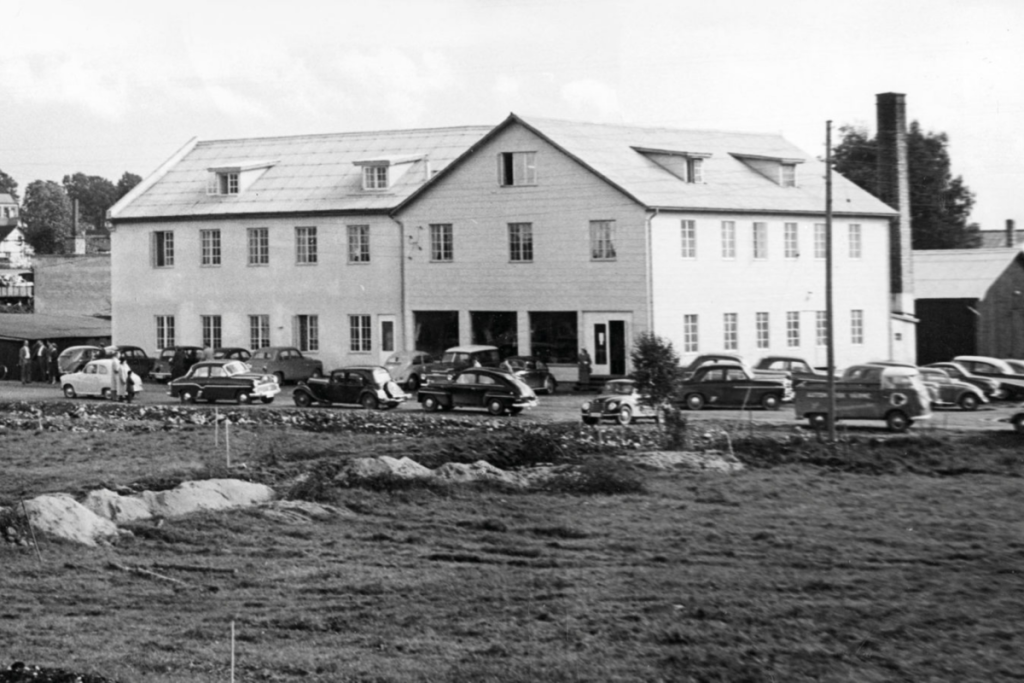
The Swedish company opened its first store in Älmhult in 1953, more than forty years before its arrival in Spain. Thirty years after its arrival in Spain, IKEA now has more than 80 physical retail locations nationwide, and its current store in Alcorcón is no longer the one that opened in 1996. That store covered 22,000 square meters, while the one opened in 2016 spans nearly 39,500 square meters and welcomes 4 million visitors a year.