


To warm up and feel right at home, there’s nothing better than enjoying a hearty cocido—or, while we’re at it, one of the best cocidos in Madrid. When the temperature drops below 20 degrees, every Madrilenian craves a cocido, which is much more than just a noodle soup. Whether it’s a two-, three-, or even four-course version. And without further ado, here are the best restaurants to try one of the star dishes of our cuisine: Madrid-style cocido.

Lhardy is one of Madrid’s century-old restaurants; it’s been open since 1839 and has a rich history. So rich, in fact, that Manolete himself dined there, and it has also been featured in the works of Azorín and Galdós.
Although it was acquired by Pescaderías Coruñesas in 2021, the restaurant is still decorated in the 19th-century style. Lhardy was established in Madrid before the advent of electric light, the telephone, and even paved streets. Here, the cocido is served in two courses, and it’s typical for the first course (the soup) to contain chunks of meat and chicken.

At La Bola, the cocido is prepared for over 4 hours over very low heat using oak charcoal. In addition, the chefs use traditional clay pots, and it’s served in the same pot in which it’s cooked. The raw ingredients—chickpeas, “agua de Madrid” (a type of water from Madrid), bacon, potatoes, and chorizo—are placed inside the pots and set over the charcoal, where they cook for more than four hours; during this time, the pots are periodically refilled with broth.

At Malacatín, they’ve been preparing cocido madrileño since 1895; their motto used to be, “Whoever finishes it doesn’t pay,” and now they even offer home delivery. It’s a fairly small place, so finding a table isn’t easy, but when you do… You’ll indulge in pure pleasure with each of the three courses of the cocido, especially the soup, which is quite thick and rich in fat. But if you prefer, they can serve it all together in a single course.
Palm Court at the M.O. Ritz
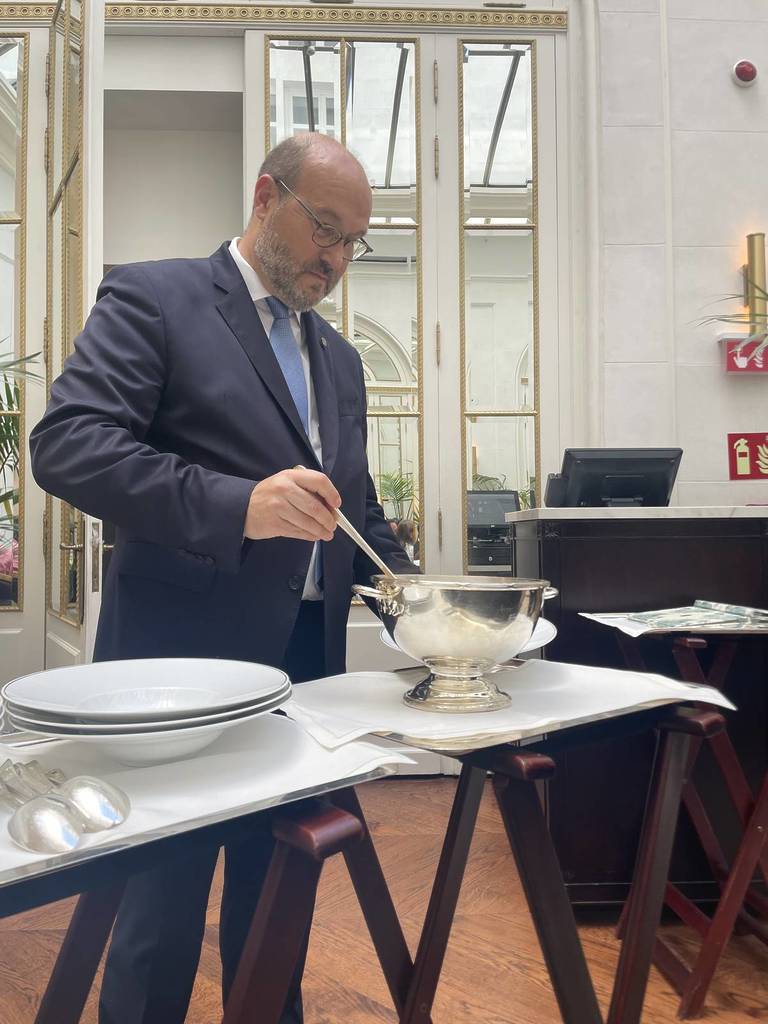
Beneath the dome of the M.O. Ritz Hotel’s inner courtyard lies Palm Court, its main restaurant. King Alfonso XIII used to eat cocido here every Thursday in the early 20th century, and 115 years later, they not only maintain the tradition but also continue to use the same silver cutlery from that era.
The first course is the classic noodle soup, but with the fat skimmed off—which doesn’t take away from the broth’s richness. You can have seconds, and it’s highly recommended. The second course features chickpeas—small and very tender in this case—and vegetables served with an unusual tomato and cumin sauce, though this is indeed one of the dish’s traditional accompaniments. At the same time, they serve the meat with marrow and the classic ball of breadcrumbs and bacon, sliced as if it were part of the third course.
To top it off, they serve a torrija for dessert—included in the menu—in a sort of custard soup, along with nougat ice cream. The king liked to pair this typical Madrid dish with champagne, and the restaurant invites you to follow the monarch’s advice.

Luckily, there are quite a few Daniela restaurants all over Madrid where you can enjoy their cocido madrileño. Here, they serve it in three courses: “Sota” (soup), “Caballo” (chickpeas and vegetables), and “Rey” (meat). The portions are very generous, and if there are leftovers, you can take them home.

At La Gran Tasca, they’ve been preparing their cocido daily since 1942. The place is filled with photographs that tell the story of the restaurant and showcase the famous figures who have enjoyed its stew. Their cocido is served in two courses, but the first (the soup, which is very flavorful) is the most revered by lovers of hearty meals. The second course includes both the meat and the vegetables, and we should warn you that, while it’s already a hearty meal, here it’s even more so, because the portions are very generous.

Many say it’s the best cocido in Madrid, even though it’s not located in the city itself. It’s a great excuse to take a trip to El Escorial. Just keep in mind that their cocido isn’t prepared every day—only on Mondays, Wednesdays, and Fridays. It’s served in three courses, just like the traditional version, and they use turnip greens instead of berujas (though sometimes they do add them).
Casa Álvarez
Casa Álvarez is a traditional eatery that’s been in El Rastro since 1920. They serve not only one of the best cocidos in Madrid, but also one of the most affordable. An individual pot costs €15, and the three-course version is served in this earthenware pot, which is also used to cook the soup.

Casa Carola serves a cocido set menu that, in addition to the three courses, includes dessert, coffee, and a shot of liqueur. At this restaurant, the signature dish since 1998 has been the cocido madrileño, which is served in the center of the table so diners can help themselves as they please. Don’t worry about the seasons—it’s on the menu from September through May (Madrid summers aren’t the time for hot soups).

Few restaurants can boast that a review begins by noting that their reputation precedes them. When a restaurant is in a central neighborhood, it’s normal for people to make a pilgrimage to visit it. When it’s in a suburb, that’s a bit less common. Something truly special must be happening here when they describe themselves (without a hint of arrogance) this way: “Walking into La Cruz Blanca de Vallecas is like coming home: a pleasure for the senses, a delight for the soul, and accessible to everyone.”