

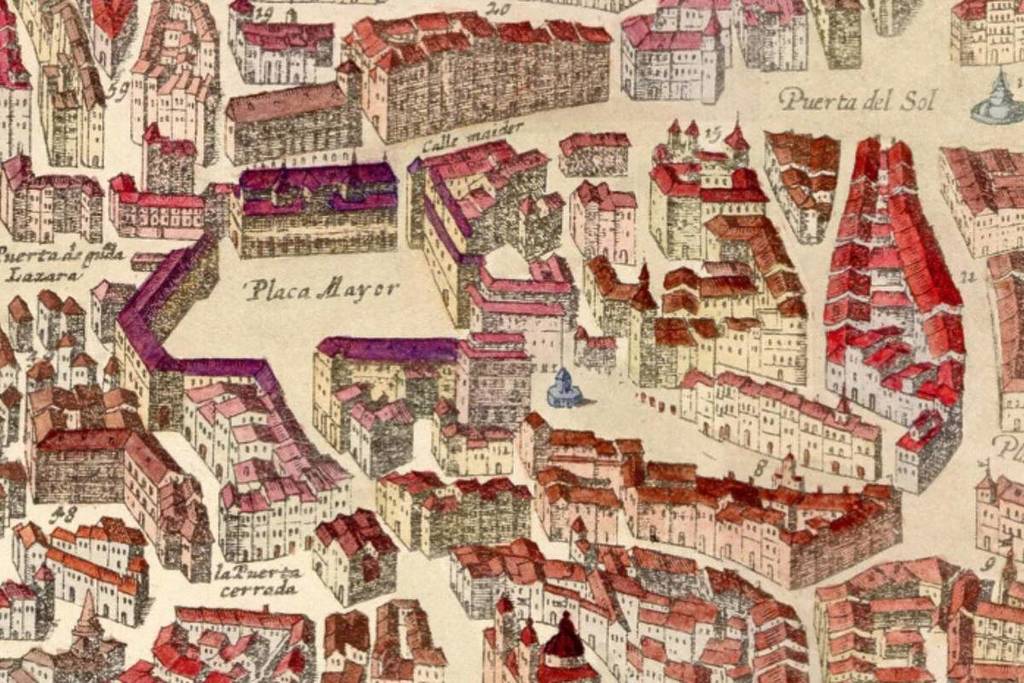
One of the most unequivocal proofs of the changes that cities undergo with the passage of time are maps, a sort of static photograph of a particular time and place. For a long time it was thought that the oldest map of Madrid was Pedro Teixeira’s map of 1656, but an earlier one has come down to our days and can be visited free of charge at the Museum of History of Madrid (Calle de Fuencarral, 78).
This valuable historical document, which was called La Villa de Madrid Corte de los Reyes Católicos de Espanna, dates from 1622 and was signed by Antonio Mancelli, an Italian cartographer and illustrator who was commissioned by Philip IV. A work that would take him 8 years.
Despite its relevance – for example, it is the first cartographic representation of the Plaza Mayor that has been preserved – both Mancelli’s work in general and this plan in particular have gone virtually unnoticed until the twentieth century: according to the Institute of Madrilenian Studies, it was considered “a rarity made clumsily and unrealistically”.
Curiosities of the oldest map of Madrid
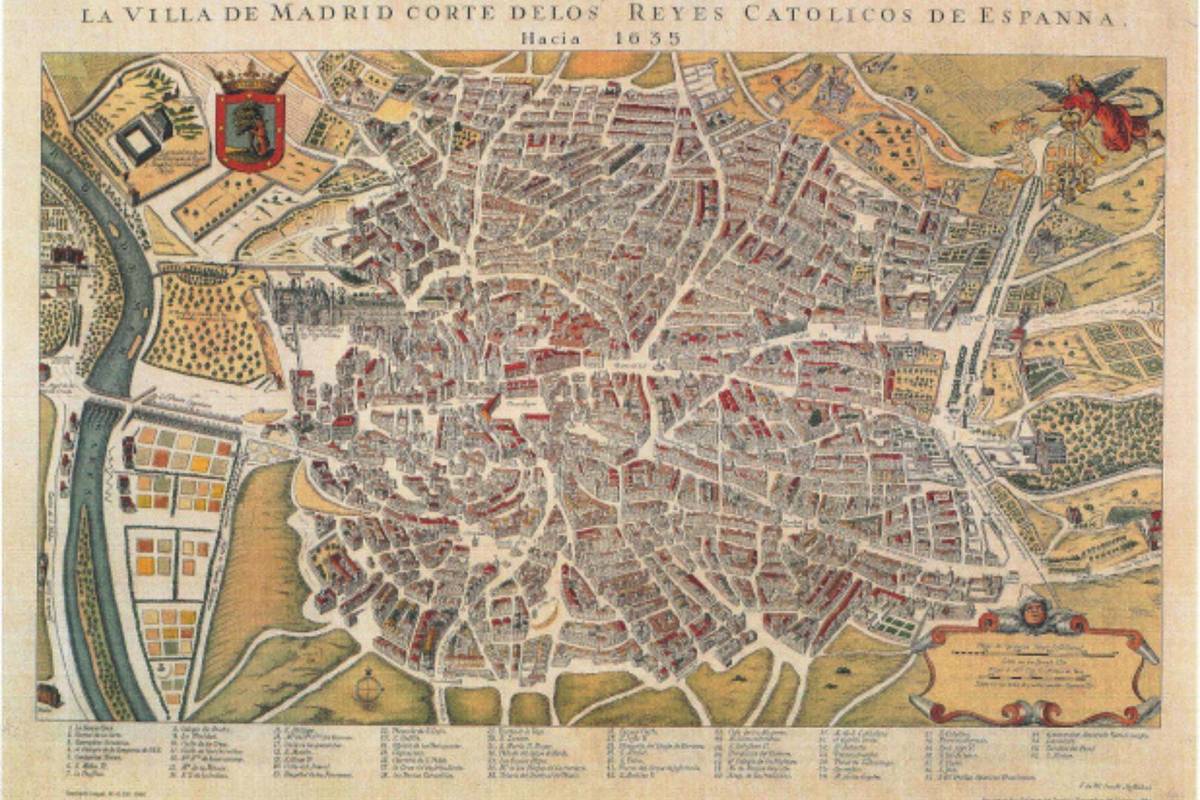
Over time, however, the Italian’s contributions have come to have a different consideration: “It is a valuable vestige of the history of the capital. It shows us how its streets, squares and surroundings looked like during the first third of the Golden Age,” says the Madrid City Council.
Another peculiar condition of the maps is that, looked at and analyzed with attention, they can provide interesting information beyond the merely urbanistic. For example, Mancelli’s map shows the Pozos de la Nieve, near the Bilbao traffic circle, where ice was stored for later sale.
The now extinct Manzanares washing places, on both sides of the river, have also been captured in it, which tell us at the same time of one of the disappeared trades performed by the women of the time: that of washerwomen.
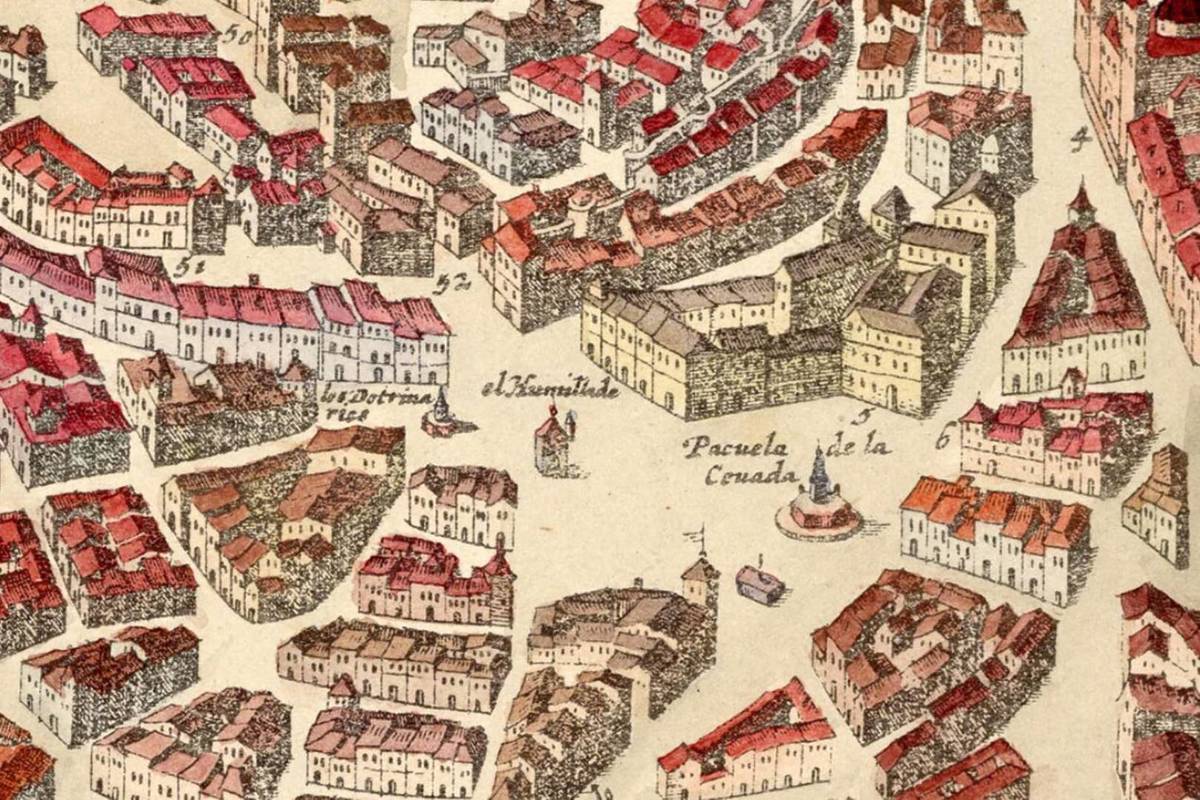
Another of the historical traces that call our attention in this 1922 map are the city gates and the squares of Cebada and Humilladero, which were the scene of executions.
Original maps of Madrid

Nowadays, with the possibilities that technologies allow, it is possible to elaborate maps not only of the most varied, but also interactive to know aspects such as the urban growth of a city with attractive visualizations or where to find shadows in summer.
The Teixeira map we were talking about at the beginning, by the way, maintains its consideration as the most important map of the seventeenth century, and thanks to the National Geographic Institute anyone can browse it and wander through the same streets that Cervantes walked through this link.
Opening hours of the Museum of History of Madrid
- From Tuesday to Sunday: from 10h to 20h. In summer (from June 15 to September 15) open until 19h. The rooms are vacated ten minutes before closing time.
- Closed: Mondays, January 1 and 6, May 1, December 24, 25 and 31.