
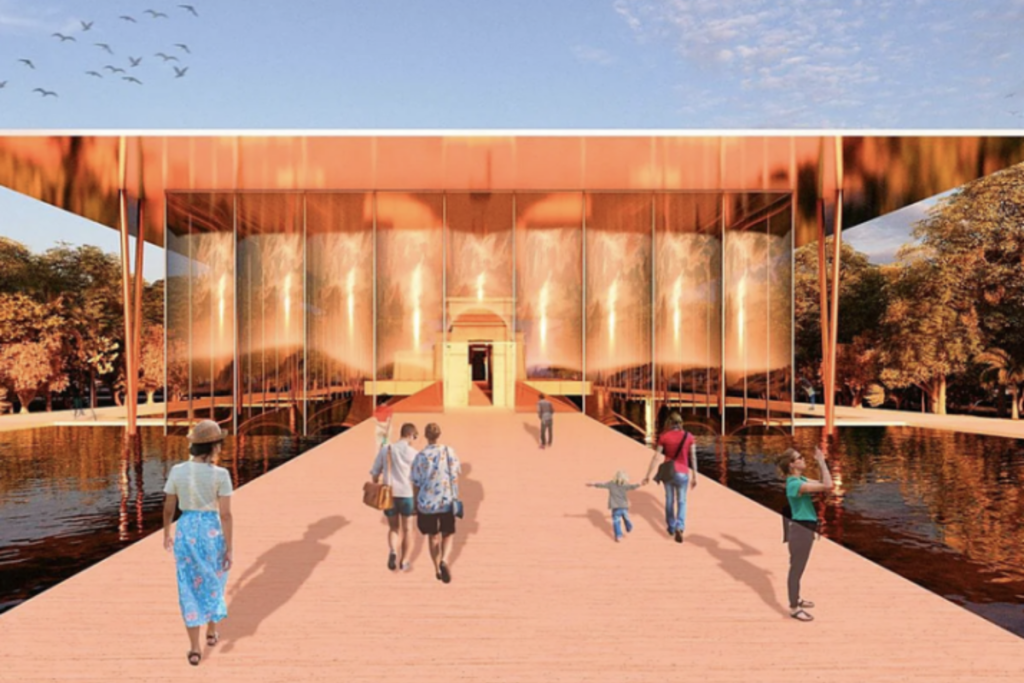

To cover or not to cover: that is the question. The debate over the best way to preserve the Temple of Debod is by no means new. The Egyptian monument, dating from the 2nd century B.C., has stood exposed to the elements at its current location in Parque de la Montaña since 1972. That was when the Egyptian government donated it to the city of Madrid, where it was rebuilt stone by stone and opened to the public.
For decades, the temple has been exposed to the elements, which in Madrid, as is well known, are quite variable: rain, snow, cold, heat, and other sudden changes in weather, in addition to pollution, graffiti, and vandalism. The monument’s condition has led experts to raise concerns about its state of preservation, and in May of this year, it prompted Madrid Foro Empresarial to launch a call for proposals to protect the Temple of Debod.
“We wanted to create a space to consider how to protect and preserve the Temple of Debod without losing what makes it unique,” said Hilario Alfaro, president of Madrid Foro Empresarial. On October 16, the association announced the winner of the first prize (worth €7,500): Eduardo Alonso Tejedor, a 23-year-old student in the Master’s in Architecture program at the Higher Technical School of Architecture in Granada.
In total, the Madrid Business Forum competition received 25 proposals, of which the jury selected two others in addition to Eduardo Alonso’s. The second prize, worth €5,000, went to Estudio Lamela (one of Spain’s best-known architecture firms), while the third prize, worth €2,500, went to the young architects Antoni Medina García and Carmen Fernández Trebacz.
A glass, retractable roof for the Temple of Debod
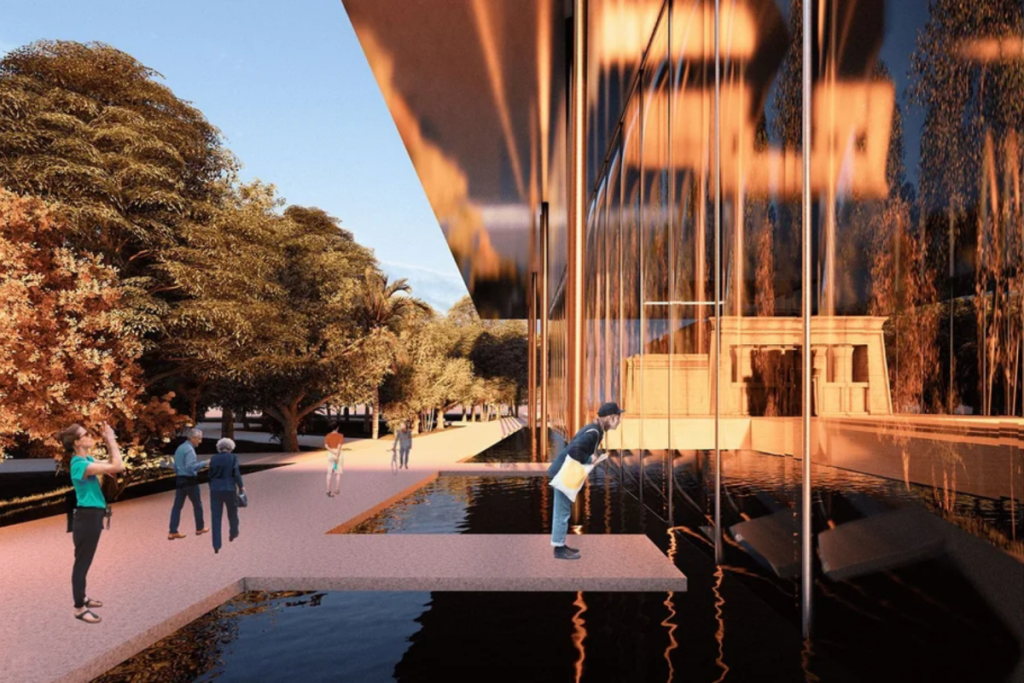
Eduardo Alonso’s proposal is titled “Suspended Memory” and consists of creating a linear bridge-like structure with a new museum space and a lightweight roof designed to protect the monument without detracting from its prominence or altering its relationship with the surroundings.
On social media, the student has described his idea as “a zero-impact, reversible strategy rooted in the temple’s complex history, which seeks to restore the monument’s dignity and historical significance.” In his own words, he has described the recognition as “a true dream come true for someone taking their first steps in the profession.” Madrid Foro Empresarial is now considering whether to hold an exhibition featuring the various proposals submitted to the competition.
Even so, it does not appear that covering the Temple of Debod is a near reality—at least not for the Madrid City Council. Last year, the Director General of Heritage for the Community of Madrid, Elena Hernando, stated that the temple was in “good condition” and that there was no “explicit recommendation” indicating that covering the monument was “necessary, or even advisable.”
Also in 2025, the delegate for Culture, Tourism, and Sports, Marta Rivera de la Cruz, stated that the monument “undergoes periodic inspections so that action can be taken if necessary, but the city council is not even considering the possibility of covering the temple.”