


Madrid is the Spanish city with the largest price difference between the most expensive and cheapest supermarkets. This is the conclusion of the annual study by the Organization of Consumers and Users (OCU), which provides exact figures: filling a shopping cart at the cheapest store in the capital results in annual savings of €4,381 compared to the most expensive one.
The next municipalities in the ranking—such as Alcobendas, Pozuelo de Alarcón, and Majadahonda— with price differences of up to 4,270 €, also belong to the Community of Madrid. The figure becomes even more revealing when compared to the national average: the average annual savings from shopping at the cheapest store versus the most expensive one in Spain is €1,310 (more than €3,000 below the Madrid average).
This comes as no surprise, since the country’s most expensive supermarkets (Sánchez Romero de Castelló, Arturo Soria, and Castellana) are located in the capital. To conduct its study, the OCU collected 101,520 prices from 690 stores and calculated price indices for 189 cities. The figures they have published correspond to the cost of a complete “grocery basket” at different stores (consisting of 244 items, including fresh produce, packaged goods, hygiene products, and household goods).
A price increase that particularly affects fresh produce
Although the increase in grocery basket prices has been lower this year compared to 2025 (1.8%), the OCU points out that these figures do not reflect the effects of the war in Iran, and that, despite everything, price increases remain at historically very high levels.“A large proportion of families have not regained their lost purchasing power,”the organization states.
In the last five years alone, food prices have risen by 39.5%, and the majority of products (61.8%) have seen price increases. The 38.2% of products that have seen a price drop have done so “to a much lesser extent than the previous increase they had experienced; therefore, in general, prices remain at exceptionally high levels,” according to the OCU.
The price increase has particularly affected fresh produce, whose price has risen by an average of 4.7%. Fruits and vegetables have risen by an average of 3.5%; meat, by 3.7%; and by far the largest increase has been in fish, whose price has risen by 8.6% compared to the previous year.
The Cheapest Supermarkets According to the OCU
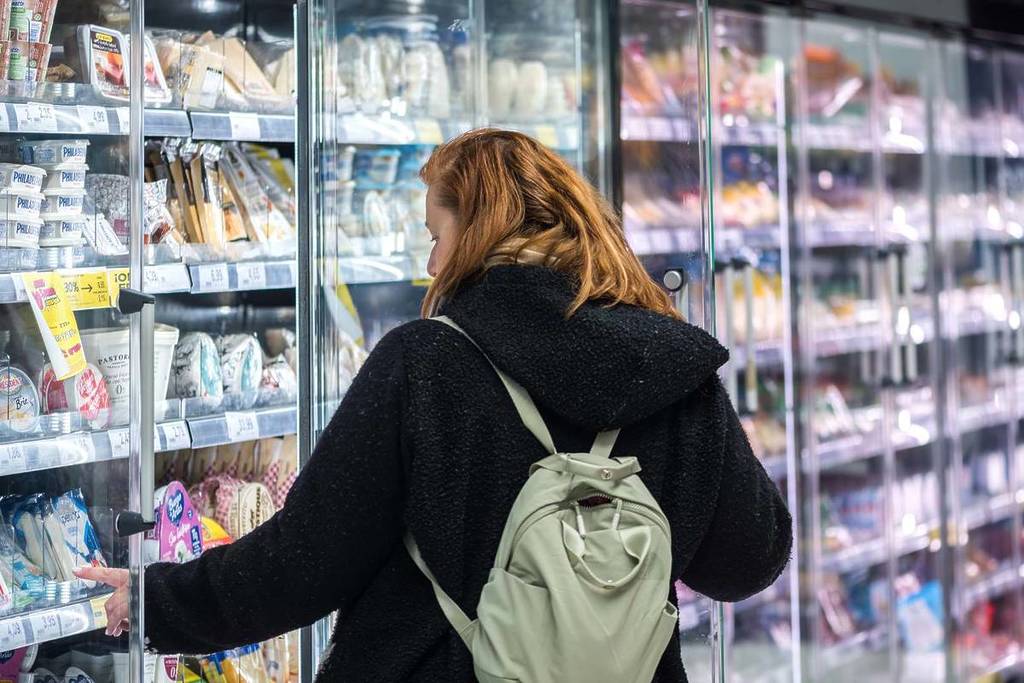
The OCU has also published a list of the most expensive and cheapest supermarket chains. Those with the highest prices are Hipercor, El Corte Inglés, Supercor, and Sánchez Romero, while the supermarkets with the most affordable prices are Supermercados Dani, Family Cash, Tifer Alcampo, and Supeco.
The study also notes that only two of the major chains have raised prices above the general inflation rate (BM Urban and Ahorramás). Eight chains have lowered their prices: Consum, Familia, Supeco, E. Leclerc, Aldi, Mercadona, Lidl, and Carrefour Market.
With the aim of helping consumers find cheaper supermarkets in their area and save money when filling their shopping carts, the OCU has launched a supermarket locator that guides consumers on price levels at different stores based on their location and personal profile. However, it is only available to members.